
When Assassin’s Creed Odyssey launched in 2018, it was met with plenty of attention, praise, and the occasional complaint that Ubisoft’s open worlds were getting too big. Fast forward several years and the question many players still ask is simple: is it worth playing today? For those who may have skipped it on release, or who haven’t touched an Assassin’s Creed game in years, the answer is a strong yes. In many ways, Odyssey has aged better than many of its peers. It remains a beautiful, content-rich experience that rewards both casual exploration and dedicated play.
Let’s take a closer look at why Assassin’s Creed Odyssey continues to stand out, and where it shows its age, to help you decide if it’s worth adding to your library.
The Setting: Ancient Greece in Its Prime
One of Odyssey’s biggest strengths is its setting. Few games have captured a historical era with the same beauty and ambition. Ancient Greece feels vibrant, colorful, and alive. The world stretches across sun-soaked islands, massive cities, and peaceful countryside. Every region has its own architecture and mood. You can ride across golden fields in one moment and climb snow-covered peaks the next. Even years later, it remains one of the most visually striking open worlds ever created.
The design of the world encourages exploration rather than simple checklist completion. The map is large, but it is filled with meaningful points of interest. You will find caves, ruins, fortresses, and temples scattered across the landscape, each with rewards or stories to uncover. The climbing and traversal systems are smooth and forgiving, letting you go anywhere you can see. For players who love wandering and discovering new corners of a world, Odyssey delivers constant satisfaction.
The attention to historical and cultural details also adds immersion. Statues, clothing, and architecture reflect genuine research into Greek history. You hear local gossip in marketplaces, see soldiers training in camps, and pass philosophers engaged in debate. It feels like a world that existed before you arrived and will continue long after you leave.
Story and Characters: A Family Epic in a Time of War
Unlike many entries in the series, Assassin’s Creed Odyssey tells a story that feels personal. Instead of focusing on the ancient order of Assassins and Templars, it centers on family and identity. You play as either Kassandra or Alexios, mercenaries who are separated from their family at a young age and drawn into a quest that spans the entire Greek world.
The main narrative has an emotional weight that keeps you engaged. It touches on themes of loyalty, forgiveness, and destiny. The dialogue choices allow you to shape your character’s personality, which helps the story feel personal even within a massive game. There are moments of humor, tragedy, and quiet reflection, all woven into a world filled with myth and conflict.
Kassandra, in particular, stands out as one of the franchise’s best protagonists. She is confident, witty, and human. Her charm and empathy make every quest feel more grounded. Even minor side characters benefit from solid writing and strong performances. The voice acting across the board brings warmth and depth to the experience.
The story also connects cleverly to Greek mythology. As you progress, you encounter mythological creatures and legendary figures that blend historical realism with fantasy. The balance between believable worldbuilding and mythic wonder gives Odyssey a tone that feels distinct from other historical games.
Gameplay: Freedom in Combat and Choice
Gameplay in Assassin’s Creed Odyssey represents a shift for the series toward RPG mechanics. You gain experience, unlock skills, and equip different weapons and armor that alter your stats and abilities. This evolution gives the player more control over their playstyle than ever before.
Combat is smooth and responsive. It blends light and heavy attacks with dodges and parries, rewarding timing and positioning. You can focus on stealth, ranged attacks, or direct melee combat, and the ability tree supports any combination of these styles. Assassination skills feel powerful, and open combat encounters feel deliberate rather than chaotic.
Boss fights and mythological battles introduce variety and test your reflexes without feeling unfair. The weapon variety is another highlight. Spears, swords, daggers, and bows each have a different rhythm, and the gear system encourages experimentation rather than sticking to one loadout.
Stealth remains an option, though Odyssey is less about hiding in crowds and more about creative infiltration. You can sneak through forts, assassinate commanders, and plan your approach however you like. The flexibility in gameplay systems makes experimentation fun rather than intimidating.
The naval combat returns from Assassin’s Creed IV: Black Flag, though it is less central here. Sailing across the Aegean is peaceful and visually stunning, but naval battles can feel repetitive after a while. They still serve as a nice change of pace and a reminder of the series’ history with ship combat.
The RPG Systems: Progression and Customization
Odyssey’s RPG systems are deeper than in previous Assassin’s Creed titles. Leveling up feels rewarding, and the abilities you unlock genuinely change how you approach the game. For example, the Spartan Kick ability lets you send enemies flying off cliffs, while others focus on critical hits, stealth bonuses, or archery precision.
Gear is customizable through engravings and upgrades, allowing you to refine your build without constant replacements. The loot system gives you a steady flow of new weapons and armor, but the game also lets you enhance favorites rather than abandon them.
Some players initially criticized the experience system for being grindy, especially if you avoid side quests. However, over time and through updates, the pacing has improved. The side content is strong enough that it rarely feels like filler. Each quest usually has a small story or moral dilemma rather than a simple “fetch this” design.
For players who enjoy tweaking builds and finding the most effective combinations, Odyssey provides plenty of depth. For those who prefer to just play, it never becomes too complicated to enjoy casually.
Exploration and Discovery
The heart of Assassin’s Creed Odyssey lies in exploration. The world feels endless, but it rewards curiosity at every turn. The viewpoints scattered across the map reveal stunning panoramas and make fast travel seamless. Hidden caves and ancient ruins often lead to treasure or lore, and the Cult of Kosmos system encourages you to hunt down hidden members across Greece, tying exploration directly into the story.
Sailing from island to island, discovering new ports, and seeing how the environment changes creates a sense of progression beyond the main quest. The world feels handcrafted, even at its scale. You might stop to help a stranger on the road, only to find that the encounter opens a surprising questline with emotional depth.
This is a game that rewards taking your time. Rushing through it means missing what makes it special. It is the kind of world that encourages you to wander just to see what happens next.
The DLC: Expanding the Adventure
Odyssey received substantial post-launch support through its DLC expansions, most notably Legacy of the First Blade and The Fate of Atlantis. Both add significant content and new storylines.
Legacy of the First Blade focuses on the origins of the hidden blade and ties the game more closely to the larger Assassin’s Creed lore. The Fate of Atlantis goes in a completely different direction, offering a mythological journey through the Greek underworld and the lost city of Atlantis. While these expansions vary in tone and focus, they add dozens of hours of new content and stunning new environments.
The DLCs may not carry the same emotional weight as the main story, but they are visually impressive and imaginative. If you finish the main game and still want more reasons to explore, these expansions make the world even larger.
How It Holds Up Today
Even years after release, Assassin’s Creed Odyssey holds up remarkably well. The graphics still look beautiful, especially on newer consoles and PC hardware. The lighting, water effects, and character animations remain impressive. The performance is smoother than at launch, with patches having resolved most technical issues.
The gameplay loop remains engaging, and the freedom of choice still feels refreshing. While many open-world games have tried to imitate Odyssey’s formula, few have matched its sense of discovery. Its world remains one of the best examples of how to blend history, myth, and adventure into a cohesive experience.
If you’re new to the series or returning after years away, Odyssey is a great entry point. You do not need deep knowledge of Assassin’s Creed lore to enjoy it. The game stands on its own as a complete adventure.
The Drawbacks
No game is perfect, and Odyssey has its share of issues. The map can feel overwhelming, especially for players with limited gaming time. There are so many icons and activities that it can be hard to decide what to focus on. The sheer volume of content may lead to fatigue before completion.
The repetitive nature of some quests also shows its age. While the writing and world-building elevate them, many side activities follow similar patterns. If you are someone who prefers tighter, more focused experiences, Odyssey might feel too large.
The naval combat, while visually impressive, lacks variety after several encounters. It serves its purpose but does not evolve much over the course of the game.
Finally, while the RPG systems add freedom, they also mean you occasionally encounter enemies who are too strong until you level up. It is not punishing, but it can slow progress if you are not interested in doing extra content.
Final Thoughts
So, is Assassin’s Creed Odyssey worth playing today? Absolutely. It stands as one of Ubisoft’s most ambitious and well-executed games, combining a strong narrative with a vast, beautiful world. It captures the spirit of adventure better than almost any modern open-world game and remains a high point for the series.
If you enjoy exploring richly detailed worlds, experimenting with combat, and following a story that balances heart and myth, Odyssey is still one of the best choices you can make. It is a game you can play for an hour or for a hundred and still find something new. Even years later, it remains worth every moment you spend in Ancient Greece.

About the Author
Robert Davis may be middle-aged now, but he has always enjoyed playing video games. Just like others may like to curl up with a good book, he just prefers a different medium for story-telling. Now that life is much busier, he has to be choosy about which games he spends time on. And that's why Delayed Respawnse exists, because he's not the only one.
View all posts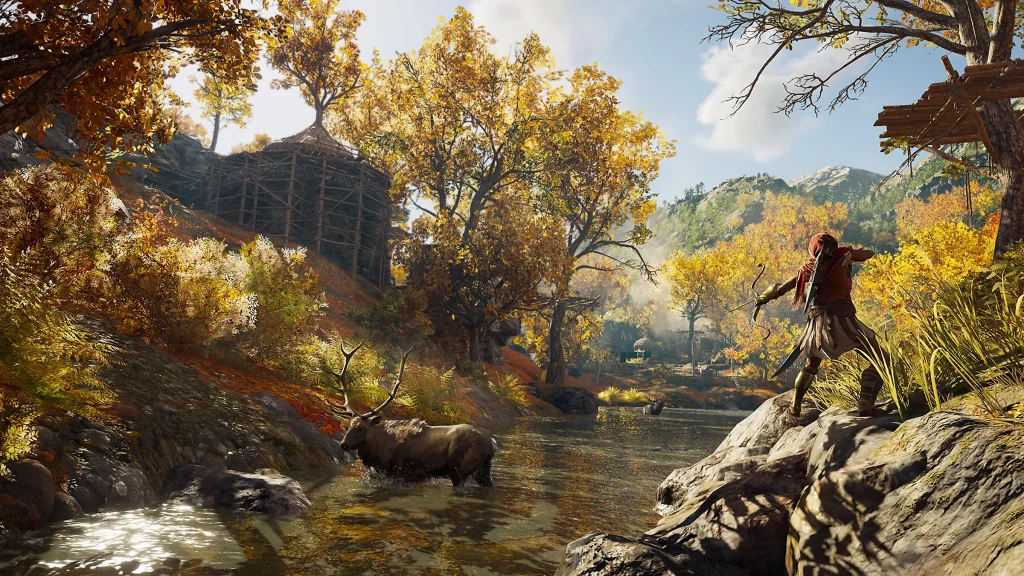
Quick Points
Yes, Assassin’s Creed Odyssey is worth playing. Its massive world, engaging story, and satisfying combat have aged remarkably well. Even years after release, it remains one of the best open-world adventures available, offering hours of exploration and a rich, rewarding experience for both new and returning players.