
Fallout has a very specific identity. It is not just a post-apocalyptic RPG with vaults and power armor. Fallout is defined by player freedom, systemic storytelling, moral ambiguity, and worlds that feel like they exist independently of the player. Those qualities are not exclusive to Fallout. They are part of Bethesda’s larger design philosophy, and they show up repeatedly across the studio’s other franchises.
From The Elder Scrolls to Starfield, Bethesda builds games around the same core ideas. The settings change. The tone shifts. The mechanics evolve. But the DNA remains recognizable. If you love Fallout, there is a strong chance you will find familiar ideas, systems, and feelings across Bethesda’s other worlds.
This article breaks down how Bethesda’s major franchises are similar to Fallout, not at a surface level, but in the way they are built, played, and experienced.
The Elder Scrolls and Fallout Share the Same Core Philosophy
At their heart, Fallout and The Elder Scrolls are built around the same player-first design approach. Both series drop you into a massive open world with minimal direction and trust you to decide who you want to be.
In Fallout, you might be a Vault Dweller trying to save a family member, a courier caught in a political conflict, or a survivor navigating a broken world. In The Elder Scrolls, you might be a prisoner turned hero, a wandering mercenary, or someone who never touches the main quest at all. In both cases, the game does not demand a specific path. It provides systems and lets the player define the experience.
Quest design reflects this philosophy. Fallout quests often allow multiple solutions, whether through combat, speech, stealth, or outright manipulation. The Elder Scrolls does the same thing, even if the consequences are sometimes quieter. You can talk your way through problems, ignore them entirely, or approach situations in unexpected ways. The freedom to solve problems creatively is a shared pillar.
Both series also rely heavily on environmental storytelling. Fallout tells stories through abandoned terminals, ruined homes, skeletons posed in darkly humorous scenes, and forgotten experiments. The Elder Scrolls uses books, ruins, collapsed forts, and subtle environmental details to tell similar stories. In both franchises, the world speaks even when no NPC is talking.
If you enjoy Fallout because it feels like a world you are uncovering rather than a story being handed to you, The Elder Scrolls delivers that same feeling in a fantasy setting.
Moral Ambiguity Is a Bethesda Signature
One of Fallout‘s defining traits is its refusal to give players clean answers. Factions are flawed. Leaders lie. Helping one group often hurts another. Even seemingly good choices can lead to unintended consequences.
This moral ambiguity exists throughout Bethesda’s other franchises. The Elder Scrolls rarely presents purely good or evil factions. The Empire and the Stormcloaks in Skyrim are both deeply compromised. Guilds like the Thieves Guild and Dark Brotherhood operate in morally gray spaces, and the player is never forced to judge them as right or wrong. You are simply allowed to participate.
Starfield continues this tradition by presenting factions that are politically motivated, self-interested, and often contradictory. Like Fallout, the games ask you to decide what matters to you rather than telling you what should matter.
Bethesda’s approach is not about punishing players for choices. It is about letting players live with them. Fallout players recognize this immediately because the series has always leaned into consequences that feel messy and realistic rather than heroic.
Starfield Feels Like Fallout’s Structure in a New Setting
Starfield may look different on the surface, but structurally, it feels very familiar to Fallout players. The moment-to-moment gameplay loop of exploration, looting, combat, and dialogue follows the same rhythm.
You arrive in a location. You investigate. You find side stories hidden off the main path. You uncover moral dilemmas that are not clearly labeled. You collect gear, modify equipment, and improve your character through perks rather than rigid classes. These systems mirror Fallout closely, even when the presentation is more grounded and less satirical.
Starfield‘s tone is different. Fallout uses dark humor and exaggerated Americana. Starfield leans toward realism and existential themes. But the player role is the same. You are a wanderer moving between factions, choosing who to align with, and deciding how much you care about the consequences of your actions.
Even base building and resource management echo Fallout 4‘s settlement system. While Starfield expands it in some areas and simplifies it in others, the idea of carving out a personal space in the world remains intact.
For Fallout fans who enjoy wandering, looting, tinkering, and slowly shaping a character over dozens of hours, Starfield feels like a natural extension of that experience rather than a departure.
Exploration Is Always the Point
Bethesda games are not built around linear progression. They are built around curiosity.
In Fallout, you rarely follow roads because the most interesting content is off the path. A random shack might hide a tragic story. A cave might lead to a powerful weapon. A ruined city might contain an entire side quest chain.
The same philosophy drives exploration in The Elder Scrolls and Starfield. Dungeons are not just combat spaces. They are narrative spaces. They reward players who wander, read, and pay attention.
Bethesda understands that players enjoy discovering things organically. Quest markers exist, but they are not the heart of the experience. The heart is the moment you find something unexpected and realize the game never forced you to be there.
This is a major reason Fallout fans often feel at home in Bethesda’s other franchises. The joy of exploration is shared across all of them.
Character Builds and Role-Playing Freedom
Fallout‘s perk system allows players to create wildly different characters. You can focus on combat, stealth, speech, crafting, or some strange hybrid that only makes sense to you. The game does not lock you into a rigid role.
The Elder Scrolls uses skills instead of perks, but the result is the same. Your character becomes defined by what you do rather than what you choose at the start. Starfield blends these approaches, offering backgrounds and traits while still allowing players to evolve freely.
This flexibility is a core Bethesda trait. Fallout players who enjoy replaying the game with different builds often find the same replay value in other Bethesda titles. Each run feels distinct because the systems support experimentation.
Role-playing is not enforced through dialogue choices alone. It is reinforced through mechanics. How you fight, how you explore, how you interact with NPCs, and what systems you engage with all shape your character.
A Focus on Systems Over Scripted Moments
Bethesda games are often criticized for lacking cinematic polish compared to more linear RPGs. That criticism misses the point. Bethesda prioritizes systems that interact in unpredictable ways over tightly scripted sequences.
Fallout excels at emergent gameplay. A random encounter can spiral into chaos. A fight can attract unexpected enemies. A decision made hours earlier can change how a quest resolves.
The Elder Scrolls and Starfield function the same way. The world reacts to you, sometimes imperfectly, sometimes hilariously, but often in ways that feel organic.
This systems-driven design is why Bethesda games feel so replayable. You are not just following a story. You are participating in a simulation that responds to your presence.
Tone Changes, Structure Stays the Same
What truly separates Bethesda’s franchises is tone, not structure.
Fallout is cynical, satirical, and often absurd. The Elder Scrolls is mythic, tragic, and steeped in history. Starfield is introspective, grounded, and focused on humanity’s place in the universe.
Despite those differences, the way you interact with these worlds remains consistent. You explore freely. You choose how to engage with factions. You build a character over time. You uncover stories rather than being dragged through them.
For Fallout fans, this consistency matters. It means that even when the setting changes dramatically, the underlying experience still feels familiar.
Closing Thoughts
Fallout is not an isolated success. It is part of a broader design philosophy that defines Bethesda as a studio. The same ideas that make Fallout compelling are present throughout Bethesda’s other franchises, even when the tone, mechanics, or setting change.
If you love Fallout for its freedom, exploration, moral complexity, and emergent storytelling, those same qualities exist in The Elder Scrolls and Starfield. They are not clones. They do not need to be. They are variations on a shared foundation that prioritizes player agency above all else.
Bethesda games are at their best when they trust players to get lost, make mistakes, and define their own stories. Fallout does this in a post-apocalyptic wasteland. The Elder Scrolls does it in a mythic fantasy world. Starfield does it across the stars.
Different worlds. Same philosophy. And for Fallout fans, that familiarity is exactly what makes Bethesda’s other franchises worth exploring.

About the Author
Robert Davis may be middle-aged now, but he has always enjoyed playing video games. Just like others may like to curl up with a good book, he just prefers a different medium for story-telling. Now that life is much busier, he has to be choosy about which games he spends time on. And that's why Delayed Respawnse exists, because he's not the only one.
View all posts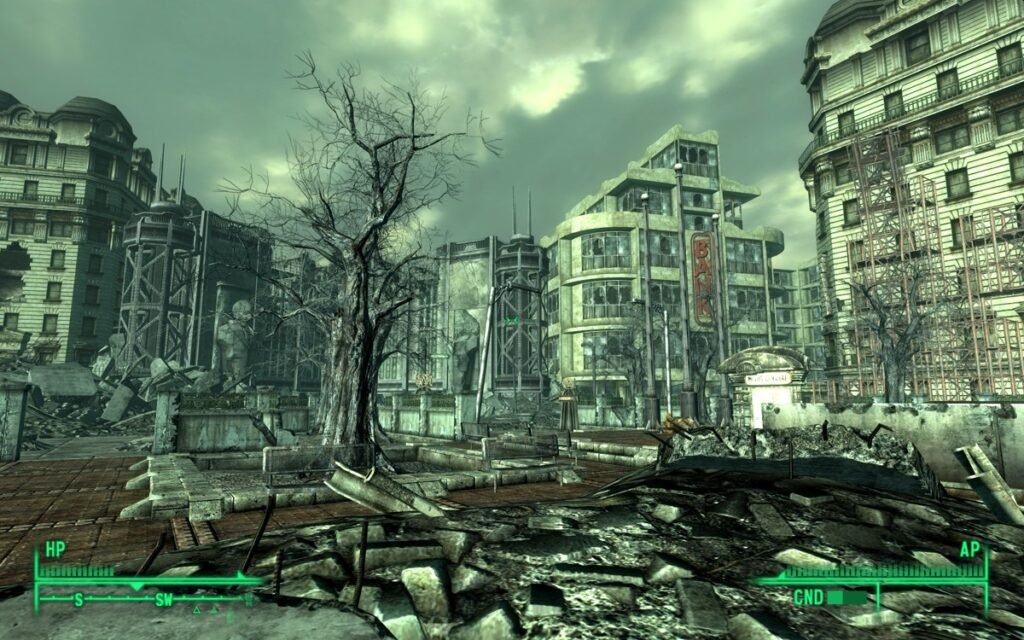
Quick Points
- Fallout and The Elder Scrolls share the same open-world design philosophy
- Starfield expands Fallout-style exploration into space
- Player choice and moral ambiguity define all major Bethesda franchises
- Environmental storytelling is a core strength across Bethesda games
- Fallout fans are already trained for Bethesda’s broader ecosystem