
If you’re staring at Breath of the Wild and Tears of the Kingdom and wondering if you should just skip straight to the newer one, here’s the short answer: it is not too late to play Breath of the Wild, but you should only do it if you want its specific kind of adventure. If your main goal is to play the best, biggest, most flexible version of this formula, play Tears of the Kingdom.
That is the honest time-saving answer.
Breath of the Wild is still excellent. It also still feels distinct. But Tears of the Kingdom builds on almost everything Breath of the Wild does, then adds more systems, more problem-solving tools, more story momentum, and more reasons to keep exploring after the first big wave of discovery wears off. For a busy adult, that matters. You do not just want a good game. You want the version most likely to keep feeling worth your evenings.
The catch is that Breath of the Wild’s sense of first-time wonder is hard to replace. Walking off the Great Plateau, spotting Hyrule Castle in the distance, getting distracted by a shrine, a stable, a Lynel, a dragon in the sky, and a weird rock formation all in one stretch, that still lands. It is one of the best opening hours in modern games. If you have never played it, it does not feel outdated in the usual way. It feels cleaner and more focused than its sequel.
So no, it is not too late. But yes, there is a right choice depending on how much time you actually have.
Why This Decision Matters More If You Have a Job, Kids, or Just Less Patience
These are huge games, and not just in map size. They are games built around drift. You head toward one objective, then spend 45 minutes climbing a mountain, helping a stable quest giver, fighting a Hinox, cooking food, and poking around a shrine you found by accident. That is part of the appeal. It is also exactly why the choice matters for busy players.
Breath of the Wild can absolutely eat your time in a good way early on, then start to feel repetitive if you keep pushing for full completion. The Divine Beast questlines are worth doing. Finding memories is worthwhile if you care about Zelda and the Champions. Hunting all 120 shrines is only worth it if you genuinely enjoy the shrine loop. Collecting all 900 Korok seeds is not worth your time. Not even close.
Tears of the Kingdom has the same danger, maybe even more, because it is denser and more system-heavy. But it also gives you more ways to make your own fun. Ultrahand, Fuse, Ascend, and Recall keep routine exploration from feeling stale for longer. In Breath of the Wild, once you understand the rhythm, the rhythm mostly stays the same. In Tears of the Kingdom, you have more room to improvise, break problems open, and move faster once you know what you’re doing.
If you only have time for one 100-hour open-world Zelda in your life, this is not a nostalgia question. It is a value question.
The Clear Recommendation: Which One Should You Actually Play?
Play Breath of the Wild first if you care about discovery more than systems
Breath of the Wild is worth your time because it delivers a cleaner, quieter version of this Hyrule. The Great Plateau tutorial is still masterful. Kakariko Village and Hateno Village do a great job of easing you into the world without feeling like a checklist. The Zora’s Domain path, with the constant rain and the buildup to Vah Ruta, is still one of the strongest regional questlines in either game.
The four Divine Beast questlines are straightforward, memorable, and manageable. Vah Ruta with Sidon is the standout. Vah Medoh with Teba is quick and efficient. Vah Rudania has good atmosphere even if the stealth section is not amazing. Vah Naboris is probably the best of the four mechanically, and the Gerudo Town section has real personality.
This game is especially worth playing if you want the feeling of being dropped into a ruined world and figuring it out with minimal clutter. It wastes less of your attention than Tears of the Kingdom. Menus are simpler. The world is less crowded. You spend less time fiddling with construction and more time just moving.
That simplicity is a real advantage if your gaming time comes in short bursts and you do not want to re-learn a bunch of systems every time you come back.
Play Tears of the Kingdom instead if you only have time for one
This is the recommendation I would give most people. Tears of the Kingdom is the better use of your time if you are choosing one game and moving on.
It has a stronger main quest structure. The Regional Phenomena arc gives you clearer momentum than the Divine Beasts did. The Rito questline with Tulin is excellent and starts the game strong. The Gerudo region has some of the best set-piece moments. The Hebra and sky island stretches are more memorable than most of Breath of the Wild’s midgame. The final run-up is also much better. It actually feels like a climax.
More importantly, the core systems stay interesting longer. Fuse makes combat loot matter more. Ascend cuts down on annoying climbing and backtracking. Ultrahand can be clunky, yes, but it also lets you solve travel and combat problems in ways Breath of the Wild simply cannot. Once you learn a few practical builds, a hover bike, a simple bridge, a fan cart, the game becomes much easier to fit into a busy schedule.
You can get more done in 30 minutes in Tears of the Kingdom. That counts for a lot.
Do not play both back-to-back unless you are really in the mood for Hyrule twice
This is where people waste time. They assume they need to do Breath of the Wild first because Tears of the Kingdom is the sequel. You do not. There is continuity, yes. You will recognize places, returning characters, and the broad emotional context around Zelda, Link, and Hyrule. But Tears of the Kingdom explains itself well enough.
Playing both in a row is where fatigue sets in. Same broad map. Similar shrine structure. Similar enemy camps. Similar survival-lite habits like cooking, weapon management, and climbing around for resources. Even though Tears of the Kingdom changes a lot, you will feel the overlap after dozens of hours.
If you have the appetite for two giant Zelda games, great. If not, pick one and feel good about it.
The Questlines and Systems That Are Actually Worth Your Time
In Breath of the Wild, prioritize the Great Plateau, Kakariko Village, Hateno Village, then at least two Divine Beasts. I would do Vah Ruta first and Vah Naboris second. Ruta gives you Mipha’s Grace, which is one of the most useful abilities in the game, especially if you do not want to lose progress to a dumb death. Naboris gives you Urbosa’s Fury, which stays useful for crowd control and tougher fights.
Do the Captured Memories quest if you care at all about story. It is one of the few places where Breath of the Wild gives Zelda real emotional presence. It also gives your wandering a stronger sense of purpose.
Unlock towers whenever they are convenient. Do shrines you naturally encounter. Visit stables because they often lead to useful side content, merchants, and easy rest points. Upgrade armor at Great Fairy Fountains when you can. That matters more than obsessing over weapon durability.
In Tears of the Kingdom, start with Lookout Landing, then do the Rito questline early. Tulin’s ability is a huge quality-of-life boost for traversal. After that, pick regions based on what sounds fun, but do not ignore the main quest for too long because the story reveals are better paced than in Breath of the Wild and the later main missions are genuinely worth seeing.
Also in Tears of the Kingdom, spend a little time learning Autobuild once you get it. Not because you need to become a machine-building genius, but because it saves time. A lot of time. This is one of those systems that feels optional until you realize it cuts friction out of the whole game.
What You Can Skip Without Missing Much
In Breath of the Wild, you can skip most shrine hunting once you have enough hearts and stamina to feel comfortable. If a shrine is right in front of you, great. If you are combing the map with a guide for the last 30, stop. That is where the game shifts from discovery to chores.
You can also skip most side quests that are just errands unless they point you toward something useful like armor, a fairy fountain, or a village chain with actual flavor. Tarrey Town is worth doing. It has personality, a sense of progression, and a nice payoff. Fetching ingredients for random NPCs because a journal says 42 percent complete is not.
Do not farm Korok seeds beyond what you need for weapon, bow, and shield slots. Hestu is useful. Completionism is not.
In Tears of the Kingdom, the same rule applies to Koroks, but even more strongly because there is so much else to do. You also do not need to spend hours in the Depths early unless you are enjoying the atmosphere and want Zonaite. The Depths are cool at first, then they can become a long stretch of gloom, mining, and repeated combat if you force it. Great in doses. Draining if binged.
You can skip a lot of Addison sign-holding puzzles too. Funny the first few times. Not worth turning into a job.
How To Play Breath of the Wild Efficiently If You Decide To Start There
Here is the practical route.
- Finish the Great Plateau properly. Do not rush it. It teaches the entire game better than most open-world tutorials.
- Go to Kakariko and Hateno early. This opens key story threads, shops, and the camera for the memory quest.
- Get a horse you like and actually use roads sometimes. Fast travel is great, but roads connect stables, NPCs, and low-stress discoveries.
- Prioritize towers, fairy fountains, and armor upgrades. These improve the whole game.
- Do Vah Ruta early. Mipha’s Grace makes the rest of the game smoother.
- Stop well before burnout. Once the world starts feeling familiar instead of exciting, head for Ganon or move on.
That last point is the big one. Breath of the Wild peaks early and midgame. The opening wonder is incredible. The middle is strong if you let yourself roam. The late game can flatten out because enemy variety is limited, shrines blur together, and the reward structure does not really escalate. You will feel this after a few dozen hours.
That does not ruin the game. It just means you should not treat it like a forever project unless you are still having fun.
Playing on Handheld Still Makes a Lot of Sense
This is one of the best arguments for both games, especially for busy adults. On Switch, both Breath of the Wild and Tears of the Kingdom work well in handheld mode because they are easy to dip into for 20 or 30 minutes. Clear a shrine. Hit a stable. Knock out a story objective. Gather materials while half-watching the house.
Breath of the Wild is a little better for short handheld sessions because it asks less of your brain when you come back after a day or two away. Tears of the Kingdom is still great portable, but if you leave off in the middle of a Zonai contraption plan or a layered cave-and-sky objective, there is a slightly higher chance you will spend the first five minutes remembering what you were doing.
That said, handheld play really helps both games because a lot of their best moments come from relaxed wandering, not intense focus. These are excellent couch, bed, or travel games. If your life does not leave room for long dedicated sessions, that portability matters more than graphics debates or frame rate complaints.
If You Only Have 20 Minutes, Do This
For Breath of the Wild, use short sessions for shrines, tower climbs, stable visits, and one clear travel goal. Do not start by aimlessly wandering unless you are specifically in the mood for that. Pick one thing. Reach Zora’s Domain. Unlock a tower. Find one memory location. Upgrade one armor set piece. The game feels much better in small doses when you give yourself a concrete target.
For Tears of the Kingdom, use short sessions for caves, side adventures near Lookout Landing, one shrine, or one chunk of a regional main quest. Also, save Autobuild favorites for common vehicles so you are not rebuilding from scratch every time.
If you only have 10 to 15 total hours for Breath of the Wild, do the Great Plateau, Kakariko, Hateno, Vah Ruta, one more Divine Beast, a handful of memories, then finish the game. That gives you the best version of it.
If you only have 10 to 15 total hours for Tears of the Kingdom, do the opening sky island, Lookout Landing, the Rito questline, a few shrines, one more regional arc, and follow the main quest. You will still get a much fuller sense of the game than you would from trying to sample everything.
So, Is It Too Late?
No. Breath of the Wild is still worth playing.
But it is only the right choice if you want its specific mood: quieter exploration, cleaner design, and that original lightning-bolt feeling of stepping into this version of Hyrule for the first time. That is real. It still works.
If you are trying to make the smartest use of limited gaming time, though, play Tears of the Kingdom. It is the more complete package, the more consistently surprising game, and the one more likely to hold your attention once the initial novelty settles.
My practical advice is simple. Play Breath of the Wild if you want to experience a landmark game and you are fine stopping after the best 20 to 40 hours. Play Tears of the Kingdom if you want one Zelda to carry you for a long while and feel worth the commitment.
Just do not force yourself to treat either one like homework. These games are at their best when they feel like adventure, not backlog management.

About the Author
Robert Davis may be middle-aged now, but he has always enjoyed playing video games. Just like others may like to curl up with a good book, he just prefers a different medium for story-telling. Now that life is much busier, he has to be choosy about which games he spends time on. And that's why Delayed Respawnse exists, because he's not the only one.
View all posts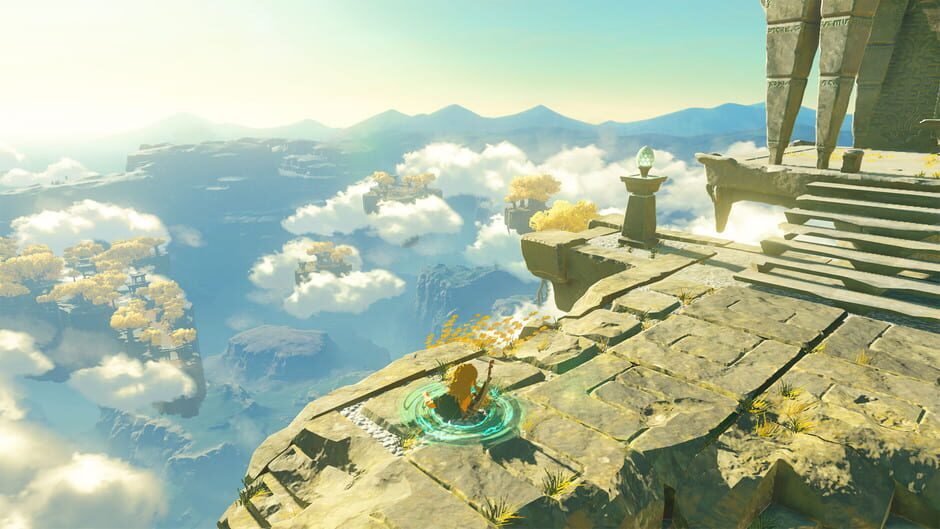
Quick Points
- If you only play one, play Tears of the Kingdom
- Play Breath of the Wild for its cleaner exploration and stronger first-time wonder
- Do not play both back-to-back unless you really want two giant Hyrule games
- In Breath of the Wild, prioritize Vah Ruta, memories, towers, and armor upgrades
- Skip Korok completion and late-game cleanup in both games