
Which NBA 2K Games Are Worth Playing?
If you’re trying to figure out which NBA 2K games are actually worth loading up in 2025, the answer is not “just play the newest…
NBA 2K20 leans into steady long-term progress with MyTeam, MyCareer, and a neighborhood loop that always gives you another small goal to chase. At the same time, full NBA games, quick street runs, and the WNBA teams make it easy to drop in for 20 minutes and still feel like you got something done.
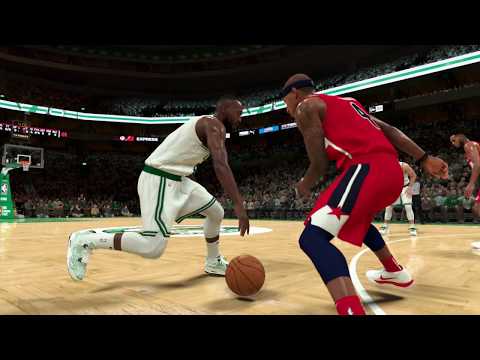
NBA 2K20 plays best when you treat each possession as its own small problem. Dribble moves, defensive positioning, shot timing, and passing angles all matter, so full NBA games have a steady rhythm instead of turning into constant end-to-end chaos. It rewards reading the floor, calling a simple pick, and taking the right look rather than forcing highlight plays every trip down.
That same control also makes short sessions useful. You can jump into a quick game, a street run, or a smaller mode and still get a satisfying slice of basketball because the basic play feels deliberate and readable from the first minute.
MyCareer is built around gradual improvement, with badge progression and attribute upgrades shaping how your player behaves on the court. A guard who leans into playmaking opens different lanes than one focused on shooting, and the game gives you a steady stream of goals that push you toward those strengths.
The Neighborhood ties that progress into a loop of games, upgrades, and small unlocks that rarely leaves you wondering what to do next. Even when you only have time for a couple of runs, there is usually a badge to work on, VC to earn, or one more step toward making your build feel sharper.
MyTeam adds a different kind of progression by turning roster building into an ongoing project. You collect cards, test lineups, and slowly refine a team that fits the way you like to play, which makes even brief sessions productive because every match can feed the next upgrade.
What helps NBA 2K20 stand out is how many ways it supports that mix of quick play and long-term investment. Standard NBA games sit next to street basketball, and the inclusion of WNBA teams gives you another clean, easy-to-enter option when you want competitive basketball without committing to a larger grind.
NBA 2K20 is easy to stick with because almost every mode feeds some kind of forward motion. MyCareer gives you a player who keeps improving through badges, attributes, and equipment, while MyTeam lets you slowly shape a roster that actually reflects your preferences instead of handing you a fixed path.
That matters if you like seeing results from regular play rather than waiting for one huge payoff. Even a modest session can earn VC, unlock something useful, or push a build one step closer to feeling right on the court.
One of the best reasons to play NBA 2K20 is how well it handles different amounts of free time. You can sit down for a full NBA game, jump into a few neighborhood runs, or pick the WNBA for a change of pace and still come away feeling like the time was well spent.
It is not a game that only comes alive after a long commitment. There is enough structure around each mode that 20 minutes can produce a clear result, whether that is a win, a challenge completed, or just a little more momentum for your next session.
NBA 2K20 stays worthwhile because it is not locked into a single version of basketball. Some nights it works as a slower, more deliberate five-on-five sim. Other times it is better as a quicker social sports game where you chase a few park wins and log off.
That flexibility keeps the game from becoming stale, especially if you do not want every session to demand the same mindset. It gives you room to treat basketball as a long-term hobby game or as a reliable drop-in option, without switching to something else just to get a different rhythm.
If you treat NBA 2K20 like a MyCareer-centered run, expect roughly 40 to 60 hours to get through the story framing, settle into an NBA season, and build your player into something dependable. Progress comes in chunks: cutscenes and early setup, then a loop of games, practice drills, badge growth, and neighborhood stops for upgrades and side activities.
A single session can be as short as 20 to 30 minutes if you play a street game, run drills, or handle menus and upgrades, while full NBA games usually push sessions closer to 35 to 50 minutes. That structure makes stopping points clear, since each game, practice, or upgrade visit feels like a natural checkpoint rather than part of one long uninterrupted campaign.
Seeing most of what NBA 2K20 offers can climb past 120 hours, and a fully completion-focused stretch can land anywhere from 250 to 300+ hours. The extra time comes less from a traditional checklist and more from layered progression: earning badges, improving attributes, collecting cards in MyTeam, chasing cosmetics, and playing through more of a season than the story strictly requires.
Replay value mostly comes from starting new builds, trying different positions and badge paths, and rotating between MyCareer, MyTeam, exhibition play, and WNBA games depending on your mood and available time. It works well if you want steady long-term progress, but it also supports short return visits where one game, one challenge, or one upgrade still feels meaningful.
Curious what NBA 2K20 is all about? The trailer gives you a great first look at the world, the vibe, and the kind of story you're stepping into.
These videos give some tips and pointers on getting started with NBA 2K20
Want to see what NBA 2K20 actually looks like in-game? These screenshots will hopefully give you a feel for what the world of NBA 2K20 is like.
Yes. You can play with all 12 WNBA teams in Play Now and season-style options, which adds a useful extra set of teams if you want something outside the standard NBA setup. It is a separate menu option rather than something deeply tied into MyCareer.
Yes, but some major features are reduced or unavailable without an internet connection. Local exhibition play and some offline modes work fine, while online neighborhoods, competitive multiplayer, and parts of the live-service economy depend on servers. If you mainly want solo basketball, it still has value, but online support matters for the full package.
It supports local multiplayer for standard couch games and online multiplayer across several modes. You can play regular head-to-head matchups, jump into neighborhood street games, or build lineups for online MyTeam competition. It is better thought of as a mix of quick competitive matches and shared social spaces than a traditional co-op campaign.
It can be approachable if you stick to simpler modes first and let the controls settle in over a few games. The sport itself is easy to understand at a basic level, but timing shots, reading defenses, and using advanced dribble tools take practice. Lower difficulty settings and straightforward team play help a lot early on.
It uses both. Regular games, team management, and many standard options are menu-based, while The Neighborhood acts as a social hub where you move your player between shops, courts, and activities. That setup gives it a more lived-in feel, but it also means a bit more walking and menu hopping than a purely streamlined sports game.
Great games dont have an expiration date. Take our quiz and we will find you the perfect game.
Take the QuizSome of the links on this site are Amazon affiliate links, which means if you click through and make a purchase, I may earn a small commission—at no extra cost to you. It’s a simple way to help support the site and keep the game recommendations coming. Thanks for your support!