
Starfield gets dragged online like it personally insulted half the internet. If you only see clips, tweets, and Reddit threads, you could easily come away thinking it is a complete waste of time. I don’t think that’s true. I do think the backlash matters a little, because a lot of it is reacting to real problems. But if you are a busy adult trying to figure out whether this thing deserves 20, 40, or 80 hours of your life, the internet’s pile-on is not the part that matters most.
What matters is whether Starfield gives you enough good hours before the repetition, loading, menu hopping, and flat exploration start wearing you down.
Having played a lot of it, here’s the simple version. Starfield is not a great all-purpose sandbox in the way Skyrim was for a lot of people. It is much better when treated like a quest-and-faction RPG with a decent ship loop attached. If you go in expecting endless organic discovery, you will feel the seams fast. If you go in wanting a Bethesda game where you pick the best questlines, build a solid ship, and ignore the filler, it becomes much easier to recommend.
So no, the hate does not fully matter. But the criticism does. You should use it to play smarter, not to write the game off automatically.
Why This Matters If Your Gaming Time Is Already Limited
Starfield is exactly the kind of game that can waste your time if you play it the wrong way.
It starts with promise. You get the ship, you jump between systems, New Atlantis feels huge, and there is that familiar Bethesda feeling that maybe anything could happen if you just pick a direction. For the first several hours, that works. Then the pattern becomes obvious. A lot of travel is menu-based. A lot of planets are broad spaces with not much worth seeing between points of interest. A lot of outposts and caves start to blur together. You will feel this after a few hours.
That is why the online hate has stuck around. People were not just being dramatic. Many were reacting to the gap between what the game looks like it offers and what it actually delivers over time.
For busy players, that gap is a big deal. You do not have the luxury of spending ten hours waiting for a game to become itself. You need to know where the good stuff is, what systems are worth engaging with, and what can be safely ignored.
Starfield does have good stuff. Quite a bit, actually. It just does not surface it well, and it surrounds it with a lot of busywork.
The Questlines That Are Actually Worth Your Time
Join the UC Vanguard early
If you play Starfield, do the UC Vanguard questline. This is the easiest recommendation in the game.
It starts in New Atlantis and quickly becomes one of the strongest arcs Starfield has. It gives you better context for the Settled Systems than the main story does, and it has actual momentum. There is a strong setup, clear stakes, and some missions that feel handcrafted instead of assembled from the game’s procedural parts bin.
It also helps that the Vanguard line does a better job than most of the game at making the world feel like a place with history. You get politics, military structure, and a real sense of what people are afraid of. It is one of the few times Starfield feels focused.
This is worth your time because it gives you strong missions early and makes the universe more interesting. If you only do one major faction line, make it this one.
The Freestar Rangers are decent, but not essential
The Freestar Rangers questline is fine. That sounds harsher than I mean it to, but fine is the right word.
Akila City has personality, and the Rangers setup is appealing if you like the space western angle. There are a few good beats here, and it is more enjoyable if you already like the Freestar Collective vibe. But it never hits the same level as UC Vanguard. The pacing is less consistent, and the payoff is not as strong.
Only do this early if the cowboy-in-space thing really works for you. Otherwise, it is a second-tier recommendation.
Ryujin Industries is worth doing if you like stealth and corporate nonsense
Ryujin, based in Neon, is one of the more divisive questlines. I liked parts of it more than I expected, mostly because it commits to its corporate espionage angle. Sneaking through offices, manipulating competitors, and dealing with boardroom politics is at least different from another abandoned facility shootout.
That said, if you hate stealth in Bethesda games, skip it. Do not force it. Starfield’s stealth can be fiddly, and some of these missions are more annoying than clever.
This one is only worth doing if you want a change of pace from combat and enjoy the idea of playing a fixer in Neon. If not, move on.
The Crimson Fleet and SysDef line is worth seeing through
The UC SysDef and Crimson Fleet arc is one of the better uses of Starfield’s faction setup. Infiltration, divided loyalties, and the chance to spend time around the rougher side of the Settled Systems give it more flavor than a lot of the game’s one-off side content.
The key thing here is that this questline has identity. The Key feels different from New Atlantis. The Fleet has actual attitude. It is not subtle, but at least it is memorable.
This is worth your time because it breaks up the clean, bureaucratic feel that dominates parts of Starfield. If you want one faction line besides Vanguard, pick this over Freestar.
The main story is mixed, and you should treat it that way
The main Constellation questline is not the best thing in the game. It has moments. It also has long stretches where you are just chasing artifacts and temples in a loop that gets old way too fast.
Constellation itself is part of the problem. Compared with the Dark Brotherhood, the Thieves Guild, or even Fallout 4’s stronger faction personalities, this crew is just not that compelling. They are functional. Rarely more than that.
I would not tell you to skip the main story entirely, because some later ideas are interesting and it does unlock systems and context that matter. But I would absolutely tell you not to mainline it expecting the best content. Dip in and out. Use it as a spine, not the whole meal.
What You Can Skip Without Missing Much
This is where Starfield becomes much easier to like. Once you stop trying to do everything, the game improves.
Skip random planet surveying unless you genuinely love it
Surveying planets is one of those systems that sounds relaxing on paper. In practice, it is often a lot of jogging, scanning, and checking menus for a payout that rarely feels worth the time.
If you are the kind of player who likes low-pressure completion tasks while listening to a podcast, maybe this works for you. For most people with limited time, it is not a good use of an evening.
You can skip this because the game does not reward it with enough interesting discoveries often enough.
Deprioritize outpost building
Outposts are classic Bethesda side-system bait. You can spend hours setting them up, linking resources, and trying to make the whole thing useful. The problem is that Starfield never makes this loop feel essential unless you personally enjoy base-building for its own sake.
This is not Fallout 4 settlement building, where the fantasy was at least tied tightly to the world. In Starfield, outposts often feel detached from the best parts of the game.
Skip this unless you really enjoy optimization and logistics. If your question is whether it is worth your limited time for practical progression, the answer is no.
Do not chase every procedural point of interest
This is probably the biggest trap in the game. You land on a planet, see structures in the distance, and think maybe there is a cool story over there. Sometimes there is a decent combat encounter or a useful loot stop. Too often, though, you are walking into another recycled lab, mine, or outpost with familiar layouts and thin rewards.
You can lose a shocking amount of time doing this.
If you want handcrafted content, stick to faction missions, city side quests in New Atlantis, Akila, Neon, and Cydonia, and a few companion-related threads. Random wandering is much less rewarding here than in older Bethesda games.
How To Play Starfield Efficiently Without Burning Out
The best way to approach Starfield is to be selective from the start.
- Pick one faction line early. UC Vanguard is the best choice.
- Use the main story in small doses. Do a few Constellation missions, then switch back to stronger side content.
- Stay near major cities when looking for side quests. Neon, New Atlantis, Akila City, and Cydonia have the densest concentration of worthwhile content.
- Upgrade your ship enough to stay comfortable, not perfect. Ship building can become a time sink fast.
- Ignore systems you are not enjoying. Starfield does not suddenly transform because you forced yourself to mine more resources.
That last point matters. A lot of the game’s reputation problems come from people insisting on engaging with every system because Bethesda games trained us to do that. In Starfield, that is a mistake. This is a buffet game, not a clean-your-plate game.
Also, be realistic about ship building. It is fun. It is also a black hole for time. If you love tinkering, go for it. If not, make a functional ship with enough cargo, decent shields, and weapons you like, then stop. You do not need to become a part-time aerospace engineer to enjoy the better missions.
Playing Starfield on Handhelds Can Work Better Than You’d Think


Starfield is oddly well suited to handheld play if your expectations are in check. Not because it runs perfectly everywhere, and not because it suddenly becomes a different game, but because its structure is already chopped into short tasks. Fast travel to a city. Talk to two people. Clear a facility. Sell junk. Log off.
That loop works better on a handheld than a giant, uninterrupted three-hour session where the game’s pacing issues become more obvious.
If you are using a handheld PC, streaming, or playing in shorter couch sessions, Starfield can actually feel more manageable. The stop-start nature that annoys people on a big screen can become a strength when you are fitting play around work, kids, or just being tired at the end of the day.
The caveat is obvious. Performance and interface friction matter more on a handheld. Menus are a huge part of Starfield, and they are not exactly elegant. If text size, inventory management, or battery drain are already pain points for you, those issues will not disappear.
Still, this is one of those games that can benefit from a lower-pressure format. Do a mission, tweak your loadout, maybe decorate a ship compartment if that is your thing, then put it down. That rhythm suits Starfield.
If You Only Have 20 Minutes, Do This
If your gaming life is mostly made of short windows, Starfield can still work. You just need to stop pretending every session should be a grand adventure.
In a 20-minute session, do one of these:
- Advance a city-based side quest. Neon and New Atlantis are especially good for this.
- Run one UC Vanguard mission step. These are often cleanly segmented.
- Sell gear, clear inventory, and set your next destination. Boring, but useful.
- Do one ship upgrade pass. One pass, not a full redesign.
- Handle one Constellation objective if it is nearby. Do not start a long chain unless you have more time.
What you should not do in a short session is roam a random planet hoping for magic. That is how you spend half your time jogging across empty terrain and the other half wondering why you booted the game up in the first place.
So Does The Hate Actually Matter?
Yes and no.
It matters because Starfield really does have structural problems. Exploration is less rewarding than people wanted. Too much of the game depends on fast travel and menus. The procedural content gets repetitive. The opening sells a fantasy the rest of the game only sometimes supports.
But the hate does not matter if it convinces you the game has nothing worthwhile in it. That is just wrong.
There is a solid 30 to 50-hour version of Starfield that I would recommend to the right person without much hesitation. It includes UC Vanguard, the Crimson Fleet or Ryujin depending on your taste, a measured amount of main story, some city side quests, and enough ship customization to make space travel feel like yours. That version is good. Not amazing. Not genre-defining. But good, and often enjoyable in a relaxed, after-work way.
The 100-plus-hour version where you try to see every planet, build elaborate outposts, scan wildlife across the galaxy, and chase every procedural icon? That version is where a lot of the online resentment comes from. I do not recommend that version unless you are already all-in on Starfield’s specific flavor of busywork.
So if you are wondering whether the internet’s hatred should stop you, my answer is simple. No. Let it warn you, not decide for you.
Play it like a curated RPG, not a limitless space sim. Prioritize the faction content. Skip the filler. Be ruthless with your time.
Do that, and Starfield stops being a disappointing forever game and becomes something much more useful for busy adults. A pretty good one.

About the Author
Robert Davis may be middle-aged now, but he has always enjoyed playing video games. Just like others may like to curl up with a good book, he just prefers a different medium for story-telling. Now that life is much busier, he has to be choosy about which games he spends time on. And that's why Delayed Respawnse exists, because he's not the only one.
View all posts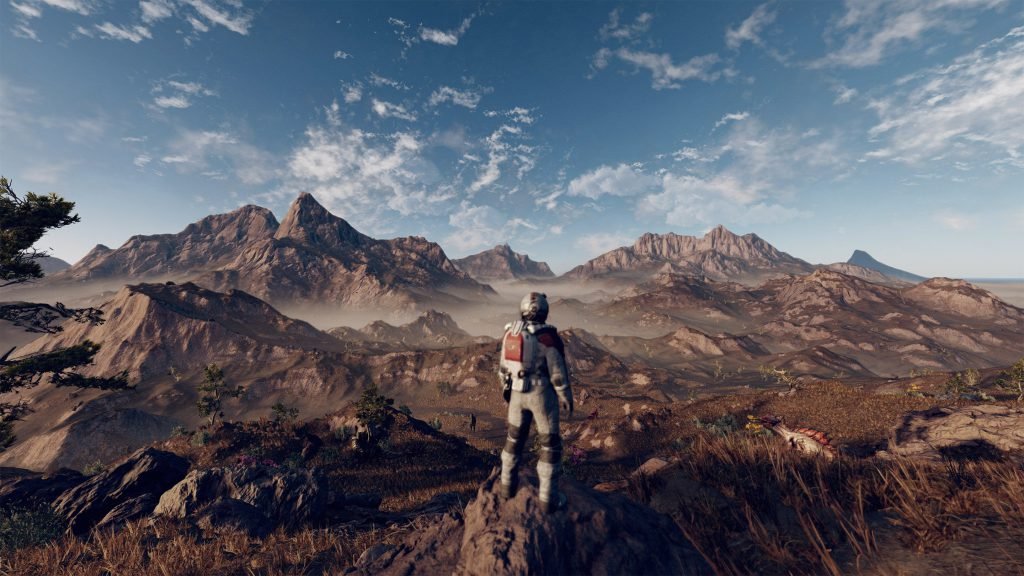
Quick Points
- Do UC Vanguard early. It is the strongest questline in the game.
- Treat Starfield like a curated RPG, not an endless exploration sandbox.
- Skip surveying and outposts unless you already know you enjoy those loops.
- Use the main story in small doses. Do not mainline it expecting the best content.
- Short sessions work well if you stick to city quests, faction steps, and ship upkeep.