
Cyberpunk 2077 was more than just another RPG release. For many players, it was a world that asked big questions about technology, identity, and humanity, while wrapping those ideas in neon-lit streets, dangerous characters, and a story full of choices. Its combination of open-world exploration, branching dialogue, and cyberpunk atmosphere made Night City a place players wanted to live in – even after the main story was over.
But what do you do when you’ve seen every ending, romanced every character, and finished Phantom Liberty? The itch for story-driven sci-fi doesn’t go away easily. That’s where other games come in – titles that may not be exact copies of Cyberpunk but capture parts of its DNA, whether through worldbuilding, moral dilemmas, or technology-driven narratives.
The last few years have delivered some excellent options. From sprawling space operas to intimate stories of survival, these games tap into what made Cyberpunk 2077 so memorable.
What Makes a Game “Like Cyberpunk”?
Not every sci-fi game fits the mold. To resonate with Cyberpunk fans, a game usually needs at least one of these qualities:
- Identity and Technology: Questions about who we are in a high-tech world, often through implants, AI, or altered selves.
- Moral Choice and Consequence: Decisions that ripple through the story, shaping relationships and outcomes.
- Rich Worldbuilding: A setting that feels alive, whether it’s a city, a frontier, or a post-apocalyptic wasteland.
- Character-Driven Narratives: Memorable NPCs with depth, not just quest-givers.
- Atmosphere: Whether neon urban sprawl or desolate ruins, the environment itself tells a story.
The games below all share at least some of these traits, making them strong recommendations for anyone chasing that Cyberpunk energy.
1. Starfield (2023)
Bethesda’s space RPG may not be neon-drenched like Cyberpunk, but it offers the same sense of freedom and moral ambiguity – only on a galactic scale. Starfield invites you to carve your own path in a universe of factions, pirates, scientists, and settlers.
Story and Worldbuilding:The storylines are packed with choices. Do you side with the Freestar Collective or the United Colonies? Will you take missions for shady smugglers, or pledge yourself to science and exploration? Like Cyberpunk, Starfield thrives on gray morality, where no decision feels entirely right.
Gameplay and Exploration:Character customization goes deep, letting you shape skills, perks, and your very ship. Combat is first-person or third-person, with guns, melee, and jetpacks all in the mix. Exploration takes center stage – planets, stations, and settlements stretch across the galaxy, each with its own atmosphere.
Why it feels like Cyberpunk 2077:
- Huge, interconnected worlds to explore.
- Stories driven by moral choices and consequences.
- Factions that echo Cyberpunk’s gangs and corporations.
Where it’s different:
- Much broader in scope, with hundreds of planets instead of one dense city.
- Sometimes quantity overshadows the depth of smaller stories.
- Atmosphere leans toward frontier space rather than neon dystopia.
Time commitment:Starfield can easily stretch beyond 100 hours, especially with mods. Best for players who loved Cyberpunk’s sense of freedom and choice, but want it writ large in a space opera.
2. Horizon Forbidden West (2022)
At first glance, Horizon may seem too tribal and natural to compare to Cyberpunk. But its story is deeply sci-fi, with a ruined Earth dominated by machines and secrets of advanced technology.
Story and Worldbuilding:Aloy’s journey continues in a narrative full of mystery, factions, and the remnants of ancient tech. The game’s heart is in exploring humanity’s adaptation to a machine-filled world, much like Cyberpunk examines humans adapting to corporations and implants.
Gameplay and Exploration:Combat blends melee with ranged weapons, often against towering mechanical beasts. Exploration spans deserts, forests, ruins, and futuristic vaults. Side quests flesh out characters and add personal stakes to the main arc.
Why it feels like Cyberpunk 2077:
- Rich lore explaining how humanity and tech intertwine.
- Strong character development for both Aloy and her allies.
- Stunning visuals and cinematic cutscenes.
Where it’s different:
- Themes focus on nature versus machines rather than corporations versus humanity.
- Story arcs are more linear, with fewer branching choices.
- Environments are diverse wilderness rather than neon sprawl.
Time commitment:The main story runs 30-50 hours, but completionists can double that. Best for players who loved Cyberpunk’s emotional arcs and rich lore, but who want a fresher take on how technology reshapes society.
3. The Alters (2025)
The Alters is smaller in scope but huge in ideas. It’s a survival narrative where you play as Jan, stranded on a hostile planet. To survive, you create “alters” – alternate versions of yourself based on different life choices.
Story and Worldbuilding:The game’s emotional weight comes from conversations with these other versions of yourself. What if you had chosen another career? Another path in life? Each alter represents a road not taken, and together they form a cast as rich as Cyberpunk’s companions.
Gameplay and Exploration:While survival and resource management anchor the gameplay, the real draw is decision-making. Every alter brings new abilities and perspectives, but also tensions. Managing relationships and keeping everyone alive is as crucial as keeping your base supplied.
Why it feels like Cyberpunk 2077:
- Explores identity and choice at its core.
- Deeply psychological and morally layered.
- Characters with distinct voices and consequences.
Where it’s different:
- A quieter, more survival-oriented experience.
- Smaller scope, focused on one planet rather than sprawling worlds.
- Less action, more philosophy.
Time commitment:Roughly 20-30 hours. Best for players who loved Cyberpunk’s exploration of identity and consequence, and who want a more intimate, reflective journey.
4. Metal Eden (2025)
If what you loved most about Cyberpunk was the adrenaline – combat, augmentations, and conspiracies – Metal Eden might be the closest match. It’s set in a decaying future where humans push the limits of cybernetics to survive.
Story and Worldbuilding:The game’s narrative is packed with conspiracies, betrayals, and questions about what happens when the human body is no longer human. It’s less about grand philosophy and more about survival in a brutal, collapsing society.
Gameplay and Exploration:This is where Metal Eden shines. Combat is fast and fluid, with augmentations changing how you fight and move. The environments are dense, urban, and hostile, echoing the danger of Night City.
Why it feels like Cyberpunk 2077:
- Augmentations and body-machine fusion as core mechanics.
- Fast-paced combat with a cyberpunk aesthetic.
- A dark, conspiracy-filled world.
Where it’s different:
- Heavier focus on FPS action than RPG choice.
- More linear missions instead of open exploration.
- Narrative is strong but doesn’t offer Cyberpunk’s breadth of freedom.
Time commitment:Expect 25-40 hours. Best for players who want Cyberpunk’s energy condensed into tighter, combat-driven gameplay.
5. MindsEye (2025)
MindsEye is almost a spiritual cousin to Cyberpunk 2077. It doubles down on neural implants, corrupted corporations, and the fragility of identity. While it doesn’t have the polish of Cyberpunk, its ideas resonate strongly.
Story and Worldbuilding:You wake with altered memories, tangled in conspiracies and experiments. The story leans heavily into corruption, identity, and what it means to be human when your mind is not entirely your own.
Gameplay and Exploration:MindsEye is more linear, focusing on cinematic storytelling and episodic progression. While the environments are urban and dystopian, the freedom to explore is more limited.
Why it feels like Cyberpunk 2077:
- Memory loss and implants driving the story.
- Urban corruption and experimental science.
- Heavy emphasis on cinematic, story-first gameplay.
Where it’s different:
- More linear structure, with less player choice.
- Reviews note uneven pacing and polish.
- Shorter and more focused.
Time commitment:15-25 hours. Best for players who loved Cyberpunk’s implants-and-identity themes most of all, and don’t mind a narrower, more directed ride.
Final Thoughts
Each of these games captures a piece of what made Cyberpunk 2077 special:
- For freedom and exploration: Starfield takes Cyberpunk’s choices and stretches them across a galaxy.
- For lore and emotion: Horizon Forbidden West gives you character-driven storytelling with a unique take on humanity’s relationship with technology.
- For philosophy and identity: The Alters digs into what it means to be human through intimate, character-driven survival.
- For action and augmentation: Metal Eden delivers adrenaline and cyberpunk grit through fast-paced combat.
- For cinematic storytelling: MindsEye taps directly into Cyberpunk’s themes of implants, memory, and corruption.
Whether you’re looking for another massive open world or a smaller but equally thought-provoking narrative, there’s something here to keep you hooked long after your time in Night City is over.

About the Author
Robert Davis may be middle-aged now, but he has always enjoyed playing video games. Just like others may like to curl up with a good book, he just prefers a different medium for story-telling. Now that life is much busier, he has to be choosy about which games he spends time on. And that's why Delayed Respawnse exists, because he's not the only one.
View all posts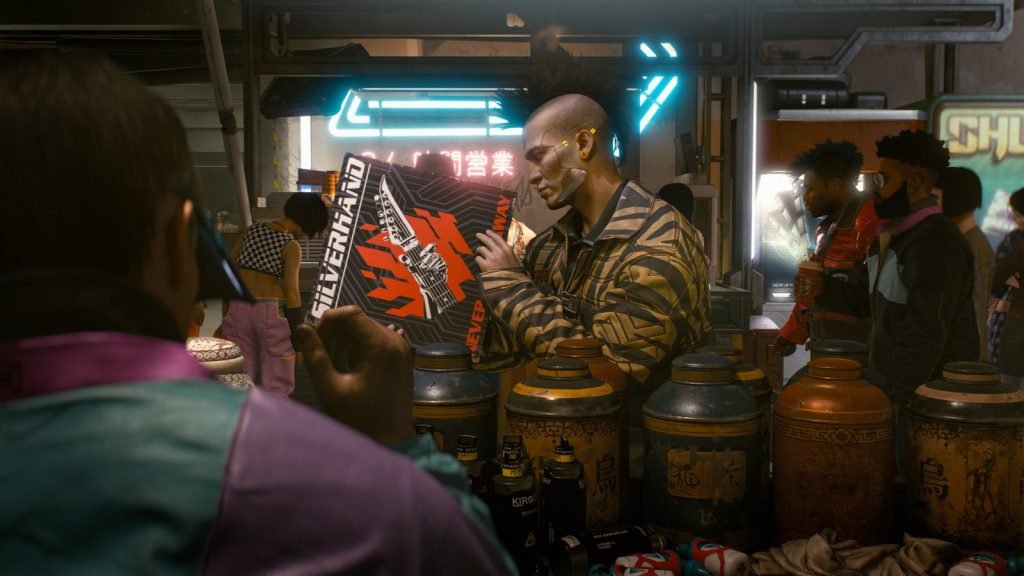
Quick Points
- Starfield (2023): Massive space RPG with moral choices.
- Horizon Forbidden West (2022): Post-apocalyptic sci-fi.
- The Alters (2025): Survival story about identity.
- Metal Eden (2025): Fast-paced cyberpunk FPS.
- MindsEye (2025): Narrative-driven dystopia.