
When Bethesda first revealed Starfield, it was billed as the studio’s most ambitious project yet. Bethesda has always been known for sprawling open world RPGs like Skyrim and Fallout 4, but this time, instead of a single world, the team set its sights on an entire galaxy. The game took nearly a decade to develop, and anticipation was sky-high among fans eager to see how Bethesda would translate its signature formula into space.
Now that Starfield is here, players know it carries both the strengths and quirks of Bethesda’s design style. It delivers enormous freedom, endless exploration, and deep customization, all within a universe that feels ripe for discovery. But it also comes with the kind of systems and mechanics that reward patience and a willingness to sink dozens, if not hundreds, of hours into it.
If you’re wondering what Starfield truly has to offer, here are five major things you can expect when diving into Bethesda’s latest adventure.
1. A Galaxy of Exploration
Exploration is at the core of Starfield, and it’s the feature that sets it apart from Bethesda’s earlier RPGs. Instead of a single continent or wasteland, players can visit over a thousand planets across multiple star systems. Some of these planets are bustling hubs filled with quests, factions, and characters, while others are barren worlds that serve as resource-rich outposts or quiet places for exploration.
The handcrafted cities stand out as some of the most detailed Bethesda has ever built. New Atlantis is the gleaming capital of the United Colonies, filled with towering skyscrapers, NPCs going about their routines, and faction leaders who can draw you into political intrigue. Neon, by contrast, is a neon-soaked den of vice built on a fishing platform, a place where illegal substances and shady deals drive the local economy. Each of these hubs feels unique, and they give Starfield more personality than simply visiting planet after planet.
Procedurally generated worlds fill in the gaps, providing variety and scale that few games can match. While not every planet is equally rewarding, the sheer sense of scope is undeniable. You can land anywhere on a world, step out of your ship, and explore at your own pace. Sometimes you stumble into hostile outposts, other times you find hidden resources or random events. The unpredictability keeps exploration exciting.
- Expect: Hundreds of hours of wandering across handcrafted hubs and procedurally generated planets
- What Makes It Special: Scale that dwarfs almost every other RPG to date
- Time Commitment: 50-100 hours for the story, hundreds more for full exploration
2. Deep Customization and Role-Playing
Bethesda’s reputation for role-playing freedom is on full display in Starfield. From the very start, you’re asked to define who your character is – not just how they look, but also their backstory and traits. Do you want to play as a diplomat with extra persuasion options, a gangster who knows the criminal underworld, or an explorer with a knack for science? These decisions affect the dialogue you see and how factions or NPCs respond to you, giving each playthrough its own flavor.
Spaceship customization is just as robust. Ships are more than just fast-travel tools; they’re personal expressions of playstyle. You can buy, upgrade, and even build ships piece by piece, choosing engines, cockpits, weapons, and cargo bays. Some players will design nimble fighters perfect for space combat, while others will construct massive freighters ideal for hauling resources across the galaxy. The visual creativity in shipbuilding has already led to fan-made recreations of famous vessels from Star Wars and other sci-fi universes.
This level of customization extends to gear and skills as well. Weapons can be modded for different playstyles, from stealth assassinations to heavy firepower. Skill trees let you specialize in combat, science, social abilities, or piloting, ensuring that no two players’ characters feel quite the same.
- Expect: A wide range of role-playing choices, from traits and backgrounds to ship design
- What Makes It Special: Every decision makes your character feel unique to you
- Time Commitment: Dozens of hours fine-tuning builds, gear, and ship layouts
3. Factions and Player Choice
Bethesda has always been at its best when it comes to factions, and Starfield is no exception. Whether you want to enforce law and order or embrace the life of a space pirate, there’s a faction waiting for you. The United Colonies represent a structured, militaristic government, while the Crimson Fleet is a notorious band of pirates. The Freestar Collective appeals to those who value independence, and corporate powers like Ryujin Industries offer morally gray quests that test your loyalty.
Each faction comes with its own storyline, complete with unique missions, rewards, and decisions that can influence the galaxy. Joining them isn’t mutually exclusive, so you can sample multiple arcs during a single playthrough. These quests add replayability, since choices can lead to different outcomes depending on who you side with and how you handle their missions.
Choices extend beyond factions too. Conversations often feature persuasion checks, allowing you to talk your way out of fights or gain extra rewards. Companions react to your behavior, approving or disapproving of your decisions, which can affect your relationships with them. The result is a web of branching possibilities that makes every playthrough feel slightly different.
- Expect: Multiple factions with deep questlines and branching choices
- What Makes It Special: Alignments that shape your story without locking you into one path
- Time Commitment: 20-40 hours for major faction arcs
4. Combat and Progression Systems
Combat in Starfield blends first-person shooting with RPG progression. Gunplay is tighter than past Bethesda titles, offering a wide range of weapons – pistols, rifles, shotguns, energy weapons – each of which can be upgraded with attachments to match your preferred playstyle. You might build a stealthy assassin who picks enemies off from the shadows, or a tank-like soldier who storms into firefights with heavy armor and explosives.
Space combat introduces a completely different layer. Dogfighting in orbit requires balancing power between weapons, shields, and engines, while maneuvering your ship for tactical advantage. It’s not as complex as a dedicated flight simulator, but it adds enough depth to keep encounters exciting. Many players find themselves spending as much time upgrading their ships for space battles as they do tweaking their weapons for ground combat.
Progression ties it all together. Skills are unlocked by leveling up and then improved by completing specific challenges. For example, upgrading your stealth skill requires successfully pulling off stealth takedowns. This system rewards players for practicing the abilities they want to specialize in.
- Expect: A hybrid of responsive shooting, space combat, and skill-driven RPG mechanics
- What Makes It Special: Customizable builds that reward experimentation and mastery
- Time Commitment: Hundreds of hours for players who enjoy refining combat and progression
5. A Classic Bethesda RPG at Heart
Despite all the new features, Starfield still feels unmistakably like a Bethesda RPG. It has the freedom, the emergent systems, and yes, the quirks that longtime fans expect. You can pick up nearly every object in the world, stumble into random events, or find side quests hidden in seemingly ordinary conversations. That sense of unpredictability is what makes Bethesda games so replayable.
Companions are another classic feature. Characters like Sarah Morgan, Sam Coe, and Andreja can join your crew, fight alongside you, and comment on your decisions. These companions add both personality and strategy, as their loyalty can be gained or lost depending on how you act.
Players should also expect the trademark Bethesda bugs. While Starfield is polished compared to the infamously buggy launch of Skyrim, it still has its share of oddities. Yet for many fans, those quirks are part of the charm – reminders of the sheer complexity of Bethesda’s open worlds.
At its core, Starfield is Skyrim in space. It offers that same blend of freedom, role-playing, and exploration, but now on a galactic scale.
- Expect: Familiar Bethesda DNA with ambitious new systems
- What Makes It Special: Freedom to approach the galaxy however you want
- Time Commitment: Potentially endless, depending on how much you explore
Final Thoughts
Starfield is Bethesda’s boldest game to date. It combines the freedom and emergent gameplay of past titles with a galaxy-spanning scope that few other RPGs can match. For some players, the sheer size may feel overwhelming, and not every planet offers equally rewarding content. But for those willing to invest the time, it offers a universe full of discovery and customization.
What sets Starfield apart is the way it balances scale with detail. Handcrafted cities anchor the narrative, factions provide meaningful arcs, and systems like shipbuilding and space combat make the universe feel alive. At the same time, the game invites players to lose themselves in exploration, mining resources, discovering secrets, and shaping their own story.
If you loved Skyrim or Fallout, you’ll find familiar DNA here, but wrapped in a package that feels both futuristic and ambitious. While it may not be flawless, Starfield stands as a milestone in open world RPG design.

About the Author
Robert Davis may be middle-aged now, but he has always enjoyed playing video games. Just like others may like to curl up with a good book, he just prefers a different medium for story-telling. Now that life is much busier, he has to be choosy about which games he spends time on. And that's why Delayed Respawnse exists, because he's not the only one.
View all posts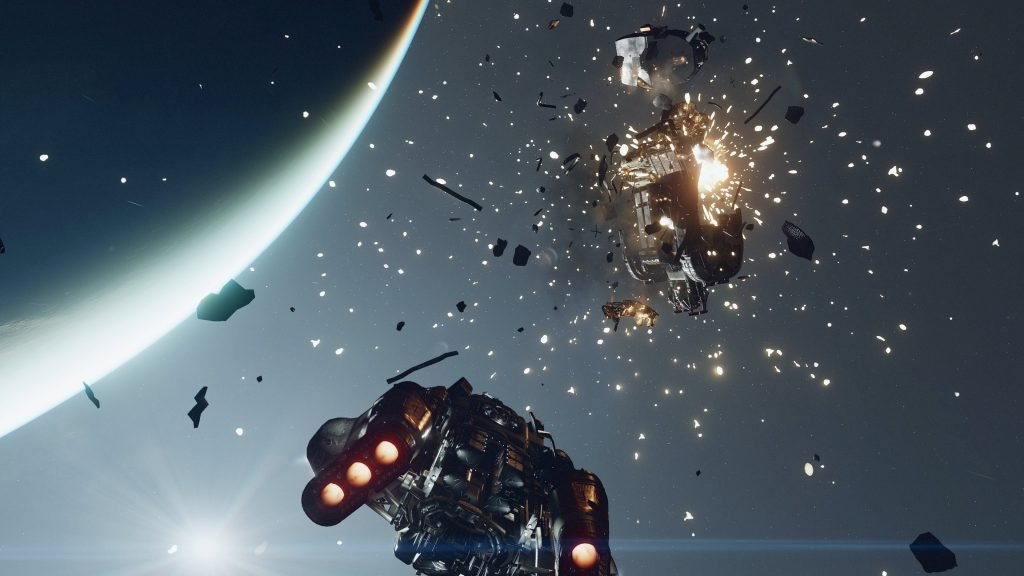
Quick Points
- A Galaxy of Exploration: Visit over a thousand planets .
- Deep Customization: Shape your character.
- Factions and Player Choice: Shape your narrative.
- Combat and Progression Systems: Robust skill trees.
- A Classic Bethesda RPG at Heart: Expanded to a galactic scale.