
When Far Cry 6 launched in late 2021, it arrived with all the hallmarks of Ubisoft’s open-world design: a massive map, endless side activities, charismatic villains, and explosions around every corner. But it also came into a gaming landscape where fatigue with that formula was already setting in.
Now that the dust has settled and the hype has cooled, it’s fair to ask the question: Is Far Cry 6 worth playing today? For gamers who like immersive worlds, flexible combat, and a sense of rebellion, the answer is yes – with a few caveats.
Let’s break down what makes Far Cry 6 fun, where it falls short, and whether it’s still a game you should make time for in 2025.
The Story: A Revolution That Mostly Works
The Far Cry series has always walked a fine line between over-the-top chaos and grounded storytelling. Far Cry 6 continues that tradition by setting you in the fictional Caribbean nation of Yara, ruled by dictator Antón Castillo, played by Giancarlo Esposito.
You play as Dani Rojas, a former soldier turned reluctant revolutionary who becomes the face of a growing rebellion. The story hits familiar notes – fighting tyranny, liberating regions, inspiring locals – but it works because of how it’s framed.
The writing leans heavily on style and personality. The supporting cast, particularly Clara and Juan, add some heart and humor to the revolution. Esposito’s performance is excellent, but he’s criminally underused. His screen time feels limited, and you spend more time chasing lieutenants than confronting Castillo himself.
That said, the main narrative remains engaging. It’s easy to get swept up in the struggle for freedom and to root for the colorful guerrilla factions that pop up across Yara.
The story is serviceable – not groundbreaking, but far from forgettable. It captures the essence of rebellion well enough to keep you pushing forward, even when the missions feel familiar.
Gameplay: Explosions, Improvisation, and Controlled Chaos
If you’ve played any of the previous Far Cry entries, you’ll know what to expect here – but that’s not necessarily a bad thing.
Far Cry 6 refines what the series already did well. The gunplay feels smoother than in Far Cry 5, and the wide range of weapons, gadgets, and “Resolver” improvised gear opens up plenty of room for creativity.
You can go in guns blazing, sneak through enemy camps with silencers, or create distractions with animal companions. The variety of approaches keeps combat fresh even after dozens of encounters.
The introduction of Supremos – powerful backpack-based ultimate abilities – adds a fun wrinkle. They’re essentially special weapons that can turn the tide of a fight, from missile barrages to EMP blasts. It’s over-the-top, but in the best way.
Vehicle combat also sees some upgrades, with customizable rides and mounted weapons. But what really stands out is the flexibility. The game rarely forces you into one style. It’s up to you whether you want to be stealthy, chaotic, or somewhere in between.
Still, this is Far Cry – and with that comes repetition. Outposts, collectibles, and side missions all follow the familiar Ubisoft loop. It’s undeniably fun, but it’s also predictable.
If you’ve burned out on open-world checklists, Far Cry 6 won’t convert you. If you enjoy that sense of steady progression and constant action, it’s one of the most refined entries in the franchise.
Exploration: Yara Is Massive and Gorgeous
The real star of Far Cry 6 isn’t Dani Rojas or Antón Castillo – it’s Yara itself.
This fictional island nation is a vibrant, sprawling playground of jungles, beaches, mountains, and cities. It’s visually stunning, even years after release. The mix of tropical beauty and decaying architecture gives Yara a sense of place and personality.
You can lose hours exploring off the beaten path. There’s always something to find – hidden bases, treasure hunts, random encounters, or just scenic vistas that make you stop and take screenshots.
Traversal is fun, too. You can glide, drive, ride horses, or use helicopters. Fast travel points are abundant, but it often feels better to just roam. The mix of urban areas and natural wilderness gives the game a refreshing balance.
That said, Yara’s sheer size can be overwhelming. The map is massive, and if you’re a completionist, you’ll spend dozens of hours checking icons off your list. For players with limited time, this can start to feel like work.
Still, it’s one of the best worlds Ubisoft has built. Even if the missions blend together, the environment itself keeps exploration rewarding.
Immersion: A Living, Breathing Revolution
Ubisoft excels at world-building, and Far Cry 6 is no exception. Yara feels alive in ways previous games didn’t quite achieve.
Civilians react to conflict, soldiers patrol roads, propaganda blares from radios, and wildlife roams the countryside. The ambient chatter, music, and visuals all contribute to a believable sense of rebellion.
The Cuban-inspired culture gives the game flavor – the music, colors, and style make it stand apart from the series’ other locations. The authenticity of the setting, even filtered through Ubisoft’s blockbuster lens, adds depth.
The first-person perspective enhances immersion. The way Dani interacts with others, the expressive animations, and the environmental storytelling make you feel grounded in the world.
There’s also a solid mix of tone. While the game leans into absurdity – crocodile pets, homemade rocket packs – it still manages to strike emotional beats when needed. Ubisoft has finally found a decent balance between serious and silly.
The immersion falters occasionally due to technical quirks or repetition, but overall, Far Cry 6 is one of the most atmospheric entries in the series.
Replayability: Big Game, Small Incentive
Once you’ve completed the main campaign, there’s still plenty to do. Ubisoft added post-launch operations, weekly insurgencies, and DLC content focused on past villains like Vaas, Pagan Min, and Joseph Seed.
While these expansions are interesting for fans, they don’t fundamentally change the experience. The replay value mainly comes from experimenting with different builds and approaches – or just revisiting Yara’s world for some chaos.
There’s a New Game+ mode, but it doesn’t add much beyond higher difficulty and full access to your gear. If you enjoy the gameplay loop, that might be enough. If you’re looking for narrative or structural variety, it’s limited.
For most players, one complete playthrough (roughly 30-40 hours) will be enough. It’s fun to revisit occasionally, but it’s not the kind of game that demands multiple runs.
Performance and Polish
By now, Far Cry 6 runs smoothly on all major platforms. The launch bugs have largely been ironed out, and load times are shorter than before.
On newer consoles and PC, the visuals still shine. The lighting, foliage, and textures hold up remarkably well. Even on lower-end hardware, performance is stable.
Ubisoft has continued to patch and optimize the game, which makes this one of the most polished Far Cry experiences to date.
Final Thoughts
So, is Far Cry 6 worth playing in 2025?
If you enjoy large open worlds filled with action, exploration, and a touch of absurd humor, then yes – it absolutely is. It’s not revolutionary, but it’s one of the best “comfort food” games in recent memory.
The story is decent, the gameplay is engaging, and Yara is a beautiful sandbox to get lost in. It’s easy to pick up for an hour or two, knock out a few missions, and feel like you made progress.
However, if you’re tired of Ubisoft’s formula or want something completely new, this won’t change your mind. It’s familiar, refined, and fun – but it doesn’t reinvent the series.
For returning fans, Far Cry 6 is a strong entry with memorable moments and plenty of chaos. For newcomers, it’s a great place to start.
Verdict: Worth playing – especially if you want a big, colorful world you can explore at your own pace.

About the Author
Robert Davis may be middle-aged now, but he has always enjoyed playing video games. Just like others may like to curl up with a good book, he just prefers a different medium for story-telling. Now that life is much busier, he has to be choosy about which games he spends time on. And that's why Delayed Respawnse exists, because he's not the only one.
View all posts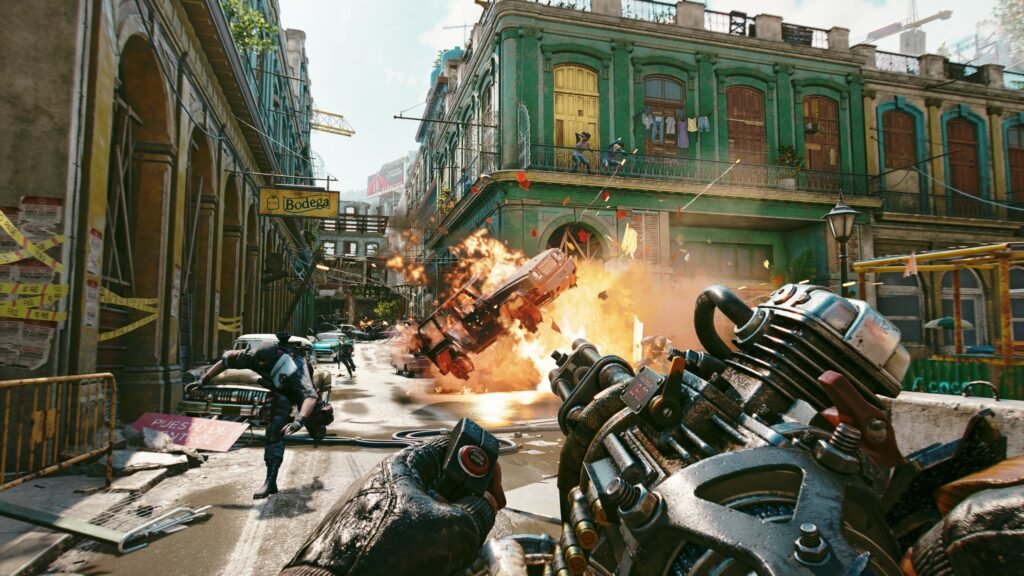
Quick Points
- Story: A solid revolution narrative with a strong cast, even if the villain is underused.
- Gameplay: Explosive and flexible with tons of ways to play, though repetitive at times.
- Exploration: Yara is massive, beautiful, and full of secrets to uncover.
- Immersion: Great atmosphere and cultural detail make the world feel alive.
- Replayability: Plenty of content but limited incentive for full replays.