
An open world can be more than just a map. The best ones feel alive, breathtaking, and worth exploring simply to see what is over the next ridge. Visual design plays a huge role in that immersion, whether it is the detail of a bustling city, the colors of a windswept field, or the glow of alien stars above a strange planet.
These 10 games stand out as the most visually stunning open worlds to explore. Each one sets itself apart with striking landscapes, unique art direction, and worlds that reward wandering off the beaten path.
1. Red Dead Redemption 2
Rockstar’s western epic is praised not just for its storytelling but also for the level of detail in its open world. From sweeping plains and snowcapped mountains to quiet swamps full of mist and wildlife, the American frontier has never looked more alive.
- Aesthetics: Hyper-realistic visuals that push immersion, with some of the most believable lighting and weather systems in any game.
- Exploration: Side paths often lead to hidden encounters, strangers, or unmarked locations that make the world feel truly organic.
- Scale: Huge, but dense. Every valley, forest, and town has details worth seeing.
What sets it apart: The sheer authenticity. Every corner of the world feels handcrafted and reactive.
2. Horizon Forbidden West
Guerrilla Games took the already beautiful Horizon Zero Dawn and made it bigger, more colorful, and even more stunning. Its world blends natural beauty with fantastical machines in ways that constantly surprise.
- Aesthetics: Vibrant jungles, coastal cities, deserts, snowy peaks, and dazzling machine designs.
- Exploration: Rewards climbing, gliding, and diving into underwater ruins, with secrets tucked into nearly every biome.
- Scale: Large but not overwhelming, with a perfect mix of main quests and optional exploration.
What sets it apart: The contrast of wild, natural landscapes with futuristic machines makes it unlike any other open world.
3. Ghost of Tsushima
Few games capture natural beauty like Ghost of Tsushima. Inspired by historical Japan, its open world feels like a living painting. From golden forests to red maple groves, it is a masterclass in art direction.
- Aesthetics: Rich colors, cinematic framing, and incredible use of wind, foliage, and light.
- Exploration: The Guiding Wind mechanic encourages organic exploration without cluttering the screen with markers.
- Scale: Big enough to get lost in, but elegant in how it directs the player to discover shrines, bamboo strikes, and fox dens.
What sets it apart: Its cinematic artistry. Every screenshot could be a poster.
4. Assassin’s Creed Odyssey
Ubisoft’s reimagined take on ancient Greece delivers one of the most striking historical open worlds in gaming. From Athens to Spartan strongholds, the landscapes are both huge and packed with cultural detail.
- Aesthetics: Sun-drenched coasts, marble temples, sprawling cities, and endless blue seas.
- Exploration: Naval sailing blends seamlessly with on-foot exploration, while ruins and islands tempt you constantly off the main path.
- Scale: One of Ubisoft’s largest maps, but impressively detailed.
What sets it apart: The ability to seamlessly transition from land to sea in a world that feels steeped in history and myth.
5. Cyberpunk 2077
Night City is unlike any other open world. Once plagued by bugs, CD Projekt RED’s updates have polished it into one of the most jaw-dropping urban sandboxes ever built.
- Aesthetics: Neon-soaked skyscrapers, gritty back alleys, deserts on the outskirts. It is Blade Runner brought to life.
- Exploration: Wandering side streets uncovers hidden stories, random encounters, and vertical exploration that makes the city feel alive.
- Scale: Not as large as some fantasy worlds, but dense. Nearly every block has something to see or do.
What sets it apart: The density and verticality of Night City. No other open world feels quite as alive and overwhelming.
6. Elden Ring
The Lands Between are as haunting as they are beautiful. FromSoftware’s fantasy epic combines brutal difficulty with breathtaking world design, making exploration both intimidating and irresistible.
- Aesthetics: Gothic castles, golden trees, eerie swamps, and towering mountains.
- Exploration: Non-linear. You are free to wander, and the game constantly rewards curiosity with hidden bosses, dungeons, and secrets.
- Scale: Massive and layered, with aboveground zones, underground caverns, and sky-high towers.
What sets it apart: The sense of discovery. Exploration feels raw, dangerous, and filled with mystery.
7. The Witcher 3: Wild Hunt
Even years after release, The Witcher 3 remains one of the most beautiful fantasy open worlds. Its swamps, fields, and war-torn villages feel grounded, while expansions like Blood and Wine add vibrant new regions that feel almost like new games.
- Aesthetics: Realistic medieval environments mixed with fantastical monsters.
- Exploration: Villages, ruins, and forests constantly pull you off the main road with contracts, treasures, and stories.
- Scale: Huge regions to explore, each distinct in atmosphere and design.
What sets it apart: The storytelling woven into exploration. The world is not just pretty, it is full of narrative depth.
8. Microsoft Flight Simulator
It may not be a traditional RPG, but in terms of stunning open worlds, nothing tops Microsoft Flight Simulator. Using real-world satellite data, it delivers the entire planet as your playground.
- Aesthetics: Photorealistic environments with real-time weather and lighting.
- Exploration: The entire globe is open. Fly from your hometown to the Himalayas.
- Scale: Literally unmatched. It is Earth.
What sets it apart: Its realism and scope. No other game gives you a world this big to explore.
9. The Legend of Zelda: Tears of the Kingdom
Nintendo expanded on Breath of the Wild with sky islands and underground depths, creating a layered open world that is both stunning and inventive.
- Aesthetics: Whimsical, painterly visuals with jaw-dropping vertical scale.
- Exploration: Every mountain, cave, and floating island hides puzzles or secrets, rewarding creativity.
- Scale: Massive, and layered vertically across three dimensions.
What sets it apart: The sandbox freedom. Exploration feels limitless thanks to physics-driven tools.
10. Starfield
Bethesda’s long-awaited space RPG is visually impressive not just for its planets, but for the sheer number of them. While not every planet is handcrafted, the ones that are feel massive, detailed, and worth spending hours on.
- Aesthetics: Realistic space visuals, starfields, and futuristic cityscapes.
- Exploration: Mix of handcrafted hubs and procedurally generated planets.
- Scale: Over 1,000 planets to land on, though not all are equally detailed.
What sets it apart: Its ambition. Sheer size and variety make it one of the most expansive sci-fi worlds ever attempted.
Final Thoughts
These 10 games show just how far open world design has come. Some push realism (Red Dead Redemption 2, Microsoft Flight Simulator), others push artistry (Ghost of Tsushima, Tears of the Kingdom), and some dazzle with scale (Starfield, Assassin’s Creed Odyssey).
Whether you prefer neon-soaked cities, mythic landscapes, or the literal globe beneath your wings, these worlds prove that exploration can be as visually rewarding as it is fun.

About the Author
Robert Davis may be middle-aged now, but he has always enjoyed playing video games. Just like others may like to curl up with a good book, he just prefers a different medium for story-telling. Now that life is much busier, he has to be choosy about which games he spends time on. And that's why Delayed Respawnse exists, because he's not the only one.
View all posts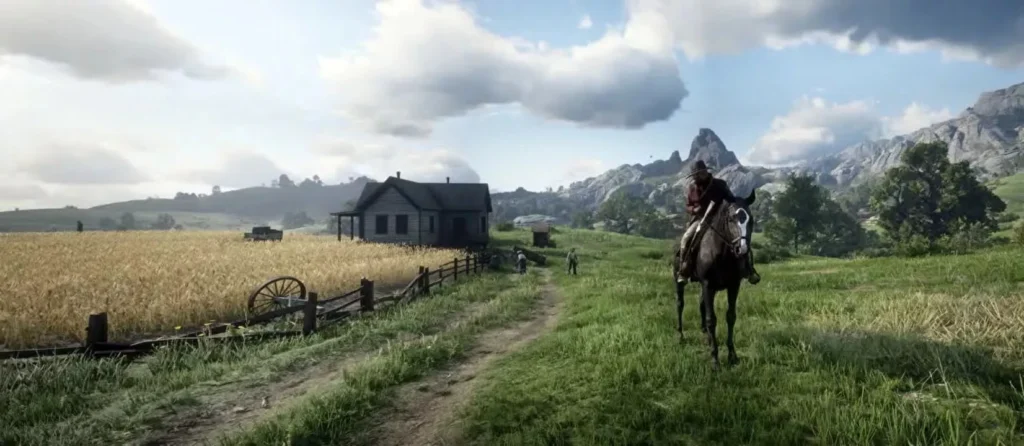
Quick Points
- Red Dead Redemption 2: Unmatched realism.
- Horizon Forbidden West: Vibrant biomes.
- Ghost of Tsushima: A living painting of historical Japan.
- Assassin’s Creed Odyssey: Greece brought to life.
- Cyberpunk 2077: Neon-soaked Night City.
- Elden Ring: Gothic fantasy with breathtaking landscapes.
- The Witcher 3: Rich medieval fantasy.
- Microsoft Flight Simulator: Photorealistic and alive.
- The Legend of Zelda: Sandbox freedom.
- Starfield: Countless planets to explore.