
Open world games are often about freedom, discovery, and scale – but a great protagonist gives that world heart. Female leads in open world games have brought fresh perspectives, compelling stories, and industry-defining performances. Some pushed boundaries for representation, others redefined what female characters could be in gaming, and many left a cultural impact that still resonates today.
Here are seven of the best female protagonists in open world games, why they stand out, and what makes them so memorable to players.
1. Aloy (Horizon Zero Dawn & Forbidden West)
Aloy emerged as one of the most iconic modern gaming heroes, balancing intelligence, resourcefulness, and fierce determination. Raised as an outcast, her journey to uncover the secrets of her world mirrors the player’s awe at discovering Horizon’s breathtaking landscapes and mechanical beasts.
- Why Gamers Like Her: Aloy is relatable and grounded, but also clever, witty, and strong without being reduced to clichés.
- Impact: Proved that a female protagonist could carry a blockbuster open world franchise.
- Boundaries Pushed: Showed the industry that nuanced, layered female leads sell games just as well as male counterparts.
2. Kassandra (Assassin’s Creed Odyssey)
Although Odyssey lets you choose between Kassandra and Alexios, Kassandra is widely considered the definitive protagonist. Her charisma, sharp wit, and commanding presence made her one of the best-loved characters in the Assassin’s Creed series.
- Why Gamers Like Her: She’s humorous, fierce, and capable of balancing lightheartedness with gravitas.
- Impact: Fans and critics alike praised her performance, leading Ubisoft to lean harder into diverse leads.
- Boundaries Pushed: Normalized giving players the option to choose a female lead as the “canon” choice.
3. 2B (NieR: Automata)
2B is both mysterious and emotionally resonant, her stoic demeanor hiding layers of vulnerability and humanity. Though NieR: Automata sits at the edge of “open world,” its semi-open design and profound story made her unforgettable.
- Why Gamers Like Her: A mix of graceful combat ability and emotional storytelling, with a complex arc.
- Impact: 2B became a cultural icon, inspiring endless fan art and discussions.
- Boundaries Pushed: Proved that female leads in Japanese action-RPGs could gain global recognition and mainstream popularity.
4. Faith Connors (Mirror’s Edge Catalyst)
Faith was a unique protagonist from the start – a parkour runner in a sleek, dystopian cityscape. Mirror’s Edge Catalyst opened her world into a freer, open environment where traversal was the star.
- Why Gamers Like Her: She’s athletic, vulnerable, and distinctly non-sexualized, breaking industry norms of the time.
- Impact: Helped normalize alternative, non-combat-driven female protagonists.
- Boundaries Pushed: Showed that games could tell compelling stories through movement and perspective rather than brute force.
5. Lara Croft (Tomb Raider Reboot Trilogy)
Lara Croft may have started as a symbol of 90s excess, but the modern Tomb Raider trilogy transformed her into a layered, believable adventurer. With semi-open world hubs and expansive exploration, these games gave her new depth.
- Why Gamers Like Her: The rebooted Lara is resourceful, brave, and deeply human, making her struggles feel authentic.
- Impact: One of the few female leads to sustain decades of relevance, adapting with the times.
- Boundaries Pushed: Redefined a once-oversexualized character into a strong, nuanced protagonist who could lead serious narratives.
6. Ciri (The Witcher 3: Wild Hunt)
Although Geralt is the main character, Ciri’s playable sequences and role in the story make her one of the most memorable female protagonists in open-world gaming. Her arc feels urgent, emotional, and powerful.
- Why Gamers Like Her: Ciri is fiercely independent yet vulnerable, with a backstory that resonates. Her powers also make her a blast to play.
- Impact: Players embraced her so strongly that many wanted her to lead her own spin-off.
- Boundaries Pushed: Showed how a secondary protagonist could steal the spotlight from a series’ long-time lead.
7. Evie Frye (Assassin’s Creed Syndicate)
Before Kassandra, Ubisoft tested the waters with Evie Frye in Assassin’s Creed Syndicate. Alongside her twin brother Jacob, Evie brought a sharp, tactical approach to London’s underworld.
- Why Gamers Like Her: Intelligent, cunning, and focused, Evie balanced Jacob’s brashness perfectly.
- Impact: Paved the way for more female leads in the series.
- Boundaries Pushed: Her inclusion in a dual-protagonist structure helped prove that fans wanted female assassins in the spotlight.
Final Thoughts
These seven protagonists prove that female leads are not just a novelty in open world games – they are some of the most enduring and beloved characters in gaming. Aloy and Kassandra carry entire franchises. Lara Croft reinvented herself for a modern audience. Faith and 2B challenged industry norms. Ciri and Evie showed how supporting or shared leads can redefine a series’ identity.
What unites them is not just popularity, but the way they expanded what players expect from a protagonist. They broke stereotypes, inspired players, and left legacies that continue to influence the industry today.

About the Author
Robert Davis may be middle-aged now, but he has always enjoyed playing video games. Just like others may like to curl up with a good book, he just prefers a different medium for story-telling. Now that life is much busier, he has to be choosy about which games he spends time on. And that's why Delayed Respawnse exists, because he's not the only one.
View all posts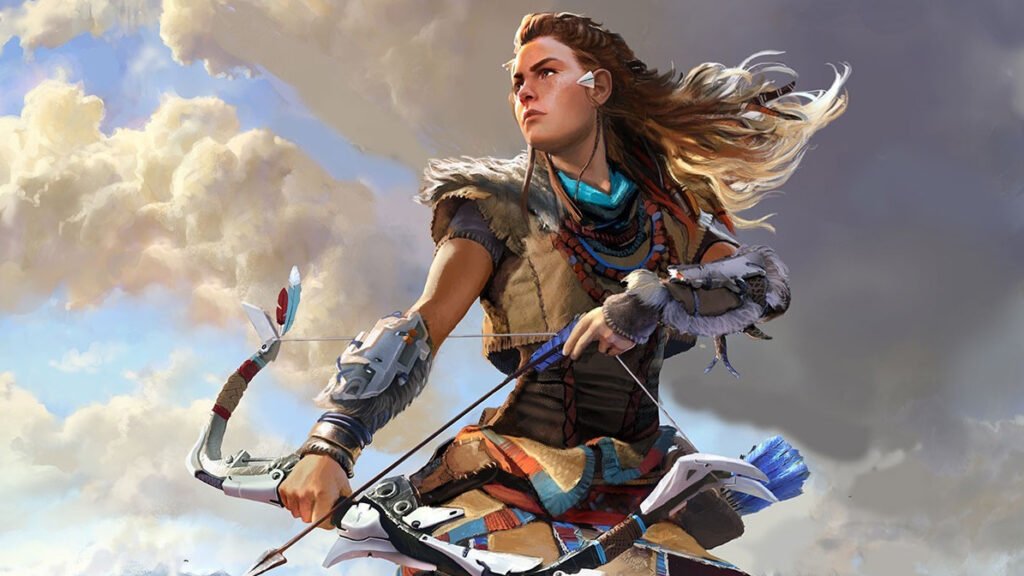
Quick Points
- Aloy (Horizon): Intelligent and resourceful.
- Kassandra (Assassin’s Creed Odyssey): Charismatic and canon-defining.
- 2B (NieR: Automata): Graceful, emotional, and iconic worldwide.
- Faith Connors (Mirror’s Edge Catalyst): Athletic, non-sexualized, and groundbreaking.
- Lara Croft (Tomb Raider): Reinvented into a layered, believable adventurer.
- Ciri (The Witcher 3): Secondary lead who stole the spotlight.
- Evie Frye (Assassin’s Creed Syndicate): Intelligent and tactical.