
Star Wars Outlaws is exactly the kind of game that can either be a great weeknight adventure or a slow-moving checklist that eats your free time. It has the right fantasy. Sneaking into syndicate compounds, picking jobs, messing with reputation, riding the speeder across open zones, and generally living in the scruffier side of Star Wars. That part works.
The problem is that the game also has a lot of friction. Travel takes time. Stealth can go sideways fast. Open-world activities pile up. Reputation choices look more important than they usually are in the moment. If you play it like a completionist sandbox, it starts to feel like admin. If you play it like a focused smuggler story with a few smart detours, it stays fun.
If you’re a busy adult deciding where to spend your limited gaming time, the answer is simple. Prioritize the main story, the faction jobs that clearly improve your standing or unlock something useful, and the upgrade paths that make stealth and traversal less annoying. Skip most map-clearing behavior. You do not need to treat every district, outpost, and side task like homework.
Why Star Wars Outlaws Can Easily Turn Into Busywork
This matters because Outlaws does not always waste your time in obvious ways. It does it gradually. Early on, almost everything feels fresh. Sneaking through restricted areas is tense. Nix is useful and funny without being overbearing. The first few faction decisions make you feel like you’re building your version of Kay Vess.
Then the seams start to show.
You realize not every infiltration space is equally interesting. A lot of errands are really there to move numbers with the Pyke Syndicate, Crimson Dawn, the Hutt Cartel, or Ashiga Clan rather than give you a memorable story beat. Lockpicking and slicing are neat enough at first, but after a few hours they become speed bumps. Crossing the map for one small reward starts to feel expensive when your real-life play session is 45 minutes long.
That’s why your approach matters more here than in a tighter action game. You need to know what gives you a payoff and what just creates the feeling that you’re being productive.
The Story Path That Is Actually Worth Following
The main story is worth your time. Full stop.
Not because every mission is amazing, but because the story campaign gives Star Wars Outlaws its best pacing, its strongest locations, and its clearest sense of momentum. The game is at its best when Kay is chasing a lead, infiltrating a place with a real goal, or dealing with syndicates in a way that creates consequences beyond a cash payout.
The main questline also does a better job than the open-world filler at mixing stealth, combat, social spaces, and travel. It feels authored. That matters.
If you’re deciding what to protect in your schedule, protect the critical path first. Let side content earn its place instead of assuming all of it deserves equal time.
The faction system is worth engaging with, but not obsessing over
The syndicate reputation system sounds like the main side-game, and for a while it is. Improving your standing with factions like Crimson Dawn and the Pyke Syndicate can open access to territories, vendors, and safer movement through their zones. That is useful. It can also make specific story and side objectives less annoying.
What is not worth your time is trying to perfectly optimize every relationship all the time.
You are going to lose reputation with one group while helping another. That is fine. The game clearly wants you to play that push and pull. Busy players should treat faction reputation as a practical tool, not a moral alignment system and not a 100 percent completion project. Pick the faction that gives you smoother access or better short-term convenience on the planet you’re currently working through, then move on.
In practice, this means taking jobs or making choices that keep one or two factions comfortable enough with you that travel and infiltration stay manageable. That’s the sweet spot. Chasing ideal outcomes with everybody is where the game starts acting like a part-time job.
Expert upgrades are a better use of time than random side distractions
One of the smartest things you can do in Outlaws is focus on the Expert system and the upgrades tied to how you actually play. These unlocks tend to give practical, lasting value. Better stealth options, stronger utility from Nix, cleaner traversal, and combat improvements all reduce friction in future missions.
That matters more than a one-off cache or a minor activity reward.
If you’re picking between poking around the map for every icon or pushing toward upgrades that make Kay more effective, take the upgrades. The game feels much better once you sand down some of its rough edges. Fewer failed stealth sections. Faster recoveries when things go wrong. Better mobility. That’s real value for limited-time players.
The Questlines and Activities That Give the Best Payoff
Prioritize story missions on each planet before going wide
When you arrive somewhere new, do not immediately start vacuuming up side content. That’s the trap. Play enough of the main story on that planet to understand the local factions, unlock important movement options, and get a feel for the layout. Once you’ve done that, the worthwhile side content becomes easier to identify.
This also helps avoid that common Outlaws problem where you spend an hour in a zone, get a few credits and some rep movement, and then realize you still haven’t advanced the part of the game with the best set pieces.
Do faction jobs when they solve a current problem
Faction contracts are worth doing under one condition. They should solve something for you right now.
Good reason to take them: you need better standing with the Hutt Cartel to move through their territory without hassle, or you want a safer route into a restricted area controlled by the Pyke Syndicate. Bad reason to take them: the contract board has icons on it and you feel guilty leaving them there.
A couple of targeted faction jobs can noticeably improve the next few hours. Grinding them just because they exist is where returns fall off hard.
Treasure hunts and intel are only good when they chain naturally from what you’re already doing
Intel-driven side content can be fun because it nudges you toward hidden stashes, special locations, and optional encounters without feeling like a giant quest log lecture. But these are only worth prioritizing when they overlap with your current route.
If you pick up a lead that sends you across the map, through multiple hostile areas, and away from your active story thread for a modest reward, skip it. If an intel clue points to something nearby while you’re already infiltrating a syndicate zone, do it. Outlaws is much better when you let activities stack efficiently instead of treating every breadcrumb like a sacred obligation.
Space and speeder moments are good for variety, not for endless grinding
The speeder and ship help sell the fantasy, and I do think they’re worth engaging with. The game needs that sense of movement and texture. But these systems are not deep enough to justify endless repetition.
Use them to break up pacing. Enjoy the flavor. Upgrade when it meaningfully improves convenience. Then move on. Trying to squeeze every possible activity out of space or open-zone traversal is not the best use of your time.
What You Can Skip Without Missing Much
You can skip a lot of low-value cleanup in Star Wars Outlaws and still get the good version of the game.
- Do not clear maps for the sake of clearing maps. Most icons are not secretly hiding the best content.
- Do not grind syndicate reputation past practical usefulness. Good standing is useful. perfect standing is usually not worth the effort.
- Do not chase every small collectible or stash. If it isn’t on your route or tied to an upgrade you actively want, leave it.
- Do not overinvest in side jobs early on every new planet. The game opens up better when you push the story first.
- Do not restart stealth sections endlessly for a clean result if the game lets you recover. Busy players should accept a little mess.
This is one of those games where discipline improves enjoyment. The more comfortable you are saying no to low-yield content, the better Outlaws feels.
How to Play Star Wars Outlaws So It Doesn’t Feel Like Work
The best way to approach Outlaws is to give yourself a session goal before you even load in. Not a vague one. A real one.
Examples: finish the next main mission, improve standing with Crimson Dawn enough to cross their district cleanly, unlock one Expert-related upgrade, or follow one useful intel lead that’s already near your story objective.
One goal. Maybe two.
If you log in and just wander, the game will absolutely fill your evening with acceptable but forgettable activity. You’ll make progress on paper and feel weirdly unsatisfied. That happened to me more than once. The sessions I enjoyed most were the ones where I treated the game like a focused caper rather than an endless open-world buffet.
Also, lean into efficiency tools. Use Nix constantly. Mark guards. Create openings. Let him do the boring setup work that saves you from repeating encounters. In a game with this much stealth, every avoided reset matters.
And don’t be afraid to leave content behind. Outlaws gets better when you stop trying to prove anything to it.
Handheld Sessions Work Better Than You’d Expect


Star Wars Outlaws is not my first pick for tiny-screen, deeply immersive couch co-op style comfort gaming, but parts of it actually fit handheld-friendly play pretty well if your expectations are realistic.
Shorter contract runs, local exploration, inventory cleanup, and low-stakes intel follow-ups work fine in bite-sized sessions. If you’re using something like a Backbone One through streaming, or a handheld PC setup where performance is acceptable to you, the game makes decent use of 20 to 40 minute windows. You can finish a contract, improve faction standing, buy an upgrade, or knock out one infiltration route.
Where handheld play gets rough is in longer stealth-heavy story missions and any sequence where visual clarity really matters. You do not want to squint through a high-pressure restricted area, miss a patrol cue, and redo the whole thing because you chose convenience over comfort. Save those missions for a TV or monitor when possible.
So yes, handhelds can work. Just use them for maintenance and side progress, not the missions where the game is asking for your full attention.
If You Only Have 20 Minutes, Do This
If you’ve only got 20 minutes, don’t roam. Pick one of these and stick to it.
- Turn in or accept one faction contract that directly improves your current access problem.
- Push one step deeper into the main story if you’re near a mission start.
- Use a short session to unlock or progress an Expert-related objective.
- Follow one nearby intel lead only if it overlaps with where you already are.
- Upgrade gear, check vendors, and set up your next longer session.
That last one sounds boring, but it’s genuinely useful. Outlaws is much better when your next session starts with a clear objective and the right loadout instead of ten minutes of menu fiddling and indecision.
Best Use of Your Time in Star Wars Outlaws
If I were recommending a clean, no-nonsense way to play Star Wars Outlaws as a busy adult, it would look like this.
Play the main story as your backbone. Use faction jobs sparingly to smooth your path, especially when a syndicate’s territory is actively blocking convenience. Prioritize Expert unlocks and upgrades that reduce stealth friction. Do nearby intel and treasure content only when it naturally fits your route. Skip broad map cleanup and don’t chase perfect reputation with everyone.
That’s the version of the game that respects your time.
Outlaws is not a super-tight action game, and it definitely has stretches where the pacing loosens and the open world starts asking for more than it gives back. You’ll feel that after a few hours if you’re doing too much low-stakes side content. But there’s still a good game here, especially if you like the Star Wars scoundrel fantasy and you’re willing to be selective.
The trick is simple. Treat it like a curated adventure, not a life simulator. Follow the story. Take the side content that solves real problems or gives real upgrades. Ignore the rest.
Do that, and Star Wars Outlaws stays rewarding. Try to do everything, and it starts feeling like paperwork in a cool jacket.

About the Author
Robert Davis may be middle-aged now, but he has always enjoyed playing video games. Just like others may like to curl up with a good book, he just prefers a different medium for story-telling. Now that life is much busier, he has to be choosy about which games he spends time on. And that's why Delayed Respawnse exists, because he's not the only one.
View all posts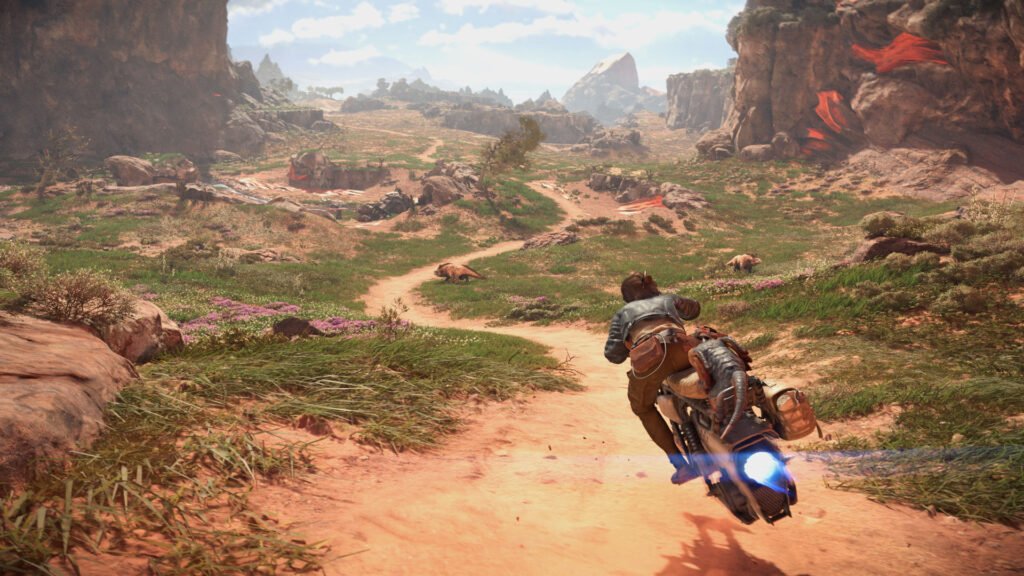
Quick Points
- Prioritize the main story first. It’s where the best pacing and set pieces are.
- Use faction jobs to solve access problems, not to grind perfect reputation.
- Expert upgrades are a better investment than clearing map icons.
- Skip most collectibles and distant intel unless they’re already on your route.
- For short sessions, do one contract, one upgrade step, or one story objective.