
Indiana Jones and the Great Circle is a pretty easy game to like and a very easy game to play inefficiently.
That matters if you’re fitting this in after work, after the kids are asleep, or in those little gaps where you want something fun without turning a two-hour session into four because you got distracted hunting one more note in a fascist outpost. The game is built to make you poke around. Sometimes that pays off. Sometimes it absolutely doesn’t.
If you want the short version, here it is: follow the main story, do side content that gives you more of the stealth-puzzle-adventure mix the game is best at, and don’t treat every open area like a checklist. The Great Circle is strongest when it’s moving. It gets weaker when you start vacuuming up every collectible and forcing yourself through every optional errand.
I’ve played enough of it to know where the time goes. A lot of it goes into climbing, sneaking, reading clues, and getting from one interesting thing to the next. When that rhythm is working, it feels great. You feel like you’re in an Indiana Jones adventure instead of just playing a licensed game. When it isn’t, you feel the seams fast.
Why this matters if your gaming time is actually limited
This is not a huge RPG where skipping side content means missing your build or getting locked out of the good ending. It’s also not a pure linear action game where every hour is equally well spent. It’s in the middle. There are hub-like spaces, optional discoveries, puzzle detours, disguises, restricted zones, and enough scattered collectibles to tempt your completionist brain into making bad decisions.
The problem is that the game’s highs and lows are very different kinds of time. A good hour in The Great Circle is a compact run of exploration, a clever puzzle, a tense infiltration, and a story beat with Indy and Gina that actually lands. A bad hour is backtracking through an area you’ve already half-cleared, looking for one last document or medicine bottle while guards repopulate and you remember you still haven’t advanced the plot.
You will feel this after a few hours.
Early on, almost everything feels fresh because the game is teaching you its language. Later, the same loops are still solid, but the friction becomes more obvious. Traversal takes longer than you want. Stealth can be a little fiddly. Optional cleanup starts to feel like work. So if you’re trying to get the best version of this game without letting it eat your whole month, you need to be selective.
The parts that are absolutely worth doing
Follow the main story all the way through
This is the easiest recommendation. The main story is worth your time because it’s where the game is most confident. The big set pieces, the tomb-style puzzle spaces, the banter between Indy and Gina, and the whole pulp archaeology tone all land best when you’re just letting the campaign carry you.
The Vatican stretch is a good example of what the game does right. You’re sneaking through restricted spaces, solving clue-driven puzzles, and getting that mix of danger and curiosity that the films always worked on. Gizeh also has some of the strongest adventure-game energy in the whole thing, especially when you’re moving between excavation areas, underground spaces, and fascist-controlled zones. Sukhothai has great atmosphere too, even if by then the pacing can sag a bit if you’ve been too thorough with side content.
If you’re wondering whether to push the story forward or keep cleaning up a map, push the story forward. Almost every time.
Do side activities that lead to unique puzzle spaces or story context
The side content that’s worth doing usually has one of two things going for it. Either it sends you into a bespoke puzzle area that feels like a mini adventure, or it gives you extra context for the people and places around you in a way that actually suits Indiana Jones.
In practice, that means optional mysteries, locked-room style detours, and side discoveries tied to relics, hidden chambers, or coded notes are usually worth a look. If a lead sounds like it ends in a tomb, a hidden archive, a crypt, or a secret excavation site, do it. That’s the good stuff.
If it sounds like busywork in disguise, skip it.
The game is much better at environmental storytelling than at making every optional objective mechanically exciting. Reading a trail of clues and opening up a hidden place feels rewarding. Running errands across a semi-open zone because an icon is there does not.
Use disguises and stealth when the game clearly wants you to
I would not force this into an action game. You can scrap your way out of trouble sometimes, and there are moments where improvising with fists, bottles, and whatever’s lying around is funny in a very Indy way. But the stealth-disguise loop is one of the main pillars here, and it’s worth engaging with because it saves time and usually creates the better version of a mission.
Walking into a fascist area in disguise, slipping past guards, ducking into side rooms for clues, and then using the whip or a quick takedown when things go wrong is more efficient than turning every encounter into chaos. It also keeps the pacing tighter. Combat is fine. It is not the reason to be here.
There are sections where the stealth feels a little gamey, sure. Enemy awareness can be inconsistent. But if your goal is to get through the strongest material without friction, stealth-first is the right call.
Take time for the bigger puzzle sequences
If you like Indiana Jones at all, this is where the game earns its keep. The larger puzzle areas, especially the ones that make you read the environment, connect symbols, use tools properly, and think through spatial layouts, are worth slowing down for.
Not because they’re brutally hard. They aren’t. But because they deliver the fantasy better than almost anything else in the game.
When you’re deciphering clues in the Vatican, navigating ancient spaces around Gizeh, or working through the more atmospheric ruins later on, the game stops feeling like a collection of systems and starts feeling like an adventure. That is the part you should protect. Don’t rush those sections. Rush the filler around them instead.
What you can skip without missing the good stuff
Most collectible cleanup
This is the biggest trap in the game for busy players.
Documents, notes, relic odds and ends, medicine upgrades, and scattered valuables can feel meaningful at first because they teach you about the world and feed the explorer instinct. Early on, grabbing what you naturally find is great. Going back for the last few pieces in a zone is not.
The return on time drops hard.
If a collectible is directly on your path, grab it. If it requires dedicated backtracking, a long detour, or revisiting a hostile area just to make a list cleaner, let it go. You are not missing the heart of the game. You’re mostly extending your playtime with low-energy scavenging.
Optional tasks that are mostly map housekeeping
You will run into side objectives that sound better than they play. If the reward is vague, the route is long, and the activity is mostly moving between already explored spaces, skip it.
The Great Circle has enough friction in traversal that these errands add up. Climb here, shimmy there, avoid another patrol, read another note, circle back because the entrance was on the other side. This is fine once. It gets old when you’re doing it for a weak payoff.
My rule was simple by the midpoint: if an optional objective didn’t promise a new puzzle space, a meaningful story beat, or a clearly useful upgrade, I stopped caring. The game got better immediately.
Completionist replay inside each hub area
The Vatican, Gizeh, and Sukhothai all encourage the same bad instinct: clear everything before you leave. Don’t do that unless you genuinely love inhabiting the space and don’t care about efficiency.
These areas are well made, but they are not so mechanically rich that full completion stays exciting the whole time. The first pass is great because you’re learning the layout and finding secrets naturally. The second pass is where momentum dies.
This is one of those games where 70 to 80 percent completion is usually the sweet spot. You see almost all the good material and avoid the drag.
How to play it efficiently without ruining the fun
Push the story whenever your energy is low
This sounds obvious, but it’s the best advice I can give. If you’re tired, don’t open the map and start triaging icons. Do the next main objective. The campaign is better paced than your own cleanup route will be.
On weeknights especially, mainlining the story keeps sessions satisfying. You get a beginning, middle, and payoff. Side content is better saved for when you have a longer block and actually want to wander.
Loot naturally, not aggressively
Search rooms you’re already in. Read notes you find on the way. Open side doors when they’re right there. Just don’t turn every mission into a forensic sweep.
This game constantly tempts you to stop and inspect one more corner. Sometimes that’s the right move. Often it’s just how a 45-minute mission becomes 90 minutes.
Use a simple filter for side content
Before doing any optional objective, ask three things.
- Does this lead somewhere unique?
- Does this sound like a real mystery or just an errand?
- Will I care if this takes 20 to 30 minutes?
If the answer isn’t a clear yes, skip it.
You do not need to optimize harder than that.
Don’t overvalue upgrades
Extra survivability and utility are nice, but this is not a game where missing a handful of optional upgrades will wreck your run. The bigger difference comes from understanding patrol routes, using disguises well, and not getting stubborn when stealth breaks.
If an upgrade path is sending you into dull cleanup, it is not worth it.
Handheld play works better than you might think


The Great Circle is actually pretty decent on handheld-friendly setups because so much of it is built around exploration, clue reading, light stealth, and puzzle solving rather than twitch-heavy combat. If you’re streaming it to a Backbone One or playing natively on something like a Steam Deck-class device, the game fits stop-start sessions better than a lot of big-budget action games.
That said, there are tradeoffs.
The clue-heavy parts and documents are more comfortable on a bigger screen. Fine environmental details matter, and if you’re tired and squinting at text on a small display, some of the slower investigative sections lose their charm fast. The stealth also benefits from clear visibility. Missing a guard because of screen size is annoying, not dramatic.
Still, for short sessions, handheld is a good fit if you use it for the right parts of the game. Story progression, exploration, and cleanup of easy optional leads work well. Big puzzle spaces are fine too if your screen is decent. I would avoid doing fiddly stealth-heavy sections on a tiny display if you’re already low on patience.
If you’re choosing where handheld helps most, use it to keep momentum. Knock out a story objective on the couch. Explore a compact area before bed. Read clues and solve one contained puzzle. That’s a much better use of portable play than trying to do extended collectible sweeps.
If you only have 20 minutes, do this
Advance the main objective until you hit a natural puzzle or infiltration segment. That’s the sweet spot for short sessions.
If you don’t have enough time to start a story mission cleanly, do one nearby optional mystery that clearly leads to a contained location. Not a map cleanup run. Not collectible hunting. One actual lead with a beginning and an end.
If even that feels too open-ended, spend the session setting yourself up. Move Indy to the next main objective marker, restock anything you need, and stop there. Future-you will appreciate booting the game straight into something meaningful instead of spending the first 10 minutes remembering where you were.
The worst 20-minute session in this game is wandering. The best one is making one clean piece of progress.
The best way to enjoy The Great Circle without letting it overstay its welcome
This game is worth playing. Easily. It captures enough of the Indiana Jones feel that the good stretches are genuinely hard to resist. Sneaking through the Vatican, poking around Gizeh, solving old-world puzzles, and watching Indy bounce off Gina and the villains is a good time.
But it is not a game where more always means better.
The main story is worth your time because it’s where the pacing, spectacle, and adventure tone line up. Optional mysteries and unique puzzle detours are worth doing because they give you more of the same in smaller, satisfying chunks. Most collectible cleanup, long optional errands, and full hub completion are not worth it because they stretch the weakest parts of the game past their limit.
So play it like an adventure, not a job. Follow the story. Chase the side content that sounds like actual archaeology. Ignore the rest.
You’ll get the best version of The Great Circle that way, and you’ll finish it before your backlog gets another victim.

About the Author
Robert Davis may be middle-aged now, but he has always enjoyed playing video games. Just like others may like to curl up with a good book, he just prefers a different medium for story-telling. Now that life is much busier, he has to be choosy about which games he spends time on. And that's why Delayed Respawnse exists, because he's not the only one.
View all posts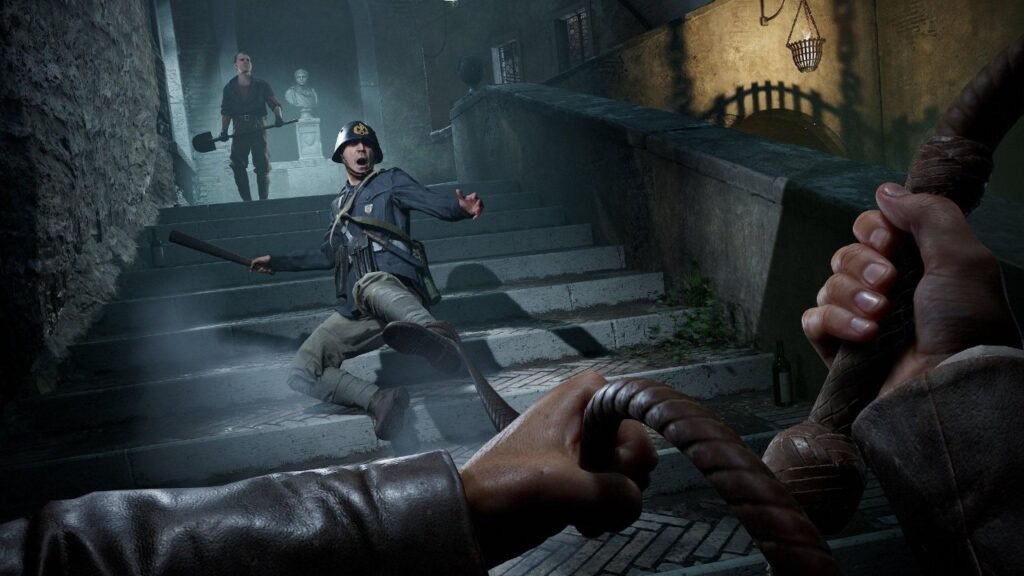
Quick Points
- Prioritize the main story. That’s where the game is best.
- Do optional mysteries and puzzle spaces, not collectible cleanup.
- Use disguises and stealth to save time and avoid messy fights.
- Don’t fully clear every hub area unless you truly love wandering.
- For short sessions, make one clean story push instead of exploring aimlessly.