
If you’re staring at Ghost of Yōtei and wondering whether it deserves one of your precious game slots this month, here’s the short version: play it if you want a polished open-world action game with strong atmosphere, satisfying sword fights, and a main path that usually respects your time. Skip it if you’re already tired of checklist maps, stealth camps, and side content that starts to blur together after the first several hours.
I had a good time with it. I also hit the point where I could feel the repetition settling in. That’s the real thing you need to know before you buy. This is not a game that wastes your time immediately. It wastes your time gradually, if you let it.
The first stretch is easy to like. The opening hours do a great job of selling the setting, the tension, and the fantasy of moving through a dangerous frontier with a blade and a plan. Combat feels sharp early because every duel still has teeth, every new enemy type matters, and the world hasn’t yet become a sea of icons. Then the usual open-world creep starts. More collectibles. More outposts. More little distractions that feel fine one by one and less worth it in aggregate.
So the right question is not just, “Is Ghost of Yōtei good?” It is, “Is this the kind of good that fits into an adult schedule?” Sometimes yes. Sometimes absolutely not.
Why This Decision Matters More If You Don’t Have Time to Burn
Busy players feel pacing problems harder than everyone else. If you get two hours on a weeknight, a game with a strong main line and weak side content can still be worth it. But only if you know where the fat is.
Ghost of Yōtei is exactly that kind of game.
At its best, you’re following a tight revenge-and-survival arc, taking on faction leaders, hunting named targets, and moving through story missions that actually change the stakes. At its most padded, you’re clearing another enemy stronghold, tailing another patrol, or doing another optional activity that gives you a small upgrade you probably didn’t need.
If you’re the kind of player who sees a map marker and feels compelled to clear it, this game can quietly become a 40-plus hour project. If you’re willing to be selective, it becomes a much cleaner 15-to-25 hour experience, and honestly that’s where it works best.
That difference matters. One version feels focused. The other feels like you’re doing chores in a very pretty coat.
Who Should Actually Play Ghost of Yōtei
Play it if you want a focused samurai-action sandbox, not a giant RPG
This is worth your time if what you want is confident action-adventure design. The sword combat is the main draw. Duels are tense, readable, and satisfying in a way a lot of open-world combat systems aren’t. You learn enemy rhythms, swap tactics based on weapon types and armor, and get that nice balance between aggression and patience. It feels good early, and it stays good longer than the stealth does.
If you liked the standoff-and-duel rhythm from Ghost of Tsushima, you’ll probably click with this quickly. If your favorite part of these games is walking into a camp, thinning the perimeter quietly, then handling the survivors head-on, Ghost of Yōtei delivers that loop well.
It also works if you value presentation. The landscapes, weather shifts, shrines, villages, and snow-swept roads do a lot of heavy lifting. This is a game that often feels great to inhabit even when you’re not doing anything especially novel. For some people, that matters a lot. For others, it’s wallpaper. Be honest about which camp you’re in.
Play it if you can ignore busywork
The people who will get the most out of Ghost of Yōtei are not completionists. They’re editors. They know how to leave things alone.
If you can look at a cluster of side markers and think, “Nope, not today,” you’ll have a better time than someone trying to vacuum the whole map. The strongest content is usually the main story path, the faction-related hunts, and the named character questlines that build out allies, rivals, and regional politics. Those are the parts with actual dramatic momentum.
The game is much better when you treat it like a curated action drama instead of a lifestyle game.
Play it if you care about mood and travel, not just novelty
Not every good game needs to reinvent itself every three hours. Ghost of Yōtei knows its lane. You ride, scout, duel, infiltrate, investigate, and move on. If you like that rhythm and you’re happy with a game refining familiar systems rather than constantly surprising you, it’s a good fit.
That said, you’ll feel the repetition after a while. You just might not mind it. That’s the distinction.
The Questlines and Systems That Are Actually Worth Your Time
If you do play, be selective. Here is the stuff that consistently pays off.
Prioritize the main story and named target chains
The central story missions are where the game has the most urgency. They introduce the strongest set pieces, the cleanest combat scenarios, and the best use of the cast. When Ghost of Yōtei is firing, it’s because you’re pushing toward a meaningful confrontation, not because you’re collecting one more minor resource cache.
Named target chains and region leaders are usually the best side-adjacent content because they feed back into the main fantasy. You’re not just checking a box. You’re hunting someone who matters, learning how a local faction operates, then taking them apart piece by piece. That’s the kind of structure that gives the game momentum.
Do companion or ally questlines when they unlock
These are usually the most worthwhile optional missions. They tend to have clearer writing, more specific combat setups, and better emotional payoff than ambient side tasks. If a questline is tied to a recurring ally, a mentor figure, or a major regional contact, do it.
Those arcs often unlock practical upgrades too, but the bigger reason is that they make the world feel less like a task board. You remember the people. You remember why you’re there. That’s important in a game this broad.
Use shrines, hot springs, and upgrade points strategically
Traversal and character growth systems are worth engaging with, but not obsessing over. Shrines and similar discovery points are useful because they naturally break up travel and usually give you something tangible. Hot springs, meditation spots, and other small-stat or charm-related activities are fine if they’re on your route. They are not worth a dedicated cleanup tour unless you’re pushing a higher difficulty and need every edge.
Same goes for armor and weapon upgrades. Improve the gear that supports how you actually play. If you prefer direct sword fights, invest there. If you lean stealth, support that. Don’t grind every material source just because it’s available. The game does not demand that level of optimization on a normal run.
Do duels whenever the game offers a meaningful one
One-on-one fights are where Ghost of Yōtei feels most alive. They cut through open-world sprawl and remind you what the combat system is built for. If a mission is clearly leading to a formal duel, a rival showdown, or an arena-style test, it’s probably worth doing.
These encounters stay memorable longer than camp clears. No contest.
Who Should Skip Ghost of Yōtei
Skip it if you are done with the modern open-world formula
If you’ve bounced off recent map-heavy action games because they feel too familiar, this will not convert you. It may be more polished than average, and it may have better combat than a lot of competitors, but it’s still built from recognizable parts. Enemy camps. collectibles. upgrade loops. stealth grass. tracking sequences. follow-the-wind style navigation cues. You know the shape of it.
If that structure already feels stale to you, you’ll see through this game fast.
Skip it if your favorite thing is deep RPG buildcraft
This is not the game for people who want a dense loot game, a wildly flexible class system, or build experimentation that changes the whole experience. There are upgrades, gear decisions, and useful loadout tweaks, but the identity of the game stays pretty stable. You’re here for action and atmosphere, not for turning your character into a completely different machine by hour 20.
If you want the gear obsession of Nioh or the systemic weirdness of Elden Ring, this is too streamlined.
Skip it if you only enjoy stealth when the AI is truly reactive
The stealth works. It does not evolve enough to stay exciting forever. Early on, infiltrations feel clean and deliberate. Later, they can start to feel like routine maintenance between the better fights. If your ideal stealth game is built around improvisation, layered tools, and AI that forces adaptation, Ghost of Yōtei is a step below that.
You can absolutely use stealth for efficiency. You probably won’t remember most of those encounters afterward.
What You Can Skip Without Missing Much
This is where you save yourself hours.
- Most generic enemy camps. Clear the ones tied to story progression, faction pressure, or obvious upgrade bottlenecks. Ignore the rest unless you simply enjoy the combat loop.
- Map cleanup for its own sake. Fog clearing and icon removal are not a good use of your time here. The world is attractive, but completion does not equal better experience.
- Resource detours once your core gear is set. After you have the armor and weapon path you actually use, stop chasing every supply stash and crafting node.
- Minor collectibles that only feed completion percentages. If it doesn’t deepen combat, unlock a meaningful technique, or support a named questline, let it go.
- Repeatable side activities after the novelty wears off. You’ll know when this happens. Usually around the point where you can predict the setup before you arrive.
This is the biggest trap in the game. A lot of optional content is individually fine. The problem is cumulative drag. You won’t notice it in the first five hours. You will notice it in the fifteenth.
How to Play Ghost of Yōtei Efficiently
Here’s the practical approach I would recommend to any friend with a job, kids, and an unfinished backlog.
- Set your own lane early. Decide whether you’re mostly a direct-combat player or a stealth-first player, then invest accordingly.
- Advance the main story every session. Even if you only do one story mission before bed, keep the narrative moving. That’s what keeps the game from flattening out.
- Only do side content with names attached. Named allies, named rivals, named targets. That’s the filter.
- Use fast travel without guilt. The world is pretty, but you do not need to roleplay every ride across the map.
- Stop clearing regions once the upgrades stop mattering. This sounds obvious, but a lot of players don’t do it.
If you follow that, you get the best version of the game. Not the biggest version. The best one.
How Ghost of Yōtei Fits on Handhelds


This is actually a decent game for handheld play if your setup supports it well, because the structure breaks into clean chunks. A camp. A duel. A story mission. A quick shrine detour. You can make progress in 20 to 30 minutes without feeling lost.
There is a catch, though. This is a game where visual atmosphere matters, and some of that impact gets blunted on a smaller screen. The sweeping landscapes and weather-heavy scenes still work, just not as strongly. Combat readability matters more than spectacle in handheld mode, and thankfully the core swordplay generally holds up.
Where handhelds help most is trimming the friction. If your alternative is not playing at all because the TV is occupied or you’re too tired to commit to a long session, handheld access makes Ghost of Yōtei much easier to fit into real life. It’s also a good match for chip-away progress. One target. One upgrade. One mission. Done.
I wouldn’t choose handheld for a first session if you want the full visual hook. But for routine progress, it works.
If You Only Have 20 Minutes, Do This
Do one of these, in this order.
- Advance a main story objective. Best use of your time, almost always.
- Finish one step of a named ally questline. Usually worth it and easy to track.
- Take a duel or hunt a named target. High payoff, low filler.
- Grab a nearby shrine or upgrade point on the way to something important. Good bonus, not a destination.
Do not spend your short session wandering, collecting, or clearing a random camp unless you actively want mindless combat. That’s how the game starts eating time without giving much back.
If you’ve only got 20 minutes after work, you want momentum. Story, allies, duels. That’s the list.
The Honest Bottom Line
Ghost of Yōtei is worth playing for a lot of busy adults, but only if you meet it halfway.
This is not a game you should approach with completionist energy. It rewards restraint. Play the main path. Follow the named questlines. Take the duels. Upgrade with purpose. Skip the filler the moment you feel repetition setting in.
If you do that, you’ll get a stylish, satisfying action game with a strong sense of place and enough combat quality to carry it through its weaker stretches. If you don’t, you’ll end up spending too many hours on content that is merely okay.
So who should play it? People who want polished sword combat, a strong mood, and an open world they can edit down into something lean.
Who should skip it? Anyone who is already exhausted by formulaic open-world design, or anyone who knows they can’t resist clearing every icon on the map.
For the right player, this is an easy recommendation. For the wrong player, it’s a beautiful time sink. Know which one you are before you start.

About the Author
Robert Davis may be middle-aged now, but he has always enjoyed playing video games. Just like others may like to curl up with a good book, he just prefers a different medium for story-telling. Now that life is much busier, he has to be choosy about which games he spends time on. And that's why Delayed Respawnse exists, because he's not the only one.
View all posts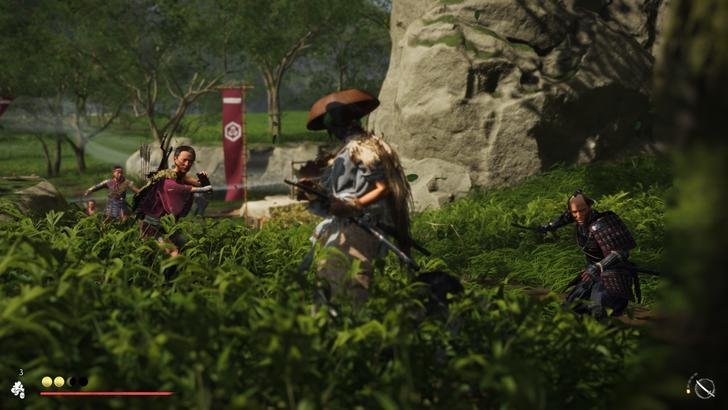
Quick Points
- Play it for the main story, duels, and named questlines
- Skip most generic camps and collectible cleanup
- Best for players who can ignore map clutter
- Not worth it if you’re burned out on open-world formulas