
If you’ve somehow missed Portal 2 and you’re staring at a backlog that already feels rude, here’s the short version: this is one of the safest great-game recommendations you can get. It is highly regarded because it does three hard things at once. It teaches elegantly, stays funny without becoming unbearable, and keeps changing just before its core idea gets old.
More important for a busy adult, it respects your time better than most all-time classics. This is not a 70-hour masterpiece that needs a spreadsheet. It’s a focused first-person puzzle game that usually lands somewhere around 8 to 10 hours for the campaign, with a separate co-op campaign if you want more. You can finish it. You can remember it. You probably won’t need a wiki open.
And yes, if you haven’t played it, you probably should.
Not because it’s historically important, though it is. Not because people on the internet won’t shut up about GLaDOS, though they won’t. You should play it because Portal 2 still feels good right now. The puzzles are clean, the writing still lands, and the pacing is smart enough that even when it slows down a bit in the middle, it usually earns your attention back fast.
Why This Still Matters If Your Gaming Time Is Limited
Busy players need games that do not waste the first three hours proving they have lore. Portal 2 gets moving quickly. It opens with a memorable setup, reintroduces the basic portal mechanics without talking down to you, and then steadily layers in new systems like excursion funnels, thermal discouragement beams, light bridges, gels, and laser redirection. Every major mechanic has a point. Very little feels like filler.
That matters more than people admit. A lot of beloved games are beloved partly because players met them at the right time in life, when losing a whole weekend to friction felt normal. Portal 2 works even if you only have 30 to 45 minutes at night. Most chambers are self-contained. Progress is easy to track. If you stop, you can usually pick back up without needing to relearn an entire combat build or remember which faction wanted what.
It also avoids one of the biggest time sinks in modern games: dead space disguised as content. There are no crafting trees to maintain. No map icons multiplying like mold. No loot treadmill. The game asks you to solve a room, listen to a joke, move to the next room, and occasionally deal with a bigger set piece. That’s a great loop when your free time is scarce.
The other reason it matters is that Portal 2 is one of those rare games where the cultural reputation is mostly honest. Sometimes a classic gets graded on nostalgia. This one largely doesn’t. The portal gun still creates a kind of spatial problem solving that feels fresh, and the campaign keeps remixing that idea instead of just making the same test chamber harder over and over.
Why Portal 2 Is So Highly Regarded in the First Place
The puzzle design is excellent, not just clever
Lots of puzzle games have a few strong ideas. Fewer know how to teach them. Portal 2 is great because it constantly nudges you toward the answer without making you feel managed. Early chambers teach momentum and line of sight in simple ways. Later, those same ideas get combined with beams, buttons, cubes, funnels, and gels so that you feel smart for understanding the language of the space.
The game is also good at preventing the worst kind of puzzle-game fatigue. It rarely asks you to brute force weird logic. Usually, if you’re stuck, it’s because you haven’t noticed a surface, a timing interaction, or the intended path for momentum. That sounds obvious, but it means the game wastes less time on nonsense.
The writing is actually useful, not just funny
Portal 2 gets remembered for GLaDOS, Wheatley, and Cave Johnson, and that makes sense. They’re great. But the bigger achievement is that the dialogue helps the pacing. It keeps you engaged while moving between chambers and turns setup into entertainment. Cave Johnson’s recordings during the old Aperture Science sections are especially good because they add personality without stopping the game cold.
And unlike a lot of comedy games, Portal 2 doesn’t become exhausting. It doesn’t scream jokes at you every ten seconds. The writing has rhythm. GLaDOS is dry and cruel in a way that still works. Wheatley is annoying on purpose, but not so annoying that he ruins the game. Cave Johnson steals every scene he’s in.
It keeps escalating
The campaign has a real sense of momentum. The clean test chambers at the start are satisfying. The escape sequence gives the game energy early. The descent into old Aperture changes the mood just before the formula could get stale. Then the gels arrive and give the puzzle design a second life. By the time you’re working with propulsion gel, repulsion gel, and conversion gel, the game feels more playful and physical than the opening hours.
This is a big reason people still talk about it. Portal 2 understands that a great mechanic is not enough. You need context shifts, new toys, and a steady feeling that things are building toward something.
What Is Actually Worth Your Time in Portal 2
Play the full single-player campaign
This is the easy recommendation. The main campaign is the reason to play Portal 2. It has the best writing, the best pacing, and the strongest puzzle progression. If you only ever touch one part of the game, make it this.
The early Aperture Laboratories test chambers do an excellent job onboarding you even if you barely remember the first Portal. Once GLaDOS is back in control, the game settles into a great rhythm of chamber, banter, chamber, set piece. Then the old Aperture Science section with Cave Johnson’s recordings gives the whole thing a second wind. That’s where the world gets bigger and stranger, and where the game goes from very good to memorable.
The finale is also worth calling out because it sticks the landing. A lot of puzzle games peak in the middle and then fumble the ending. Portal 2 closes strong.
Play co-op only if you have the right partner
The co-op campaign is good. Really good, actually. It introduces mechanics and puzzle setups that the single-player campaign can’t do because two players can split tasks, coordinate portal placement, and communicate timing. The Atlas and P-body dynamic is charming, and GLaDOS gets some of her meanest lines here.
But this is only worth doing if you have a patient partner who actually wants to solve puzzles with you. Not someone half-checking their phone. Not someone who gets irritated after ten minutes of being stuck. Co-op Portal 2 can be brilliant with the right person and a slog with the wrong one. The puzzles are designed around communication. If that part is bad, the whole thing falls apart.
If you have a spouse, friend, or older kid who likes puzzle games and can laugh through mistakes, absolutely do it. If not, skip it without guilt.
Pay attention to the old Aperture sections
If you are the kind of player who usually skips audio logs, don’t do that here. Cave Johnson’s recordings are part of why the middle stretch works so well. They give the world texture, break up the chamber flow, and turn what could have been a generic backstage section into the most distinctive part of the game.
This is one of the few times where listening is worth your time because it actively improves the experience instead of just dumping lore in your lap.
Where Portal 2 Slows Down a Bit
It isn’t perfect. The middle of the game, especially during some of the larger old Aperture traversal sections, can briefly feel less sharp than the chamber-based material. You’re still moving through interesting spaces, and Cave Johnson helps a lot, but the game occasionally trades puzzle density for environmental wandering.
You will feel this if you are playing in short sessions and mostly want clean puzzle hits. It’s not bad. It just isn’t as tight.
There are also a handful of chambers where the answer is less immediately readable than the game usually is. Not unfair, just a little more fiddly. When that happens, Portal 2 is still better than most puzzle games because the solution usually makes sense in hindsight, but yes, there are moments where you may spend longer than you’d like scanning for a valid portal surface or realizing the intended use of a gel path.
And if you bounce hard off first-person spatial puzzles, none of the writing will save it. This is still a game about looking at a room and understanding geometry. If that core thing sounds like homework to you, don’t force it because of the reputation.
What You Can Skip Without Missing Much
You can safely skip community test chambers unless you finish the campaign and still want more. Some player-made chambers are excellent. Many are not. This is classic user-generated-content math. The hit rate is too inconsistent to recommend to someone trying to avoid wasting time.
You can also skip chasing every little extra line or poking around every corner for hidden details on a first run. Portal 2 rewards curiosity, but it does not require obsessive exploration. This is not a game where the best content is hidden behind side systems. The main path is the point.
If you’re deciding between replaying the campaign immediately and moving on, I’d move on unless you truly loved the puzzle solving and want to see solutions more cleanly the second time. The first playthrough is the special one. Replays are still fun, but the surprise is a huge part of the appeal.
How to Play It Efficiently and Get the Best Version of It
Play the single-player campaign in sessions of 30 to 60 minutes. That’s the sweet spot. Long enough to clear several chambers and keep the mechanical logic in your head, short enough that you won’t get mentally blurry and start missing obvious surfaces.
Use headphones if you can. This is not because the game has some huge cinematic soundscape. It’s because the dialogue timing matters, and the environmental audio helps with immersion in a way that makes the sterile spaces and old Aperture ruins more memorable.
Don’t overuse guides. If you’re stuck for two or three minutes, keep trying. If you’re stuck for ten and getting annoyed, look it up and move on. Portal 2 is best when you’re solving things yourself, but the game is too good to let one chamber sour your night. This is exactly the kind of game where a fast hint is better than stubbornly burning half your session.
If you’re playing co-op, use voice chat. Text or couch-side half-communication slows everything down. The co-op campaign is at its best when both players are talking through portal placement, timing, and who is handling beams, cubes, or switches.
How Portal 2 Works on Handhelds and Portable Play


Portal 2 is a surprisingly good fit for handheld play if the hardware and controls are decent. The chamber structure helps a lot. You can solve one or two rooms, suspend the game, and come back later without losing the thread. For busy players, that matters more than raw spectacle.
The main tradeoff is control precision. Portal 2 is not a twitch shooter, but accurate portal placement still matters, especially in chambers that require quick momentum setups or cleaner aiming across large spaces. On a handheld with solid sticks and stable performance, that’s fine. On weaker controls, it can get mildly irritating.
Text and visual readability are generally manageable because the environments are clean and the interactable surfaces are easy to read. That’s a real advantage over busier modern games. The game design is visually legible. You usually know what the room wants you to notice.
If portable play is your main way to get through games, Portal 2 works. I’d still prefer it on a larger screen if possible, especially for the old Aperture spaces and the bigger set pieces, but handheld is absolutely a valid way to finally play it.
If You Only Have 20 Minutes, Do This
Load into single-player and aim to clear one to three chambers, not to make major story progress. Portal 2 is perfect for this kind of bite-sized play if you set the right expectation. Finish a chamber, let the dialogue land, and stop at a natural transition.
If you’re in the old Aperture section and the game is in a more exploratory stretch, give yourself a little extra time or wait until you have a longer session. Those parts are still good, but they are less cleanly segmented than the chamber-heavy sections.
Do not spend a 20-minute session inside community chambers unless you already know you like them. That’s where your time can vanish fastest for the weakest payoff.
If you’re doing co-op, 20 minutes is enough only if both players are already focused and ready to go. Otherwise you’ll spend half the session syncing up and reminding each other what the room is asking for.
So, Should You Play It Now?
Yes. If you have never played Portal 2, it is worth your time.
It earns that recommendation because it is compact, smart, funny, and still mechanically fresh. It doesn’t ask for a lifestyle commitment. It doesn’t bury the good stuff under chores. It gives you a polished campaign with memorable characters, excellent puzzle design, and one of the better endings in games.
The caveat is simple. If you know you hate first-person puzzle solving, skip it. Not every classic is for everyone. But if the idea of solving clever rooms while GLaDOS insults you and Cave Johnson yells about science sounds even a little appealing, this is an easy yes.
For busy adults, that’s really the whole case. Portal 2 is highly regarded because it’s genuinely great, and because it delivers that greatness efficiently. It doesn’t just deserve its reputation. It deserves a spot near the top of your backlog because there’s a very good chance you’ll actually finish it and be glad you did.

About the Author
Robert Davis may be middle-aged now, but he has always enjoyed playing video games. Just like others may like to curl up with a good book, he just prefers a different medium for story-telling. Now that life is much busier, he has to be choosy about which games he spends time on. And that's why Delayed Respawnse exists, because he's not the only one.
View all posts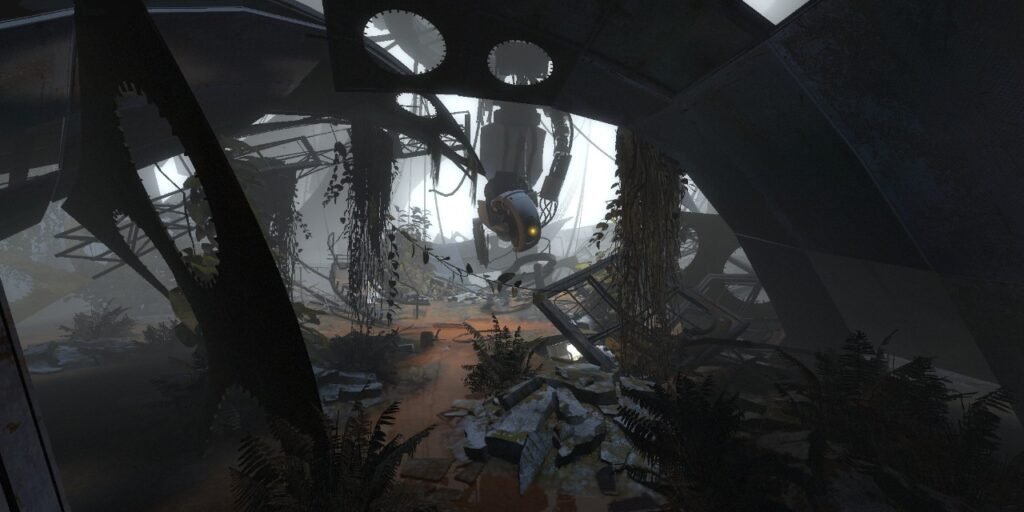
Quick Points
- Play the single-player campaign. It’s the part that fully earns the hype.
- Do co-op only with a patient puzzle partner. Otherwise skip it.
- Use hints if you’re stuck for 10 minutes. Don’t let one chamber waste your night.
- Skip community test chambers unless you finish the campaign and still want more.
- Great for short sessions. Most chambers fit neatly into 20 to 45 minutes of play.