





5 Games to Play If You Like Far Cry
Far Cry built its identity on open world freedom, explosive encounters, unpredictable wildlife, and villains who dominate the story. Whether you loved Far Cry 3‘s…

Far Cry drops you into a hostile tropical archipelago where open-ended combat encounters unfold across large, mission-based maps. Each objective pushes you forward through contained levels that reward quick adaptation and tactical positioning rather than long-term character progression.
Built primarily for the Sprint Player, Far Cry delivers forward momentum through structured missions, while its punishing combat scenarios give the Resilient Player a steady challenge curve that demands focus and adjustment.
Far Cry structures its experience around contained mission objectives set within large, open combat spaces. Each level provides freedom in approach, but progression is clearly directed through forward-moving objectives rather than systemic character growth.
Encounters unfold across beaches, jungles, and research facilities where positioning, sightlines, and movement matter more than statistics. The environment supports tactical choice without becoming a sandbox of endless side systems.
For the Sprint Player, missions provide clear entry and exit points, making progress measurable and session-friendly.
Enemy AI is a defining feature of Far Cry. Opponents flank, pursue, and adapt to your position, punishing careless aggression. Combat rarely feels static. Engagements escalate quickly if control is lost.
Difficulty spikes reinforce caution and awareness. Ammunition scarcity and exposed terrain amplify tension during firefights.
For the Resilient Player, the challenge lies in learning enemy behavior patterns and maintaining composure under sustained pressure.
While progression moves in a defined direction, individual encounters allow for multiple tactical approaches. Players can attempt stealth, use long-range weapons, rely on vehicles, or force direct engagements.
Freedom exists within structure. Creativity is encouraged, but survival depends on execution rather than experimentation alone.
The result is a forward-driven shooter that rewards adaptability more than long-term accumulation.
Far Cry stands out through its wide, open combat arenas that encourage positioning, reconnaissance, and controlled engagement rather than corridor shooting. Jungles, beaches, and research compounds function as tactical sandboxes where elevation, cover, and sightlines determine survival.
Movement through the environment is not cosmetic. It directly shapes combat outcomes.
For the Sprint Player, each mission delivers a contained objective with room for creative execution.
Enemy AI reacts aggressively, flanking exposed positions and escalating firefights if control is lost. Encounters can shift quickly from manageable to overwhelming, especially in later stages of the campaign.
Difficulty spikes reinforce deliberate pacing and situational awareness. Success often depends on patience and adaptation rather than speed alone.
For the Resilient Player, the appeal lies in overcoming sustained pressure and refining tactical approach after failure.
Unlike later entries in the series, Far Cry emphasizes mission progression over side systems. There are no layered skill trees or long-term build optimization loops. Progress comes from completing objectives and mastering the tools provided.
This streamlined structure makes forward momentum clear and measurable. Sessions feel purposeful rather than sprawling.
For the Sprint Player, that clarity keeps progress tight and defined. For the Resilient Player, difficulty ensures that advancement feels earned rather than automatic.
A standard playthrough of Far Cry on normal difficulty typically takes 12 to 18 hours, depending on combat efficiency and how often encounters require retries.
The campaign moves through clearly defined missions with limited detours. Progress is measured by advancing objectives rather than completing optional systems.
For the Sprint Player, the campaign offers forward momentum with clear completion pacing.
Higher difficulty settings significantly extend total playtime. Reactive enemy AI, limited resources, and punishing firefights often require repeated attempts and tactical adjustments.
Encounters are not built to be rushed. Positioning, patience, and environmental awareness determine success.
For the Resilient Player, additional hours come from overcoming sustained challenge rather than pursuing optional content.
Replayability in Far Cry comes from experimenting with different combat approaches. Stealth-focused play, aggressive vehicle use, or long-range tactics can alter how missions unfold.
Multiplayer modes add further longevity, but the core replay value comes from refining execution and improving performance across missions.
The overall time commitment is moderate, but difficulty scaling can meaningfully extend engagement.
Curious what Far Cry is all about? The trailer gives you a great first look at the world, the vibe, and the kind of story you're stepping into.
These videos give some tips and pointers on getting started with Far Cry
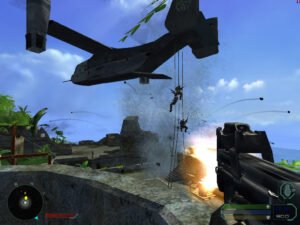
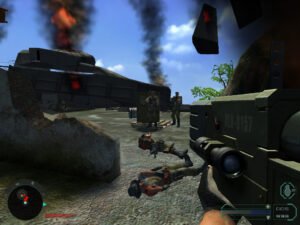
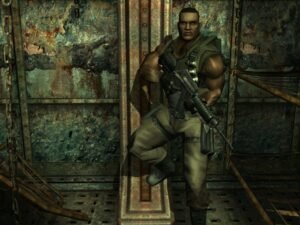
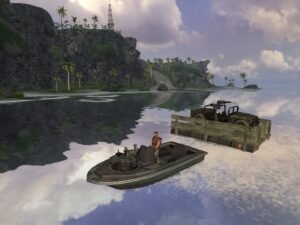
Want to see what Far Cry actually looks like in-game? These screenshots will hopefully give you a feel for what the world of Far Cry is like.
Far Cry built its identity on open world freedom, explosive encounters, unpredictable wildlife, and villains who dominate the story. Whether you loved Far Cry 3‘s…

When Far Cry first released in 2004, it wasn’t yet a household name. It was an ambitious PC shooter from a small German studio, Crytek,…
The original Far Cry features large, open combat maps but follows a mission-based structure. Levels allow tactical freedom, but progression is linear and objective-driven rather than fully open-world.
For the Sprint Player, this keeps momentum clear and contained.
Yes. Enemy AI is aggressive and reactive, especially on higher difficulty settings. Opponents flank, pursue, and punish exposed positioning.
For the Resilient Player, the challenge comes from adapting tactics and refining execution rather than relying on upgrades.
Most players complete the main campaign in 12 to 18 hours on normal difficulty. Higher difficulty settings can extend total playtime due to encounter retries and tactical adjustments.
The original Far Cry does not feature skill trees or long-term build systems. Progression comes from advancing through missions and mastering available weapons and tools.
Multiplayer modes exist, but the primary experience is the single-player campaign. Replay value comes more from refining combat approach and increasing difficulty than from ongoing progression systems.
There's more to Far Cry than Far Cry. Check out some of the other games in the franchise.
Great games dont have an expiration date. Take our quiz and we will find you the perfect game.
Take the QuizSome of the links on this site are Amazon affiliate links, which means if you click through and make a purchase, I may earn a small commission—at no extra cost to you. It’s a simple way to help support the site and keep the game recommendations coming. Thanks for your support!