



How Long Does It Take to Beat Starfield?
Starfield is one of the largest and most open ended RPGs Bethesda has ever built, which naturally leads to one of the most common questions…
Launch into the infinite frontier and discover the secrets of the galaxy in Starfield, the first new universe in 25 years from Bethesda Game Studios! Set in the year 2330, you join Constellation, the last group of space explorers seeking rare artifacts throughout the Settled Systems. This is a journey crafted for those who want their time to result in a literal empire among the stars. Whether you are designing a custom interstellar vessel, establishing automated outposts on distant moons, or navigating the complex political landscape of New Atlantis, every action builds toward a legacy that spans light-years.
Few games have generated as much anticipation as Starfield. As Bethesda’s first new universe in over two decades, it promised the vastness of space with the depth of Skyrim and the immersion of Fallout 4. The final result didn’t please everyone. Critics called it too slow or too safe, while others saw it as a sprawling sandbox filled with discovery and freedom.
The truth sits somewhere in the middle. Starfield has rough edges and pacing issues, but when it’s firing on all cylinders — exploring star systems, building ships, or diving into faction storylines — it becomes something special. Mods have only made it better, patching weak spots and expanding the game’s potential. Despite its uneven reception, Starfield remains one of the most rewarding experiences for players who want to get lost in a living, breathing universe.
Starfield is built on the philosophy of long-term, player-driven progression. For the Investment Gamer, the true draw is the sheer volume of interconnected systems that reward your dedication. You aren’t just a pilot; you are an architect and a tycoon. The game allows you to build a fleet of specialized ships, manage a network of resource-extracting outposts, and level up a vast skill tree that influences everything from your persuasion skills to your combat effectiveness with jetpacks. The more time you invest in learning the logistics of the Settled Systems, the more the game opens up, providing a sense of scale and ownership that is rare in the genre.
Beyond the sandbox mechanics, Starfield features a rich tapestry of human history and future speculation. For the Narrative Seeker, the appeal lies in the competing visions for humanity’s future. You’ll navigate the bureaucratic halls of the United Colonies, the rugged frontier of the Freestar Collective, and the shadowy corporate world of Ryujin Industries. Each faction offers a lengthy, high-quality questline that explores themes of religion, science, and the cost of expansion. The main quest itself is a philosophical mystery that pays off in surprising ways, ensuring that your journey has a meaningful emotional core.
Gameplay in Starfield is a dual-layered experience, blending tight first-person ground combat with strategic space dogfighting. On foot, you’ll utilize a wide array of ballistic, laser, and particle weapons, enhanced by “Boost Packs” that add a thrilling vertical dimension to fire-fights. In space, your ship becomes your weapon, requiring you to manage power levels between shields, engines, and various weapon systems. This variety ensures that no two encounters feel the same, allowing you to switch between a stealthy corporate agent and a heavy-hitting space pirate as your mood, and your schedule, dictates.
The visual design of Starfield utilizes a unique “NASA-punk” aesthetic, grounding its futuristic technology in believable, functional industrial design. From the cluttered, lived-in cockpits of your ships to the sterile, high-tech labs of research stations, the world feels tangible and historically grounded. For those looking for a high-quality escape, the atmospheric lighting and planetary vistas, watching a gas giant rise over the horizon of a barren moon, provide a constant sense of awe. It is a world that invites you to stop and admire the sheer scale of the cosmos.
One of the game’s greatest strengths is how it categorizes its content. You can engage in “Mission Board” tasks for quick 15-minute sessions, tackle a major faction quest over an hour, or spend a whole weekend building the perfect base. For the busy gamer, this modular design is a perfect fit. You can make measurable progress in your ship’s cargo capacity or your character’s level even in short bursts, ensuring that the game never feels like a burden, but rather a flexible hobby that respects your availability.
The ship-builder is perhaps the most robust toolset Bethesda has ever created. You can spend hours meticulously snapping modules together to create anything from a sleek fighter to a massive flying fortress. Similarly, outpost building allows you to colonize planets, hiring crew members to manage production lines while you are away. This level of customization ensures that your presence in the galaxy is visible and unique, giving you a deep sense of accomplishment as you see your designs functioning across the Settled Systems.
For players who focus primarily on the main questline and the mystery of the artifacts, the journey through Starfield will take approximately 30 to 40 hours. This path provides a cinematic and thought-provoking sci-fi tale that takes you to the most important locations in the galaxy. It is a manageable way to see the core narrative conclusion without getting lost in the thousands of planets available, making it a great option for those with limited weekly gaming time.
If you choose to complete the major faction storylines alongside the main quest, your playtime will easily reach 80 to 100 hours. These faction stories are widely considered the highlight of the game, offering distinct “mini-campaigns” with their own unique themes and rewards. This path provides the most balanced experience, giving you a comprehensive look at the politics and cultures of the future while significantly increasing your power and wealth.
For the player who wants to build a multi-planet industrial empire, reach the level cap, and explore every unique star system, the total time investment can exceed 200 hours. Because the game features a unique “New Game Plus” mechanic that is narratively integrated into the story, the replay value is practically infinite. This is a game designed to be played over years, providing a reliable and expansive universe that you can return to whenever you feel the call of the stars.
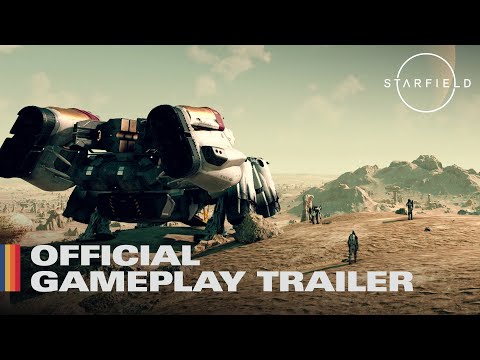
Curious what Starfield is all about? The trailer gives you a great first look at the world, the vibe, and the kind of story you're stepping into.
These videos give some tips and pointers on getting started with Starfield
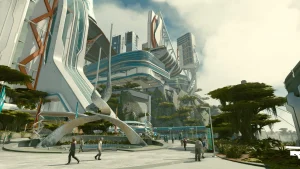
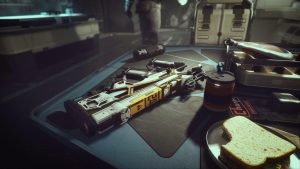
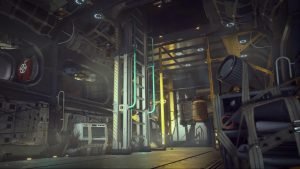
Want to see what Starfield actually looks like in-game? These screenshots will hopefully give you a feel for what the world of Starfield is like.
DLC just means more of a good thing. Here are some for Starfield
In the Shattered Space expansion, players travel to the secretive home world of House Va’ruun, a faction shrouded in mystery in the base game. This expansion offers a massive, hand-crafted landmass on a single planet, providing a more focused and atmospheric experience reminiscent of traditional Bethesda expansions. For the Narrative Seeker, this is an essential chapter, diving deep into the dark theology and history of the Great Serpent worshippers in a visually stunning, alien environment.
The expansion introduces terrifying new enemies and gravitational anomalies that challenge your combat skills and traversal abilities. The tighter, more contained map design allows for deeper environmental storytelling and more complex level design. It rewards the time you spend investigating the ruins of Va’ruun’kai with unique rewards and a story that feels more intimate and high-stakes than the sprawling exploration of the main game.
Shattered Space provides a significant amount of high-quality content that expands the lore of the Settled Systems in a meaningful way. Whether you are navigating the political infighting of the Va’ruun nobility or uncovering the source of a cosmic catastrophe, the DLC ensures that your journey into the unknown is a highlight of your Starfield experience, offering a different flavor of sci-fi that enriches the entire universe.
Starfield is one of the largest and most open ended RPGs Bethesda has ever built, which naturally leads to one of the most common questions…
Starfield was one of the most anticipated RPGs in years, but many players quickly realized that while it had a strong foundation, it also carried…
When Bethesda first revealed Starfield, it was billed as the studio’s most ambitious project yet. Bethesda has always been known for sprawling open world RPGs…
The game uses a mix of procedural generation and hand-crafted points of interest. While some moons are barren—reflecting the reality of space—major planets are filled with outposts, labs, and caves to explore. The game is designed so that you can find action quickly by landing near icons or scanning for signals.
It has a learning curve, but it is incredibly rewarding. There is an “Upgrade” system for simple stat boosts, while the “Ship Builder” allows for full creative control. The game checks your ship’s flight worthiness automatically, so you don’t have to worry about accidentally building something that can’t take off.
Yes. The “Persuasion” system is very robust, allowing you to talk your way out of many confrontations. Additionally, the “Research” and “Scanning” skills allow you to progress and earn XP through discovery and data collection rather than just combat, making it a viable path for the Investment Gamer.
Without spoiling the story, Starfield has one of the most unique NG+ systems in gaming. It is woven directly into the narrative and offers the chance to see different variations of quests and world states, making subsequent playthroughs feel fresh and relevant to your character’s growth.
While you do need to manage fuel for grav-jumps (which recharges automatically) and oxygen for sprinting, the survival elements are not intrusive. The game focuses more on the thrill of exploration and the joy of building than on punishing the player with tedious survival meters.
Great games dont have an expiration date. Take our quiz and we will find you the perfect game.
Take the QuizSome of the links on this site are Amazon affiliate links, which means if you click through and make a purchase, I may earn a small commission—at no extra cost to you. It’s a simple way to help support the site and keep the game recommendations coming. Thanks for your support!