Modern Games That Are Perfect for Busy Gamers
Being a busy gamer is not about having bad priorities. It is about having real ones. Work, family, fatigue, and limited mental bandwidth all shape…
Embark on a soul-stirring journey as a tiny fox in a massive, uncaring world in Tunic, an isometric action-adventure that pays homage to the classics while forging its own cryptic path. Hidden behind its charming exterior is a complex layer of environmental storytelling and deep, manual-based puzzles. This is a sanctuary for the Narrative Gamer who lives for “show, don’t tell” lore and the Sprint Player who needs a dense world where every 20-minute session leads to a new discovery. In Tunic, the manual isn’t just a guide, it’s the key to the universe.
Tunic is a masterclass in Environmental Narrative. The game intentionally obscures its language and mechanics, forcing the Narrative Gamer to become a digital archeologist. You aren’t fed a script; you piece together the story of the “Heir,” the “Holy Cross,” and the ruined civilization by observing murals, deciphering the hand-drawn manual pages, and noticing subtle changes in the world. It’s an intellectual high-wire act where the “Aha!” moments of narrative realization are just as satisfying as defeating a boss. For the busy professional, it provides a deep, contemplative mystery that doesn’t rely on endless dialogue trees to feel significant.
For the Sprint Player, Tunic is designed with incredible density. The world of Tunic is a “Rubik’s Cube” of shortcuts and hidden paths. Because the map is so tightly wound, a 15-to-20 minute session can yield massive progress: finding a new manual page, unlocking a permanent fast-travel point, or discovering a hidden upgrade. It respects your time by ensuring that even “exploration-only” sessions provide tangible account ROI. Furthermore, the inclusion of “No Fail” and “No Stamina” modes allows the time-pressed player to bypass challenging combat hurdles if they simply want to focus on the exploration and narrative.
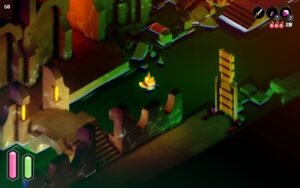
Tunic captures the feeling of playing an imported game as a child, where you don’t understand the text but you feel the weight of the adventure. The tilt-shift photography effect, vibrant lighting, and the “Lifeformed” soundtrack create a premium, meditative atmosphere. It is a visually and aurally “Beefy” experience that feels like a polished indie gem, perfect for a high-quality mental reset after a long day of work.
The core of Tunic is the instruction manual you collect page-by-page. These pages aren’t just collectibles; they contain the maps, the controls, and the hints for the game’s deepest secrets. For the Narrative Gamer, it’s a brilliant meta-storytelling device. For the Sprint Player, it’s a focused roadmap. You might find a page that reveals a move you’ve been able to do since the first minute of the game, instantly changing how you view the entire world. It turns “finding a manual” into the game’s most powerful upgrade.
Tunic can be as hard as a “Souls-like” or as breezy as a walk in the park. The accessibility settings allow you to turn on No Fail Mode (invincibility) at any time. This is a “Strategic Safety Net” for the busy professional. If you find yourself stuck on a boss for 30 minutes and just want to see the next narrative beat before bed, you can toggle it on, secure the win, and move forward. It removes the “gatekeeping” of difficulty without devaluing the mystery of the world.
Like Animal Well, Tunic has layers. Layer 1 is the quest for the keys. Layer 2 is completing the manual. Layer 3 involves a deep, language-based ARG that rewards the most dedicated Narrative seekers. This structure ensures that the game has a massive Strategic ROI—you get out exactly what you put in, whether that’s a quick weekend adventure or a month-long investigative deep-dive.
A focused playthrough to reach the credits and see the “Ending A” typically takes 10 to 12 hours. This fits perfectly into a busy schedule, allowing you to complete a major gaming milestone over the course of two weeks of casual, nightly play.
If you seek the “True Ending” and want to collect every manual page and secret fairy, expect to spend 18 to 22 hours. For the Narrative Gamer, this is the most rewarding way to play, as it fully completes the fox’s story and resolves the central mystery of the cycle.
For those who wish to actually translate the game’s runic language and solve the “Holy Cross” puzzles without guides, Tunic can easily become a 30 to 40-hour intellectual obsession. Because the game is so dense, even these longer playthroughs feel “Sprint-friendly” because they are broken down into hundreds of small, manageable discoveries.
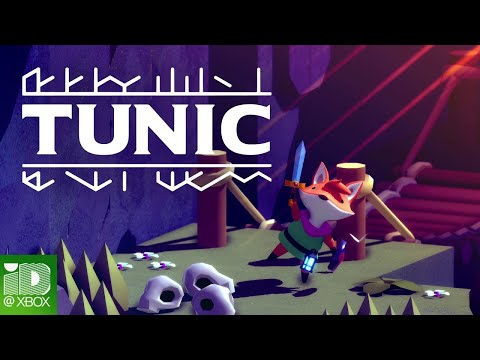
Curious what Tunic is all about? The trailer gives you a great first look at the world, the vibe, and the kind of story you're stepping into.
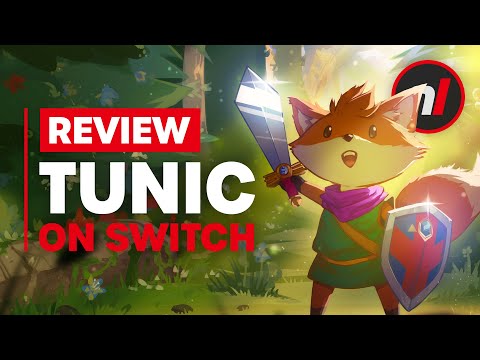
These videos give some tips and pointers on getting started with Tunic
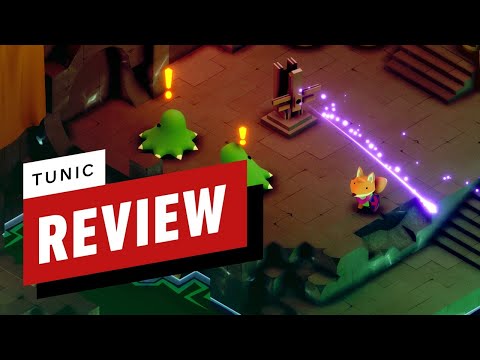
Want to see what Tunic actually looks like in-game? These screenshots will hopefully give you a feel for what the world of Tunic is like.
It takes heavy inspiration from early Zelda games (especially the mystery of the NES original), but its “manual” mechanic and focus on obscured information make it a completely unique experience.
Only if you want to be. Between the “Reduced Difficulty” setting and “No Fail Mode,” anyone can enjoy Tunic’s story and puzzles regardless of their technical skill with a controller.
The game is best played “blind.” The in-game manual is designed to be your guide. Only look things up if you are truly stuck on the final, most cryptic puzzles.
Yes. You can carry your upgrades and knowledge into a second run, which allows you to find secrets even faster and try to sequence-break the game’s intended path.
It’s rated E10+ for mild violence and some scary atmosphere. While it looks cute, it can get quite dark and challenging, so it’s a great game for parents and children to play together as a “Co-op Mystery.”
Great games dont have an expiration date. Take our quiz and we will find you the perfect game.
Take the QuizSome of the links on this site are Amazon affiliate links, which means if you click through and make a purchase, I may earn a small commission—at no extra cost to you. It’s a simple way to help support the site and keep the game recommendations coming. Thanks for your support!