Delayed Respawnse
  • About
  • Articles
  • Games
  • Franchises
  • Respawnses
  • Tier Lists
Find Your Next Game
  • Home
  • About
  • Articles
  • Games
  • Xbox
  • Playstation
  • Nintendo
  • PC
  • Franchises
  • Respawnses
  • How We Score Games
  • Tier Lists
  • Take Our Quiz
  • Join the Community
  1. /
  2. Tier Lists
  3. /
  4. Every Assassin’s Creed Antagonist Ranked

Every Assassin’s Creed Antagonist Ranked

The Assassin’s Creed series is filled with unforgettable villains who shape the worlds, stories, and emotional stakes of each game. From political masterminds to personal rivals and shadowy organizations pulling strings from the dark, these antagonists define the conflicts that drive the Assassins forward.

Ranking the Most Memorable Villains in Assassin’s Creed

The Assassin’s Creed series has featured some of the most interesting villains in modern gaming. Across its many eras, cultures, and political landscapes, each game introduces an antagonist who shapes the story, challenges the protagonist, and deepens the world. Whether they are ruthless tyrants, cold ideologues, tragic figures, or shadowy manipulators, these characters give each Assassin’s Creed entry its tension and emotional weight.

This tier list highlights the strongest primary antagonist from each game and ranks them based on their presence, motivation, impact, and overall effectiveness in the story. Some stand among the best villains Ubisoft has ever written, while others fall short, but all of them help define the identity of their game.

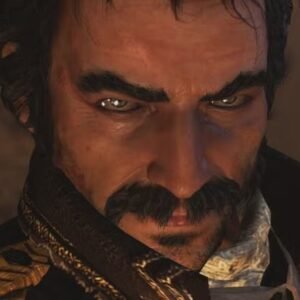
S
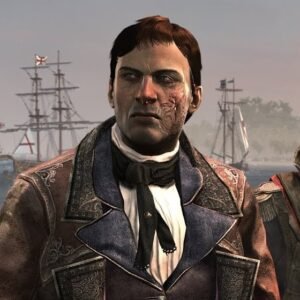
Woodes Rogers
François-Thomas Germain
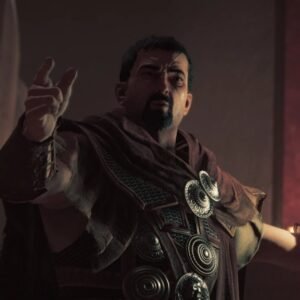
Flavius Metellus
A
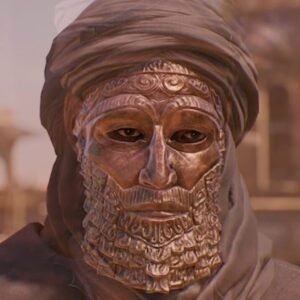
Al-Rabisu
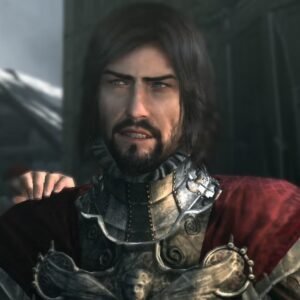
Cesare Borgia
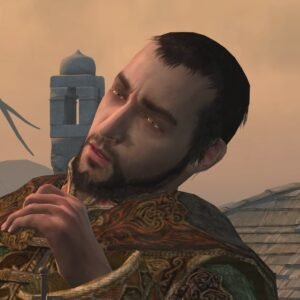
Prince Ahmet
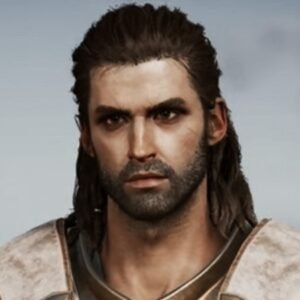
Deimos
B
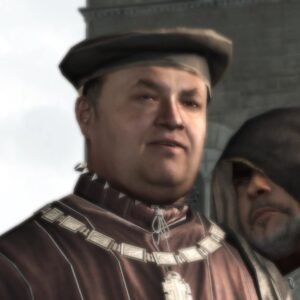
Rodrigo Borgia
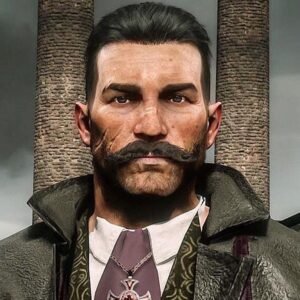
Crawford Starrick
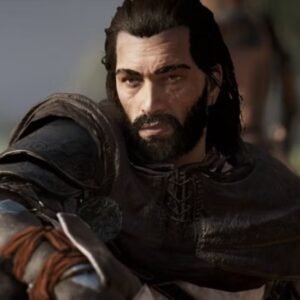
Basim
Akechi Mitsuhide
C
Charles Lee
Liam O’Brien
Armand Bouchart
D
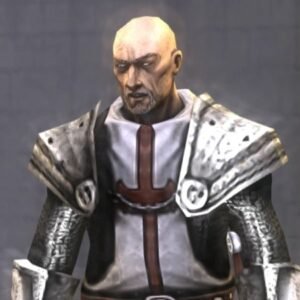
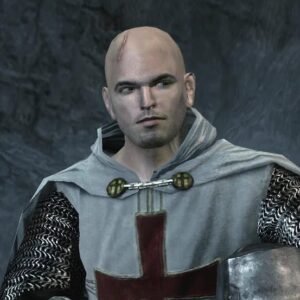
Robert de Sablé
S Tier

Woodes Rogers (Assassin’s Creed IV: Black Flag)

Woodes Rogers works so well as an antagonist because he feels like a natural consequence of Edward’s world rather than a cartoon villain dropped into it. He is disciplined, intelligent, and completely committed to restoring order to the Caribbean. Rogers represents the rise of imperial power as piracy starts to fade, which gives his conflict with Edward a bittersweet edge. He is not evil for the sake of it. He is a man with a job to do, and he does it ruthlessly. That grounded approach makes him one of the most believable and effective foes in the series.


François-Thomas Germain (Assassin’s Creed Unity)

François-Thomas Germain is a standout because his motivations are almost disturbingly calm and logical. He sees the chaos of the French Revolution as an opportunity to reshape society according to his ideals. He is not driven by petty grudges. He is driven by a cold belief that the old order must be burned down so something better can rise. That philosophical edge makes him feel more dangerous than a typical brute. Germain’s influence is felt across Paris, and his scenes always raise the stakes, which makes him a perfect fit for Unity’s tense and violent setting.


Flavius Metellus (Assassin’s Creed Origins)

Flavius Metellus is compelling because he is tied directly to Bayek’s deepest wound. He is not just another name on a list. He is the face of the cruelty that destroyed Bayek’s family. Flavius treats human life as a tool in his pursuit of power, and that cold detachment makes him feel inhuman in the best possible way for a villain. By the time Bayek finally reaches him, the player fully understands the rage and grief behind that confrontation. Flavius turns Origins from a simple revenge story into something much more personal and memorable.

A Tier

Al-Rabisu (Assassin’s Creed Mirage)

Al-Rabisu works as a strong primary face for the Order in Mirage because of how well they reflect the themes of secrecy, control, and hidden power in Baghdad. The masked identity fits the game’s focus on investigation and uncovering the truth. Al-Rabisu feels like someone who has learned to pull strings quietly and efficiently. While they may not reach the emotional impact of the very best villains in the series, they help create a feeling that corruption is woven into the fabric of the city. That presence makes Mirage’s world feel more dangerous and alive.


Cesare Borgia (Assassin’s Creed Brotherhood)

Cesare Borgia is one of the franchise’s most iconic villains for a reason. He is arrogant, ambitious, and completely convinced that he is destined to rule. Cesare is larger than life, but he is grounded enough to feel believable within the political chaos of Renaissance Italy. He pushes Ezio in ways that few other antagonists do. The scale of his plans, the brutality of his methods, and his constant presence throughout the story make him a perfect central foe. If the very top tier is reserved for the most nuanced villains, Cesare sits just below that as a powerful and unforgettable rival.


Prince Ahmet (Assassin’s Creed Revelations)

Prince Ahmet is compelling because he hides in plain sight for much of Revelations. He is educated, calm, and outwardly reasonable, which makes his true intentions more interesting once they are revealed. Ahmet’s goals are rooted in the political struggles of Constantinople, and he feels like a natural product of that environment. He is not as theatrical as some other villains, but that restraint actually works in his favor. He comes across as a man who believes he is the rightful guardian of knowledge and power, which places him in direct and meaningful opposition to Ezio.


Deimos (Assassin’s Creed Odyssey)

Deimos is at the heart of Odyssey’s emotional conflict. Whether Deimos is Alexios or Kassandra, they are a walking reminder of the broken family at the center of the story. The Cult of Kosmos is a strong structural threat, but Deimos is the one who gives that threat a face and a voice. Their rage, confusion, and manipulation make every encounter with them feel heavy. Deimos is not just someone you have to stop. They are someone you hope can be saved, depending on your choices. That layered relationship makes them one of the more memorable antagonists in the series.

B Tier

Rodrigo Borgia (Assassin’s Creed II)

Rodrigo Borgia is a classic villain who fits perfectly with the tone of Assassin’s Creed II. He is corrupt, ambitious, and confident, and he has enough presence to feel like a true puppet master behind much of Ezio’s suffering. Rodrigo is responsible for the death of Ezio’s family, which gives their rivalry real emotional weight. At the same time, he is more straightforward than later villains. His goals are clear and simple, and he does not evolve much over the course of the story. That keeps him out of the very top tiers, but he is still a strong and memorable antagonist.


Crawford Starrick (Assassin’s Creed Syndicate)

Crawford Starrick is a stylish and theatrical villain who fits nicely into Syndicate’s exaggerated take on Victorian London. He controls industry, crime, and politics with a smile, which gives him a charming but dangerous aura. Starrick is fun to watch, and his control over the city gives the Frye twins a clear target to work against. However, he can feel a bit one-note at times. He is very good at being “the bad guy,” but he lacks the depth or personal connection that defines the series’ very best antagonists.


Basim (Assassin’s Creed Valhalla)

Basim is one of the more intriguing antagonists in the modern era of Assassin’s Creed. He starts as a mentor and ally, which makes his eventual turn more impactful. His motivations are tied deeply into the Isu lore, and his long memory and simmering resentment create a very different kind of villain. Instead of chasing simple power, Basim is driven by old wounds and an ancient grudge. The tradeoff is that he spends much of the game in the background, and his full impact lands late. That keeps him in B Tier, but his role in the larger meta-story is significant.


Akechi Mitsuhide (Assassin’s Creed Shadows)

Akechi Mitsuhide is a compelling choice for Shadows because he is one of the most enigmatic and debated figures in Japanese history. His betrayal of Oda Nobunaga gives him instant narrative weight, and the game’s setting allows his motives to be explored with more nuance than the traditional historical account. Mitsuhide can be portrayed as a man torn between loyalty, ambition, ideology, and survival in a brutal political era. He fits naturally into the world of shifting allegiances that defines the Sengoku period. The main limitation is that his story is so well known that his arc may feel predictable, which keeps him from the very top tiers, but he remains a strong, grounded, and thematically rich antagonist who suits the setting extremely well.

C Tier

Charles Lee (Assassin’s Creed III)

Charles Lee is interesting on paper. He is tied to Connor’s personal story, he operates within the larger Templar structure, and he represents a worldview that clashes strongly with the Assassin ideals. In practice, he suffers from uneven pacing and screen time. He appears in bursts rather than as a constant presence, which makes him feel more like a final checkpoint than a looming threat. The rivalry between Connor and Lee has strong moments, especially toward the end, but it never fully realizes its potential. That keeps him in the middle tier.


Liam O’Brien (Assassin’s Creed Rogue)

Liam O’Brien works more as an emotional antagonist than a traditional villain. He is a former ally who becomes a direct opponent, which gives their conflict with Shay a more personal angle than a simple Assassin versus Templar setup. Liam represents Shay’s old life and the pain of betrayal on both sides. However, the game’s structure and focus on the twist of perspective mean that Liam never quite becomes a fully fleshed out villain. He is effective in key scenes, but he does not dominate the story in the way that the best antagonists do.


Armand Bouchart (Assassin’s Creed Bloodlines)

Armand Bouchart serves his role as the primary antagonist in Bloodlines, but the limited scope of the game holds him back. He continues the Templar threat and gives Altair someone tangible to pursue, but his characterization is thin and functional. Bouchart does not have many standout scenes or memorable speeches. He feels more like a necessary endpoint to the story than a deeply developed character. That is understandable given the platform and budget, but it places him firmly in the lower middle of the pack.

D Tier

Robert de Sablé (Assassin’s Creed)

Robert de Sablé is important to the foundation of the series, but he does not hold up well compared to later antagonists. He is more of a distant objective than a fully realized character. Most of the first game is spent hunting his allies and unraveling their conspiracy, while Robert himself appears rarely and leaves a limited impression. His role in the story is crucial, but his personality and motivations are not explored in much depth. He works as a structural villain, but not as a compelling character in his own right, which keeps him in D Tier.

Final Thoughts

Assassin’s Creed has always been a series defined by its settings and protagonists, but the villains often determine how memorable each journey becomes. The strongest antagonists bring clarity and weight to the conflict. They shape the themes of the story and push the heroes to their limits. The weaker ones remind us how much the series benefits from a complex and well-developed foe.

Looking across the franchise, it is clear that Assassin’s Creed shines brightest when its antagonists feel grounded in their world and driven by believable motivations. As the series continues to explore new eras and cultures, its legacy of great villains will grow, and we may not have seen the best one yet.

Delayed Respawnse

Some of the links on this site are Amazon affiliate links, which means if you click through and make a purchase, I may earn a small commission—at no extra cost to you. It’s a simple way to help support the site and keep the game recommendations coming. Thanks for your support!

Copyright © 2025 Delayed Respawnse. All Rights Reserved.

Platforms

  • Xbox
  • Playstation
  • Nintendo
  • PC

About

  • About
  • Privacy Policy
  • Terms and Conditions
  • Sitemap

Find Your Next Game

  • Take Our Quiz
  • Quiz Results
  • How We Score Games