Every Assassin’s Creed Map Ranked
From the sunlit Caribbean to the rooftops of Paris and the dense streets of Baghdad, we rank every Assassin’s Creed world by exploration, atmosphere, and design.
From the sunlit Caribbean to the rooftops of Paris and the dense streets of Baghdad, we rank every Assassin’s Creed world by exploration, atmosphere, and design.
Assassin’s Creed is known for many things, but world design has always been at the heart of the series. From the crowded bazaars of the Middle East to the icy rivers of England, every entry creates a sense of place that defines the experience. Some maps are dense and masterfully crafted. Some are sprawling with unforgettable vistas. Some are beautiful but a little empty. Others are bold swings that still spark debate among fans.
This tier list focuses on the worlds themselves. How fun they are to explore, how well they support parkour and stealth, how memorable their locations are, and how fully they immerse you in their historical eras. Here is how each Assassin’s Creed map stacks up.
The Caribbean is one of the most ambitious and successful settings Ubisoft has ever created. Sailing between islands, diving into underwater shipwrecks, exploring jungles, and engaging in massive naval battles all create a world that feels alive. Even though it is not a traditional city parkour setting, the open sea is unforgettable and atmospheric in a way no other AC map can match.
Paris is dense, vertical, detailed, and built for parkour. The city feels alive with crowds, conflict, and tension. The incredible interior exploration and seamless movement make it one of the best designed urban maps in the franchise. Unity’s Paris remains the gold standard for city design in the series.
Egypt is breathtaking. From the glowing sands of the desert to the lush Nile Delta and the grandeur of Alexandria, Origins offers one of the most atmospheric and visually stunning maps in the entire franchise. Exploration feels meaningful and rewarding, and the world successfully feels ancient yet alive.
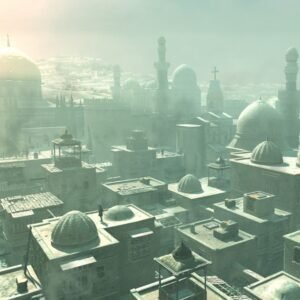
Baghdad is compact but dense, vibrant, and built for stealth and parkour. Its neighborhoods feel distinct and alive, and the world is filled with cultural detail. The smaller size works in its favor, creating one of the best pure city sandboxes since the early days of the franchise.
Rome is large, varied, and filled with memorable locations. The mix of historical landmarks, urban districts, countryside outskirts, and aqueduct systems gives Brotherhood a strong sense of place. It feels like a true evolution from AC II’s cities and remains fun to explore today.
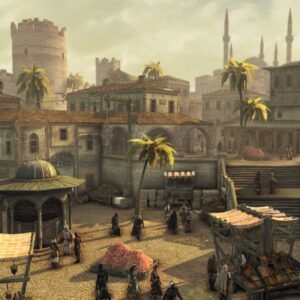
Constantinople is atmospheric, beautiful, and sprawling. It captures the cultural mix of east and west perfectly and offers excellent rooftops for parkour. Not quite as varied as other maps, but still one of the franchise’s most memorable cities.
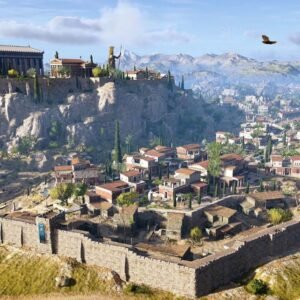
Greece is stunning and huge. The islands are gorgeous, the seas feel alive, and exploration is constantly rewarding. The only thing holding it back is the sheer size. It is almost too big, with areas that can feel similar to each other. But it is still one of the most striking worlds in the series.
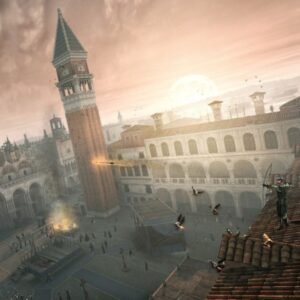
Florence and Venice remain iconic. Venice, in particular, is one of the most memorable cities in the entire franchise. The world feels handcrafted and still holds up, even if it lacks the vertical complexity of later games.
Victorian London is atmospheric and filled with character. The industrial era design, crowded streets, and smoggy skyline all feel unique in the series. The grapple hook changes traversal, for better or worse, which slightly impacts the core parkour experience.
England is beautiful and filled with variety, from forests and rivers to medieval towns and Roman ruins. Its main drawback is the scale. The regions can feel too spaced out, and many towns lack the depth and complexity needed for interesting parkour or infiltration. Still, the atmosphere is excellent.
A beautifully crafted Japan with strong environmental design, atmospheric lighting, and interesting dual character approaches. Early impressions and consensus point to a world that feels grounded, varied, and immersive, though not quite as complex as Unity or as bold as Origins.
The frontier has great ideas, but traversal is inconsistent and often frustrating. Boston and New York have memorable sections, but they lack the density and identity of the series’ strongest cities. Still, the world has atmosphere, especially in wilderness areas.
The North Atlantic is solid, but it feels like a smaller, colder version of Black Flag’s far superior world. Naval exploration is still fun, but the cities and settlements lack detail and depth compared to other entries.
As a handheld title, the map design is functional but limited. It captures the feel of early AC but without the density, complexity, or memorable layout of the console cities. Charm is there, but it is understandably constrained.
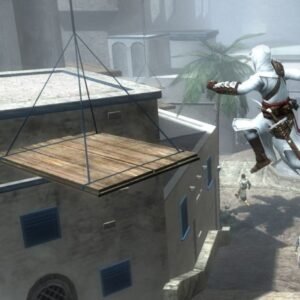
The original cities are important historically but feel empty and repetitive today. They were groundbreaking at release, but compared to modern entries, the layouts lack variety and the world feels sparse. A foundational step, but not a map that holds up.
Assassin’s Creed has always been defined by its worlds. Every game takes players to a different period, a different culture, and a different part of history. What makes the franchise special is how these settings shape the experience. Paris feels different than ancient Egypt. The Caribbean offers freedom that no other map can replicate. Baghdad rewards careful movement. Greece encourages wide open exploration. Each world brings its own identity and strengths.
Some maps stand above the rest because they combine atmosphere, density, traversal, and artistry into something unforgettable. Others are solid but limited by technology or design choices that reflect the era in which they were made. Even the lower tiered maps have historical importance because they pushed the franchise forward and helped define what came next.
Ranking these worlds highlights how ambitious Assassin’s Creed has been through the years. Whether you prefer compact, stealth focused cities or sprawling landscapes full of discovery, there is a world in this series for every type of player. No matter where you start, each map offers a window into history and a unique style of adventure that continues to make the franchise stand out.