Delayed Respawnse
  • About
  • Articles
  • Games
  • Franchises
  • Respawnses
  • Tier Lists
Find Your Next Game
  • Home
  • About
  • Articles
  • Games
  • Xbox
  • Playstation
  • Nintendo
  • PC
  • Franchises
  • Respawnses
  • How We Score Games
  • Tier Lists
  • Take Our Quiz
  • Join the Community
  1. /
  2. Tier Lists
  3. /
  4. Every Console Assassin’s Creed Game Ranked

Every Console Assassin’s Creed Game Ranked

Across centuries of history and innovation, Assassin’s Creed has evolved from stealth and intrigue to massive open-world adventures. We’ve ranked every mainline game in the series, from Assassin’s Creed II and Black Flag to Odyssey and Valhalla, to see which entries still stand above the rest.
From Hidden Blades to Open Worlds: The Evolution of Assassin’s Creed

Few franchises have evolved as dramatically as Assassin’s Creed. What started as a grounded stealth adventure about ancient conspiracies has grown into sprawling open-world RPGs that span centuries and continents. Through its highs and lows, Assassin’s Creed has remained a defining part of modern gaming, sometimes frustrating, often brilliant, and always ambitious.

Here’s how every mainline Assassin’s Creed game ranks today, based on gameplay, story, exploration, and legacy. (We’re skipping mobile titles and the Chronicles spin-offs to focus on the core experiences.)

S
Assassin’s Creed II
Assassin’s Creed IV: Black Flag
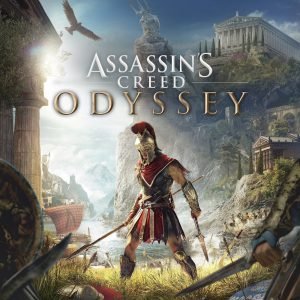
Assassin’s Creed Odyssey
A
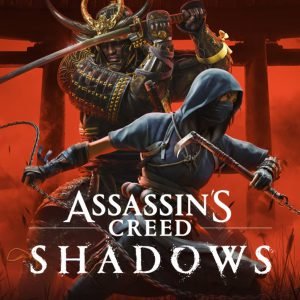
Assassin’s Creed Shadows
Assassin’s Creed Brotherhood
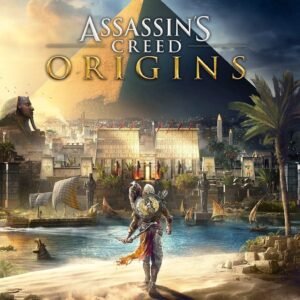
Assassin’s Creed Origins
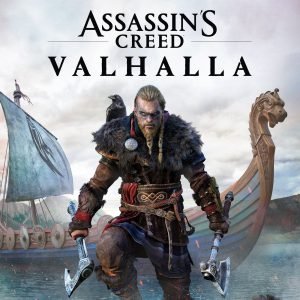
Assassin’s Creed Valhalla
B
Assassin’s Creed III
Assassin’s Creed Rogue
Assassin’s Creed Revelations
C
Assassin’s Creed Unity
Assassin’s Creed Syndicate
D
Assassin’s Creed
Assassin’s Creed Mirage
S Tier

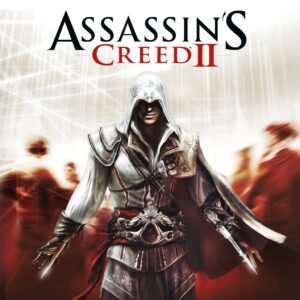
Assassin’s Creed II (2009)

This is where everything clicked. Ezio Auditore’s journey from nobleman to assassin remains one of gaming’s most satisfying character arcs. Assassin’s Creed II improved on the original in every possible way, smoother parkour, more diverse missions, and a story that finally connected emotionally. Florence and Venice are still beautiful playgrounds for stealth and exploration, and Jesper Kyd’s music perfectly complements the Renaissance atmosphere. More than any entry, this one defined what the series could be.


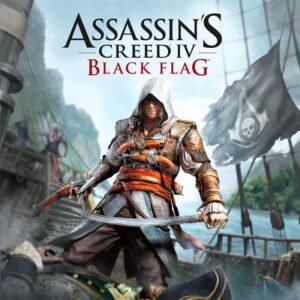
Assassin’s Creed IV: Black Flag (2013)

The game that turned assassins into pirates and somehow made it work. Black Flag took the core mechanics of Assassin’s Creed and expanded them across the Caribbean, blending stealth and naval combat into one of the most satisfying adventure games ever made. Sailing, ship battles, and island exploration are endlessly fun. Edward Kenway’s story doesn’t dive deep into the Assassins’ lore, but his charm and swagger carry the entire experience. It’s not just a great Assassin’s Creed game, it’s one of the best pirate games ever created.


Assassin’s Creed Odyssey (2018)

The boldest reinvention of the series yet. Odyssey transformed the franchise into a full-fledged RPG set in a stunning recreation of Ancient Greece. The dialogue choices, branching storylines, and large-scale combat gave players more agency than ever. Kassandra stands out as one of the best leads in the series, and the sheer scale of the world is astonishing. Some fans missed the stealth focus, but few could deny how ambitious and polished it felt.

A Tier

Assassin’s Creed Shadows (2025)

Ubisoft’s long-awaited leap to Feudal Japan delivers a world fans have wanted for years. The dual protagonists, a samurai named Naoe and a shinobi named Yasuke, offer two distinct playstyles that blend the best of stealth and action. The world design and visuals are spectacular, with stealth mechanics that finally feel grounded again. Some critics note that the story pacing dips in the middle and that performance varies slightly across platforms, but overall reception has been strong. Shadows captures the spirit of Assassin’s Creed II and Origins while giving it a fresh cultural flavor.


Assassin’s Creed Brotherhood (2010)

Essentially AC II: Part Two, but that’s not a bad thing. Ezio’s story continues in Rome with improved combat and the introduction of the Brotherhood recruitment system, which lets you send assassins on missions or call them into battle. The world design is excellent, and multiplayer was a surprisingly strong addition. It didn’t revolutionize the series, but it refined the formula beautifully.


Assassin’s Creed Origins (2017)

After years of fatigue, Origins revived the series. Bayek’s personal story in Ancient Egypt is heartfelt and tragic, and the world feels genuinely alive. The combat system overhaul brought the game closer to action RPGs like The Witcher 3, and it paid off. Climbing pyramids, uncovering tombs, and exploring the desert all feel magical. It’s slightly rough around the edges, but it laid the foundation for everything that came after.


Assassin’s Creed Valhalla (2020)

Epic in every sense of the word. Eivor’s Viking saga blends myth and history across a massive map filled with raids, settlements, and alliances. The story is engaging, though it can drag in spots due to its enormous length. The worldbuilding, however, is top-tier. Few games capture the feeling of exploration and discovery this well. It’s one of the most atmospheric entries in the series, even if it sometimes feels too big for its own good.

B Tier

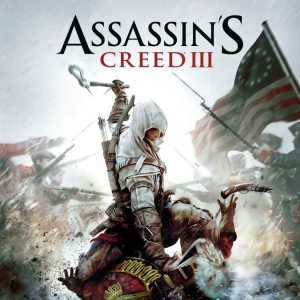
Assassin’s Creed III (2012)

A technical leap with mixed results. Set during the American Revolution, Assassin’s Creed III introduced naval combat and improved climbing but stumbled with pacing and tone. Connor’s reserved personality made him less relatable than Ezio, but his story carries emotional weight. It’s historically rich but mechanically clunky compared to later entries. Still, it laid the groundwork for Black Flag’s brilliance.


Assassin’s Creed Rogue (2014)

Often overlooked, Rogue flipped the script by letting you play as a Templar. Shay Cormac’s story provides an interesting moral perspective, and the North Atlantic setting combines Black Flag’s naval gameplay with a colder, more somber tone. It’s smaller in scale but rich in atmosphere, making it a hidden gem for longtime fans.


Assassin’s Creed Revelations (2011)

Ezio’s farewell is heartfelt, but the gameplay doesn’t evolve much from Brotherhood. The hook blade is a fun addition, and Constantinople is stunning, but fatigue was setting in by this point. It remains worth playing for closure, especially for those who followed Ezio from the beginning.

C Tier

Assassin’s Creed Unity (2014)

Paris has never looked better. Unity aimed for next-gen realism with massive crowds and fluid parkour, and its recreation of revolutionary France is breathtaking. Unfortunately, it launched in rough shape, plagued with bugs and performance issues. Years later, patches have made it far more playable, and its co-op missions are genuinely fun. It’s a game that deserved a better launch, underneath the rough edges lies a great Assassin’s Creed.


Assassin’s Creed Syndicate (2015)

A solid, if safe, entry. The twin protagonists, Jacob and Evie Frye, are charming, and Victorian London is an excellent playground. The grappling hook made traversal smoother, but the overall design felt formulaic. It’s enjoyable but forgettable, a transitional game between the old formula and the RPG era that followed.

D Tier

Assassin’s Creed (2007)

The original deserves respect for starting it all. It introduced the core pillars of the series: stealth, parkour, and assassination, but the gameplay loop is painfully repetitive. Altair’s story feels distant, and mission variety is minimal. It’s worth revisiting for historical curiosity, not for entertainment.


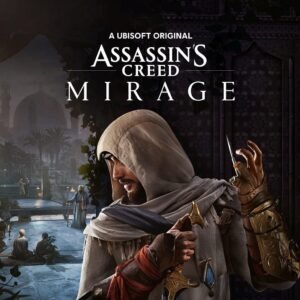
Assassin’s Creed Mirage (2023)

A nostalgic return to the series’ roots that doesn’t quite recapture the magic. Baghdad is gorgeous, and the smaller scale is refreshing after the RPG sprawl, but the missions and AI feel dated. Fans of the classic stealth style may enjoy it, but it lacks the energy and innovation that made Origins and Odyssey shine.

Final Thoughts

Across sixteen years and countless reinventions, Assassin’s Creed has grown from a promising experiment into a cultural phenomenon. When the series leans into compelling characters and breathtaking worlds, it’s among the best in gaming. When it plays it safe, it can feel mechanical and bloated.

The S-tier entries, Assassin’s Creed II, Black Flag, and Odyssey, represent the franchise at its peak: confident, ambitious, and unforgettable. Yet even the lower-ranked games offer glimpses of brilliance. Each era of Assassin’s Creed reflects its time, and that’s part of what makes it such a fascinating series to revisit.

Whether you prefer the rooftops of Florence, the seas of the Caribbean, or the mythic beauty of Greece, there’s a version of Assassin’s Creed that will feel like your own story.

Delayed Respawnse

Some of the links on this site are Amazon affiliate links, which means if you click through and make a purchase, I may earn a small commission—at no extra cost to you. It’s a simple way to help support the site and keep the game recommendations coming. Thanks for your support!

Copyright © 2025 Delayed Respawnse. All Rights Reserved.

Platforms

  • Xbox
  • Playstation
  • Nintendo
  • PC

About

  • About
  • Privacy Policy
  • Terms and Conditions
  • Sitemap

Find Your Next Game

  • Take Our Quiz
  • Quiz Results
  • How We Score Games