
When Far Cry first released in 2004, it wasn’t yet a household name. It was an ambitious PC shooter from a small German studio, Crytek, with a new engine and a focus on freedom rather than scripted levels. Two decades later, Far Cry has become one of Ubisoft’s biggest franchises, spanning multiple settings, villains, and even centuries of human history.
But as the series has evolved, so have opinions about what makes Far Cry special-and whether the changes have made it better or worse. Let’s take a look at how Far Cry transformed from a technical marvel to a global blockbuster, and what it gained and lost along the way.
The Birth of a Sandbox Shooter
The original Far Cry dropped players onto a remote Pacific island as ex-soldier Jack Carver, hunting for a missing journalist. At first glance, it looked like another linear shooter. But the moment players realized they could tackle objectives from any angle, sneak through brush, commandeer vehicles, or storm enemy camps head-on, something clicked.
Far Cry‘s open-ended design was revolutionary in 2004. Most shooters of the era, like Half-Life 2 or Halo 2, were tightly scripted. Far Cry let players improvise. It felt alive, unpredictable, and enormous. The game’s lush tropical visuals were unlike anything else on PC.
Still, the first game was a technical showcase more than a polished experience. It was brutally difficult, unevenly paced, and by the end, overrun with mutant enemies that clashed with the grounded realism of its early missions. But it planted a seed-a sandbox of chaos that would become the heart of the franchise.
Ubisoft Takes Over
After the first game’s success, Crytek moved on to Crysis, and Ubisoft took full control of the Far Cry IP. This change would shape the series’ future far more than anyone expected. Ubisoft Montreal rebuilt Far Cry 2 from scratch, introducing a realistic African setting, dynamic weather, and a striking commitment to immersion.
Far Cry 2 was divisive. Some praised its atmosphere, systems, and moral ambiguity. Others found its malaria system, weapon degradation, and constant road ambushes frustrating. Yet it was bold and uncompromising-a survivalist sandbox that treated every action as a risk.
It also introduced what would become a franchise trademark: player-driven chaos. Fires spread through grasslands, explosions drew patrols, and missions could unravel at any moment. Far Cry 2 may not have been the most fun entry, but it was the most experimental, and it built the design philosophy Ubisoft would refine for the next decade.
The Game That Defined the Franchise
When Far Cry 3 released in 2012, everything changed. This was the moment Far Cry became mainstream.
Set on a lawless tropical island ruled by pirates and madmen, Far Cry 3 delivered tight shooting mechanics, a skill tree, stealth systems, and outpost takeovers that rewarded creativity. It was open-world gaming perfected-one part survival, one part empowerment fantasy.
And then there was Vaas Montenegro. His unhinged charisma and philosophical ramblings turned him into one of gaming’s most iconic villains. Ubisoft had found its formula: an exotic setting, a powerful antagonist, and a steady progression from helpless survivor to unstoppable force.
The success of Far Cry 3 would define every sequel that followed, for better or worse.
Refinement and Familiarity
Far Cry 4 and Far Cry 5 both expanded on Far Cry 3‘s foundation. They refined systems, improved AI, and gave players new toys to play with-from grappling hooks and wingsuits to fully cooperative campaigns.
Far Cry 4 took players to the Himalayan nation of Kyrat, ruled by the flamboyant Pagan Min. It was bigger, prettier, and more varied, but structurally familiar. It leaned into verticality and world-building but rarely surprised.
Far Cry 5, set in modern-day Montana, was the first to ditch a foreign locale in favor of a grounded American setting. Its cultist antagonists and commentary on belief, freedom, and violence gave it a darker tone. Yet despite its themes, the gameplay loop was nearly identical: liberate regions, take down lieutenants, and face the final villain.
For longtime fans, this was the start of fatigue. Far Cry had become predictable-a checklist of towers, outposts, and collectibles. The freedom that once defined it was now formula.
Experimentation Between the Lines
Between mainline entries, Ubisoft experimented. Far Cry Primal (2016) stripped away guns and vehicles, dropping players into the Stone Age. It was slower, more deliberate, and oddly refreshing. Surviving with spears and tamed beasts forced players to think differently.
Then came Far Cry: New Dawn (2019), a colorful post-apocalyptic spinoff set after the events of Far Cry 5. It introduced light RPG mechanics, crafting tiers, and a focus on replayable content. While not groundbreaking, these spin-offs showed Ubisoft was willing to take risks within the established template.
Each experiment reminded fans that Far Cry‘s greatest strength wasn’t its formula, but its flexibility.
Far Cry 6 and the Modern Era
By the time Far Cry 6 launched in 2021, the series was a well-oiled machine. Set in the fictional Caribbean nation of Yara, inspired by Cuba, it told a story of revolution against a dictator played by Giancarlo Esposito.
The production values were higher than ever. The world was stunning, the arsenal absurdly deep, and the new “Resolver” weapons encouraged creativity. Yet critics and players alike felt a sense of déjà vu. The same outposts, crafting, and progression systems returned.
Far Cry 6 modernized many systems-improved AI, faster pacing, and more customization-but its core remained largely unchanged from Far Cry 3. Some praised that consistency. Others called it stagnation.
It’s hard to deny that Ubisoft’s open-world formula, once exciting, had become overly familiar by 2021. Still, for players who simply wanted another vast world to explore and tear apart with gadgets and explosions, Far Cry 6 delivered exactly that.
What Has Changed Most?
Looking back, Far Cry‘s evolution is a story of balance-between chaos and control, surprise and repetition.
Here are the biggest changes that define how far the series has come:
1. Freedom vs. StructureThe first Far Cry and Far Cry 2 were unpredictable and dangerous. Later games became more streamlined. Modern entries guide players through a clear loop of liberation and upgrades, trading tension for accessibility.
2. Storytelling and CharactersEarly Far Cry games treated story as an excuse for action. Starting with Far Cry 3, the franchise began prioritizing villains and cinematic storytelling. Every game since has featured a larger-than-life antagonist, for better or worse.
3. Tone and IdentityFar Cry has shifted from gritty survival to explosive action-comedy. Far Cry 6‘s jetpacks and pet crocodiles would have been unthinkable in Far Cry 2. The franchise has leaned into excess, embracing its role as a playground rather than a realistic world.
4. Systems and Player AgencyWeapon crafting, skill trees, and AI companions have added complexity but also clutter. The focus has shifted from player improvisation to mechanical progression. The games are now more about what you unlock than what you discover.
5. Technical MasteryEach new entry pushes graphical fidelity further, but the underlying AI and physics have plateaued. The original games felt dynamic because systems interacted in unexpected ways. Modern entries often feel more scripted, despite looking better than ever.
What’s Been Lost Along the Way
For many fans, the early Far Cry games felt dangerous in a way the modern ones do not.
In Far Cry 2, a mission could go wrong in seconds-your gun could jam, enemies could ambush, fire could spread out of control. Every success felt earned. Now, fast travel and autosave minimize that risk. The tension that once defined the series has largely disappeared.
Another loss is identity. Far Cry 3 made the franchise famous, but it also trapped it in a formula. Ubisoft’s open-world design spread across its other series-Assassin’s Creed, Ghost Recon, Watch Dogs-until everything started to feel the same. Far Cry no longer feels like a wild outlier; it feels like part of a corporate blueprint.
That doesn’t mean the series is bad. It’s just safer. The wild unpredictability of the early games has been replaced with reliability and polish.
What’s Still Great
Even with its formulaic tendencies, Far Cry remains one of the most enjoyable sandboxes in gaming. No other series gives players quite this much freedom to cause chaos, improvise, and explore.
The gunplay feels tight, the worlds are vibrant, and Ubisoft’s ability to create detailed environments is unmatched. The moment-to-moment gameplay-sneaking through grass, tagging enemies, setting traps, and watching chaos unfold-still works.
And while each entry has its critics, almost every Far Cry has its audience. Some prefer the grim realism of Far Cry 2, others love the absurdity of Far Cry 6. That range is part of its legacy.
Is It All Good?
Not entirely-but maybe that’s okay.
The Far Cry series has traded experimentation for familiarity, danger for comfort. The original games challenged players to adapt. The newer ones invite them to relax and explore. They’re different kinds of experiences, both valid in their own right.
If you value emergent chaos, you might miss the raw tension of Far Cry 2. If you prefer cinematic storytelling and endless tools for destruction, Far Cry 6 might be your favorite.
What’s clear is that Far Cry is a franchise defined by evolution. It’s never been static, even when it feels formulaic. It’s grown from a technical experiment to a cultural mainstay-and it continues to walk the line between innovation and indulgence.
Final Thoughts
From the islands of Micronesia to the streets of Yara, Far Cry has spent two decades redefining what an open-world shooter can be. It’s stumbled, repeated itself, and occasionally surprised us, but it has never stopped delivering the core fantasy that started it all-freedom, chaos, and survival in beautiful, dangerous places.
Whether you’re sneaking through tall grass with a bow or launching rockets from a homemade helicopter, Far Cry still captures something that few games do: the thrill of carving your own path through an untamed world.
The series has changed, yes-but its heart remains the same.

About the Author
Robert Davis may be middle-aged now, but he has always enjoyed playing video games. Just like others may like to curl up with a good book, he just prefers a different medium for story-telling. Now that life is much busier, he has to be choosy about which games he spends time on. And that's why Delayed Respawnse exists, because he's not the only one.
View all posts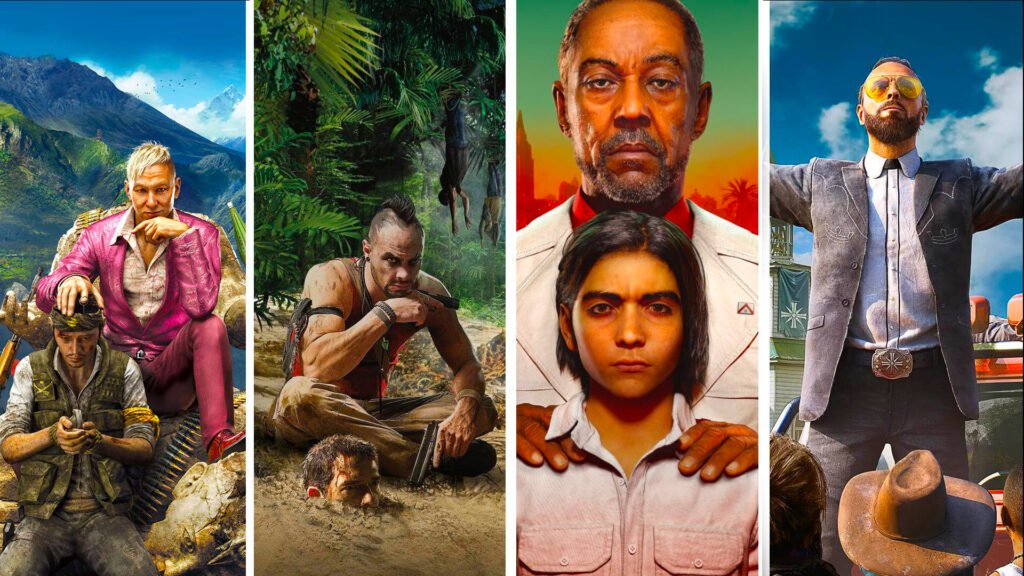
Quick Points
- Far Cry (2004) introduced massive open levels and freedom unheard of in shooters.
- Far Cry 2 doubled down on realism and risk, creating one of the most immersive sandboxes ever made.
- Far Cry 3 defined the modern formula-iconic villains, skill trees, and chaotic outposts.
- Later games refined the loop but became more predictable and structured.
- Far Cry 6 perfected the formula visually but lost some of the danger and spontaneity that defined the series’ early days.
- Across every era, Far Cry remains about freedom, survival, and the chaos players create.