
Being a busy gamer is not about having bad priorities. It is about having real ones.
Work, family, fatigue, and limited mental bandwidth all shape how games actually fit into adult life. When time is scarce, the best games are not necessarily short. They are structured, memorable, and respectful of interruption. They let you make progress without demanding daily presence or constant optimization.
Modern games are often criticized for doing the opposite, but a growing number of recent releases quietly get it right. They are designed around modular progress, strong identity, and systems that survive breaks.
The following games stand out not because they are easy, but because they are compatible with fragmented schedules . Each one excels for a different reason, and each solves a different busy-gamer problem.
What Makes a Modern Game Work for Busy Players
Before diving into the list, it helps to clarify what actually matters.
Busy-gamer-friendly games tend to share a few core traits:
- Progress is modular rather than marathon-based
- Short sessions still feel meaningful
- Systems are readable after time away
- Failure teaches rather than wastes time
- You can stop playing without feeling punished
These games do not ask you to reorganize your life around them. They fit into the spaces that already exist.
Blue Prince
Best for modular, architectural puzzle-solving
Blue Prince is one of the most quietly brilliant examples of modern puzzle design built for adult schedules.
At its core, the game is about navigating and reshaping a shifting mansion. Rooms connect differently each run, puzzles overlap across spaces, and progress often comes from understanding structure rather than solving a single isolated challenge.
What makes it ideal for busy gamers is how modular that structure is.
You can enter the mansion, explore a handful of rooms, solve or partially solve a puzzle, and leave. Progress persists through understanding. Even if you forget specific solutions, the spatial logic stays with you. You remember how rooms behave, how systems interact, and what kinds of questions the game asks.
There is no penalty for stepping away. The game does not rely on momentum. It relies on insight.
For players who enjoy mental engagement but cannot commit to long uninterrupted sessions, Blue Prince offers something rare. A puzzle experience that deepens over time without requiring constant presence.
ARC Raiders
Best for high-stakes action in short sessions
On paper, ARC Raiders should be hostile to busy gamers. It is tense, skill-driven, and built around risk. In practice, it works surprisingly well if your time comes in bursts.
Sessions are discrete. You drop in, take risks, extract or fail, and leave. There is no obligation to grind endlessly. Each run stands on its own, and each outcome feels earned.
What makes ARC Raiders compatible with busy schedules is clarity. You know what you are risking. You know what success looks like. You are not required to keep up with sprawling progression systems just to stay viable.
A single session can be thrilling, decisive, and complete.
For players who crave intensity but cannot commit to marathon play, ARC Raiders delivers focused adrenaline without dragging the experience out. You can play once or twice a week and still feel engaged rather than behind.
Animal Well
Best for dense exploration that is hard to forget
Exploration-heavy games are often risky for busy players. Forget where you were, and the magic collapses. Animal Well avoids this by making its world deeply memorable.
The game is dense without being noisy. Every screen has intention. Visual landmarks are strong. Movement feels precise and deliberate. Even if you step away for days, re-entry is surprisingly smooth because the environment itself does the remembering for you.
Progress in Animal Well is less about checklists and more about curiosity. You uncover paths, interactions, and secrets that stick in your mind. When you return, you may not remember every detail, but you remember the shape of the world.
That makes it uniquely resilient to interruption.
For busy gamers who love discovery but fear losing context, Animal Well offers exploration that survives time away instead of collapsing under it.
Balatro
Best for pure flow and instant save-and-quit
If there is a modern game that understands tired brains, it is Balatro .
Runs are fast. Decisions are immediate. Feedback is constant. You can save and quit at essentially any point without friction. The game never asks you to remember complex systems across sessions because everything is visible and self-contained.
This creates a rare sense of flow that works even in very short windows.
Ten minutes feels worthwhile. Thirty minutes feels indulgent. Stopping never feels like failure.
For busy gamers, especially those playing late at night or between obligations, Balatro excels because it respects both attention and fatigue. It is engaging without being demanding, deep without being heavy.
It is one of the clearest examples of modern design aligning perfectly with fragmented play.
Tunic
Best for a sense of wonder and mental engagement during off-hours
Tunic is a game about rediscovery. Not just of its world, but of how games used to make you feel.
It communicates through mystery, visual language, and partial understanding. Systems reveal themselves slowly. Knowledge compounds. The joy comes from noticing patterns and recontextualizing what you thought you knew.
For busy gamers, this works because progress lives in understanding , not execution.
You can play for a short time, uncover a small insight, and leave. That insight stays with you. Even if you forget exact mechanics, the sense of wonder remains intact, pulling you back in naturally.
Tunic is especially good for off-hours play. Late nights. Quiet mornings. Moments when you want to engage mentally without reacting quickly.
It asks for thought, not endurance.
Why These Games Work When Others Do Not
These games succeed for busy gamers because they share a philosophy, not a genre.
They assume interruption. They build progress that survives gaps. They value clarity, identity, and modular design over endless accumulation.
They do not punish you for living your life.
Modern gaming often equates engagement with retention metrics. These games reject that logic. They trust players to return when they can, and they meet them with continuity rather than pressure.
For busy gamers, that trust is everything.
Why These Games Shine on Handhelds and Remote Play
For busy gamers, where you play often matters as much as what you play.
Handhelds and mobile-friendly setups remove friction. They let gaming live in the margins of life instead of competing with it. Short sessions on the couch, late-night play without taking over the TV, or a quick run while everyone else is winding down all become viable.
Modern handheld ecosystems have quietly become one of the best tools for fragmented schedules.


Why Handhelds Work So Well for Busy Gamers
Handheld-friendly games tend to pair naturally with busy lives because they allow:
- Instant start and stop without ceremony
- Comfortable play away from desks or TVs
- Short, meaningful sessions in low-energy moments
- Quiet, personal play that does not dominate shared space
Devices like Backbone (via Remote Play or native mobile titles) and the Steam Deck reduce the mental barrier to starting a session. When playing feels accessible, it actually happens.
Choosing the Right Fit for Your Time
Not every busy gamer wants the same thing. That is why this list spans different experiences.
- Blue Prince for thoughtful, modular problem solving
- ARC Raiders for short bursts of high-stakes action
- Animal Well for exploration that sticks
- Balatro for instant flow and effortless stopping
- Tunic for quiet wonder and long-term mental engagement
The common thread is respect. Respect for time, attention, and imperfect schedules.
Final Thoughts
Being busy does not mean settling for shallow experiences. It means choosing games that understand how and when you play.
The best modern games for busy gamers are not necessarily shorter or easier. They are better structured. They are easier to return to. They make progress feel real even when sessions are brief.
These games do not ask for your availability. They reward your presence.
For players balancing life and gaming, that makes all the difference.

About the Author
Robert Davis may be middle-aged now, but he has always enjoyed playing video games. Just like others may like to curl up with a good book, he just prefers a different medium for story-telling. Now that life is much busier, he has to be choosy about which games he spends time on. And that's why Delayed Respawnse exists, because he's not the only one.
View all posts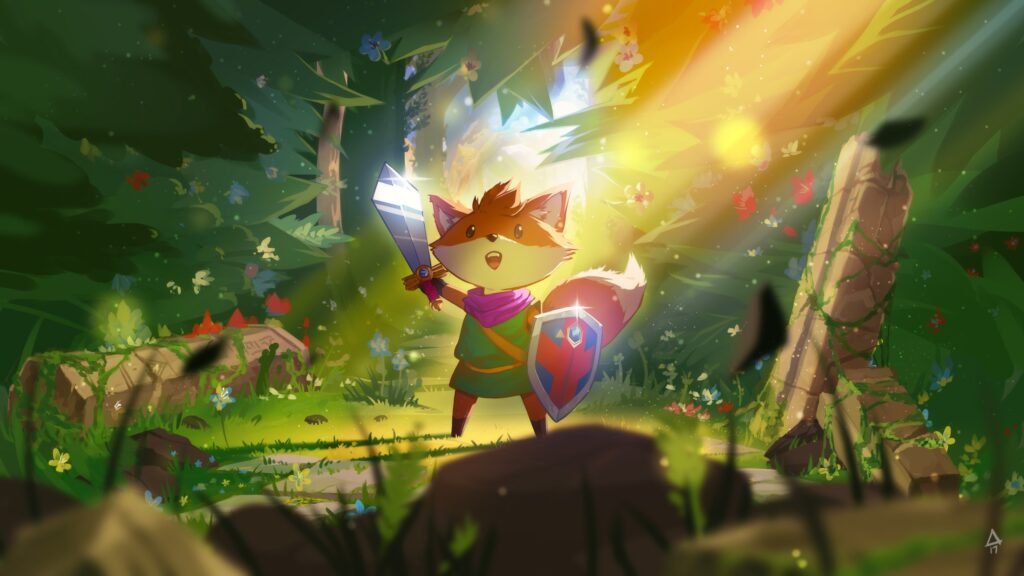
Quick Points
- Blue Prince for architectural puzzle-solving
- ARC Raiders for high-stakes action in short bursts
- Animal Well for exploration that is hard to forget
- Balatro for pure flow and instant save-and-quit
- Tunic for wonder and long-term mental engagement