
Some players need short sessions.
Some players want deep, system-heavy commitment.
But some players need something different entirely.
At Delayed Respawnse, the Resilient Player is defined by durability. Life interrupts. Schedules shift. Other games demand attention. You might step away for weeks or even months. When you return, you do not want friction. You do not want to relearn an entire build. You do not want to wonder what you were doing.
You want clarity.
Resilient-primary games are not necessarily easy. They are not necessarily short. What defines them is structural forgiveness. They:
- Reorient you quickly
- Avoid punishing mechanical rust
- Minimize dependency on remembering complex systems
- Provide clear next steps
- Survive interruption
These are games that hold their shape even when your schedule does not.
The Resilient Player on Handheld


For the Resilient Player, hardware flexibility matters.
On a device like the Steam Deck, suspend and resume transforms how interruption feels. You can close the system mid-dungeon, mid-puzzle, or mid-level and return days later to the exact same state. There is no reboot friction. No reloading anxiety. The game waits precisely where you left it.
That feature amplifies resilience. A game like Control or DOOM becomes even more forgiving when you can pause instantly without breaking momentum. Puzzle games like Portal 2 and The Witness benefit from being able to freeze a problem and revisit it later with fresh perspective.
If you play remotely from console or PC, a Backbone-style controller gives you the physical consistency that helps reacclimation. Real triggers and sticks reduce the feeling of mechanical rust. When you return after a break, comfort matters.
Resilient design and portable flexibility reinforce each other. When both are present, stepping away stops feeling risky.
The Legend of Zelda: Tears of the Kingdom
Tears of the Kingdom is enormous, but it is never fragile.
The quest log is clear. Shrines are self-contained. The map preserves your exploration history. If you leave for two months and return, you can open the Purah Pad and immediately see where your main objective sits. Side quests remain tracked. Shrine icons remain visible.
Combat does not depend on stat micromanagement or rigid builds. Weapons break, encouraging adaptation instead of perfection. You do not need to remember a min-maxed loadout. You need to remember how to explore.
The systems are complex, but they are intuitive. Ultrahand may take a moment to reacclimate, yet the logic behind it is consistent. Physics, experimentation, and curiosity drive progression.
That consistency is what makes the scale resilient rather than overwhelming.
Minecraft
Minecraft is perhaps the most interruption-proof game ever made.
There is no urgent narrative thread to lose. No quest log to forget. Your world simply exists. If you leave for a year, your builds remain where you left them. Your farms continue functioning. Your inventory waits.
Re-entry is immediate because the core mechanics never change. Mine. Craft. Place. Explore.
You might need a few minutes to remember where you stored diamonds, but the loop itself is timeless. There are no cascading penalties for absence. Nothing decays beyond your control.
Minecraft does not demand continuity. It rewards return.
Portal 2
Portal 2 thrives on clean segmentation.
Each chamber presents a defined problem space. When you load a save, you are inside a puzzle with visible boundaries. You do not need to recall a branching skill tree or layered crafting system. You need to observe and think.
Even if you have forgotten narrative beats, the mechanical structure is self-explanatory. Two portals. Physics. Momentum. Buttons. Cubes.
Because the mechanics are limited and consistent, reacclimation is quick. The game never punishes you for stepping away. It simply places you back inside a room and waits.
That clarity makes it structurally durable.
LEGO Star Wars: The Skywalker Saga
LEGO games are quietly designed for resilience.
Objectives are explicitly marked. Missions are broken into digestible chapters. Combat is forgiving and accessible. Death carries almost no penalty. Collectibles are tracked clearly in menus.
If you return after a long break, the HUD tells you exactly where to go. The open hubs are readable. The tone remains light and consistent.
There are no intricate build systems to remember. Characters have simple abilities. Progression is visible and compartmentalized.
The game assumes you might leave and return. It welcomes that.
Celeste
Celeste is challenging, but it is never structurally punishing.
Each screen is a contained obstacle. Death is instant. Respawn is immediate. You do not lose progress across long stretches. You do not retrace half an hour of platforming.
If you step away midway through a chapter, you return to a single room. Jump. Dash. Climb. The mechanics come back quickly because they are tightly defined.
Celeste proves that resilience is not about low difficulty. It is about recoverability. Failure resets cleanly. Progress is segmented. The mountain does not collapse because you paused your ascent.
Control
Control balances narrative depth with mechanical simplicity.
The mission log clearly outlines objectives. Even if the Oldest House feels surreal, your current task is always visible. Powers such as telekinesis, shield, and evade are intuitive enough to reacclimate quickly.
Combat encounters are contained within rooms or corridors. You enter, engage, clear the space, and move forward. There is no sprawling open-world drift that requires remembering layered side activities.
Even if you forget subtle upgrade paths, the core loop remains intact. Enter a space. Use your abilities. Advance the objective.
The structure supports interruption without collapse.
DOOM (2016)
DOOM is fast, aggressive, and surprisingly resilient.
Levels are clearly segmented. Objectives are direct. Weapons function consistently regardless of how long you have been away. There is no complex build tree to recall.
Mechanical rust fades quickly because the fundamentals are straightforward. Move. Shoot. Use glory kills for health. Stay aggressive.
Even if your reflexes are slightly dull, the rhythm reestablishes itself within minutes. The game does not rely on layered system memory. It relies on momentum.
That consistency makes it durable across long breaks.
Journey
Journey is structurally minimal.
There are no menus to manage. No inventory systems. No skill trees. You move forward toward the mountain. The environment communicates direction through light and framing.
If you stop halfway and return weeks later, the path remains obvious. The emotional arc is atmospheric rather than plot-dependent. You do not need to remember dialogue details.
The simplicity of its design makes it remarkably resilient. It is an experience that survives interruption without losing cohesion.
Inside
Inside distills progression to movement and observation.
There is no HUD clutter. No quest journal. No branching systems. You move through spaces that communicate what they require.
Checkpoints are generous. Failure resets instantly. The rules remain consistent throughout.
If you leave and return, the game does not demand contextual recall. It simply presents the next obstacle. The clarity of that structure allows it to endure long pauses without confusion.
The Witness
The Witness demonstrates intellectual resilience.
Each puzzle panel teaches a rule. Those rules repeat across the island in varied forms. If you forget one area’s mechanic, you can relearn it through experimentation.
There is no combat rust. No character progression to manage. No resource economy to track.
The island waits patiently. You return. You examine a panel. You test a pattern. You rediscover the rule.
The game’s durability lies in its consistency.
What Resilient-Primary Games Share
Resilient games are not defined by ease or length.
They are defined by structural forgiveness.
They survive absence. They reorient clearly. They minimize dependency on fragile systems. They respect the reality that life interrupts play.
When you return, they do not make you feel behind.
They simply continue.
If your gaming rhythm includes long pauses, rotating interests, or unpredictable schedules, these games are built to endure that rhythm.

About the Author
Robert Davis may be middle-aged now, but he has always enjoyed playing video games. Just like others may like to curl up with a good book, he just prefers a different medium for story-telling. Now that life is much busier, he has to be choosy about which games he spends time on. And that's why Delayed Respawnse exists, because he's not the only one.
View all posts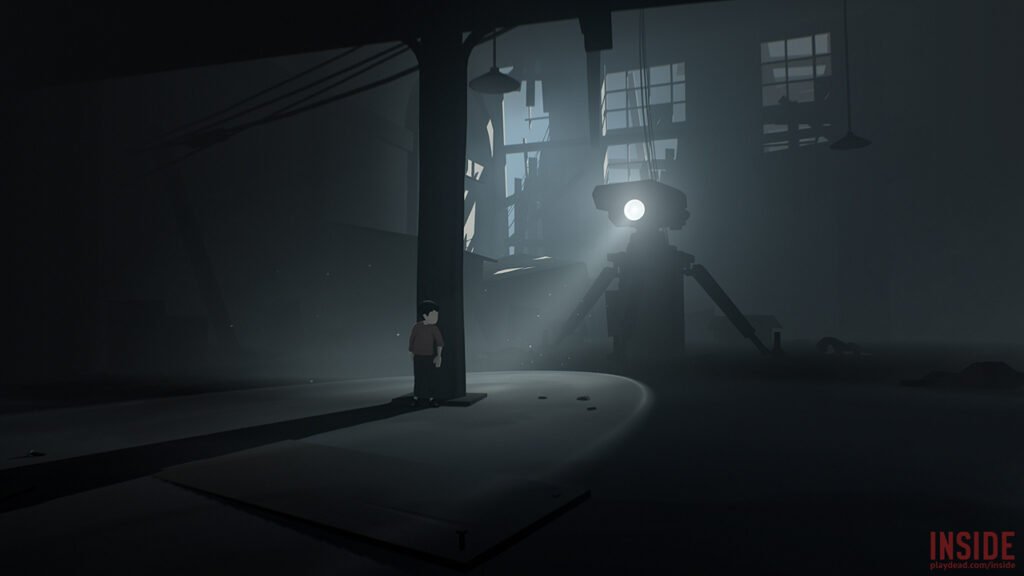
Quick Points
- Resilient Players prioritize re-entry clarity
- Durable structure matters more than runtime
- Segmentation reduces interruption friction
- Low system dependency improves returnability
- Forgiveness strengthens long-term enjoyment