
If You Have Never Played Call of Duty, Start With These Games
If you have never played Call of Duty, the biggest mistake is starting with whatever is newest. That sounds obvious, but this series is a…
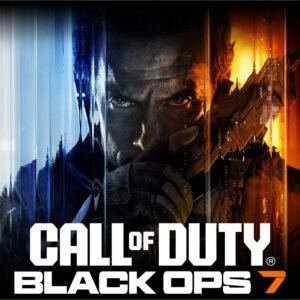
Call of Duty is built around quick, readable firefights where movement, map knowledge, and fast resets matter more than long setups or slow attrition. Matches move briskly, loadouts let you settle into a reliable rhythm fast, and even rough rounds rarely drag, which keeps progress and momentum feeling steady in short sessions.
Call of Duty is built around short, sharp firefights where spotting lanes, snapping onto targets, and moving between cover matter more than drawn-out battles. Weapons generally feel easy to read quickly, so even when a match gets hectic, you can usually tell why you lost a duel and adjust on the next push.
Health regeneration keeps the tempo high because surviving a rough exchange does not force a long recovery. Duck out, reset, and get back into the fight, which makes the game feel forgiving enough to stay engaging even when your timing is off.
Running, sliding into position, and cutting through familiar routes give the game its pace. Maps are designed to create frequent contact without making every encounter feel random, so momentum comes from learning common angles and moving decisively rather than slowly checking every corner.
That structure suits shorter sessions well because progress comes from repetition and recognition, not from long prep work. After a few rounds, it is easy to settle into a reliable flow, whether that means holding a route, flanking aggressively, or rotating quickly after each respawn.
Loadouts help Call of Duty stay approachable because you can lock in a setup that fits your habits and stick with it. Instead of relearning the game every time you return, you build around familiar guns, perks, and equipment, then make small tweaks as you notice what is working.
Matches also move briskly enough that a bad round rarely overstays its welcome. Between frequent checkpoints in campaign play and fast resets in multiplayer, the game does a good job of preserving momentum, which makes it easy to jump in, get a few meaningful bursts of action, and step away without feeling stalled.
Call of Duty is easy to drop into because it gets to the point quickly. You spend less time waiting for a match to become interesting and more time making small decisions that matter right away, whether that means pushing a lane, cutting through cover, or resetting after a bad fight.
That speed makes short sessions feel productive instead of half-finished. Even if a round goes poorly, the game usually gives you another chance within seconds, so frustration does not have much room to build.
One of the best reasons to play Call of Duty is how clearly it communicates what just happened. Sightlines, weapon behavior, and map flow are usually understandable enough that losses feel fixable rather than random, which makes improvement feel natural without demanding a huge learning curve.
That creates a satisfying loop where each respawn has purpose. You can change your angle, slow down for a moment, or lean harder into movement, and those adjustments often pay off immediately.
Call of Duty also works well because it lets you settle into a preferred style fast. Once you find a loadout and pace that suits you, the game supports that routine without making every session feel like homework before the fun starts.
There is a steady comfort in knowing a match will move briskly and rarely drag through long stretches of downtime. That consistency is valuable when you want something energetic, responsive, and easy to return to, even if you only have time for a few rounds.
Call of Duty usually takes about 7 to 9 hours to finish if you are mainly following the campaign. Progress comes through a string of tightly scripted missions, each built around short combat spaces, brief transitions, and frequent checkpoints rather than long exploration or backtracking.
That structure makes it simple to play in bursts. A single mission often fits into a 20 to 40 minute session, and checkpoints are regular enough that even 10 to 15 minutes can still move you forward without losing much ground after a death.
Seeing most of what Call of Duty has to offer usually lands closer to 9 to 10 hours, with full cleanup stretching a bit past that depending on difficulty and how much you replay. Extra time comes from mission-specific intel, challenge-style goals, and revisiting levels to improve performance or catch what you missed.
Replay is less about big side content and more about rerunning compact missions with better knowledge of enemy placement and pacing. If you enjoy shaving mistakes off a tough section or pushing through on a harder setting, it holds up well in short return sessions after the credits.
Curious what Call of Duty is all about? The trailer gives you a great first look at the world, the vibe, and the kind of story you're stepping into.
These videos give some tips and pointers on getting started with Call of Duty
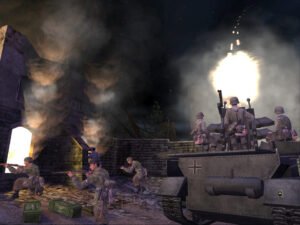
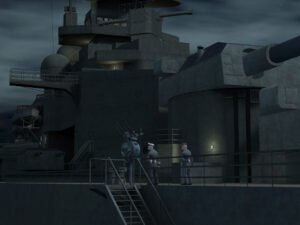
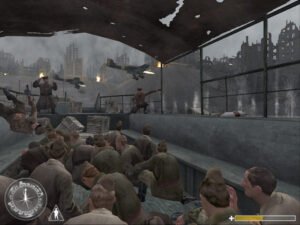
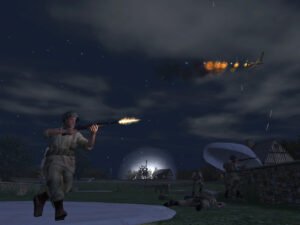
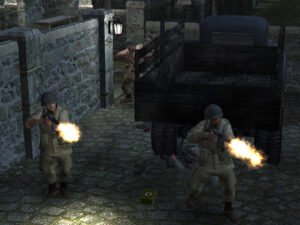
Want to see what Call of Duty actually looks like in-game? These screenshots will hopefully give you a feel for what the world of Call of Duty is like.
DLC just means more of a good thing. Here are some for Call of Duty
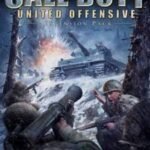
Call of Duty: United Offensive is a full expansion rather than a small add-on. It adds a new single-player campaign with missions across the Eastern Front, the Ardennes, and Sicily, plus new weapons, vehicles, and larger battlefield set pieces than the base game. It also expands multiplayer with new maps, modes, and drivable vehicles, which was a big step up for the original release.
Yes, this is a meaningful expansion if you want more of the original Call of Duty. At around four hours for the campaign, it is not huge, but it fits naturally with the base game and keeps the same WWII tone while pushing for bigger battles. If you only care about the main campaign, it is a solid extra chapter. If you also have any interest in classic multiplayer, it is one of the more substantial Call of Duty expansions.
Usually not. Most campaigns are easy to follow on their own, with simple mission goals and familiar military action setups. If you jump into a specific subseries like Modern Warfare or Black Ops, knowing earlier entries adds context, but it is not required to enjoy the main campaign.
This depends on the entry. The main campaign is often built as a solo experience, while multiplayer is a major part of the package and some games also include co-op modes like Spec Ops or Zombies. If co-op matters to you, check the specific title before buying because support changes from game to game.
It is generally approachable on lower difficulties because objectives are clear and the gunplay is easy to grasp quickly. Higher settings can be punishing, especially when enemies pressure you from multiple angles, but most players can find a comfortable level. If you mainly want the story, starting on Regular or Recruit is usually the safest pick.
The campaign is usually a sequence of linear missions rather than an open world or hub-based adventure. Each level tends to focus on a specific combat scenario, scripted set piece, or short stealth section. That makes progression easy to follow and keeps downtime low between major moments.
Replay value usually comes more from trying higher difficulties, collecting intel, or revisiting favorite missions than from major story choices. The bigger long-term draw is often multiplayer or side modes if the game includes them. If you only want a one-and-done solo campaign, it still works well, just do not expect a lot of alternate paths.
Great games dont have an expiration date. Take our quiz and we will find you the perfect game.
Take the QuizSome of the links on this site are Amazon affiliate links, which means if you click through and make a purchase, I may earn a small commission—at no extra cost to you. It’s a simple way to help support the site and keep the game recommendations coming. Thanks for your support!