
Tiny Tina’s Wonderlands is one of those games that feels perfect for a busy adult for about the first half, then starts testing your patience if you let it. The good news is that the best parts are front-loaded. The bad news is that the game really wants you to stick around for repetitive endgame chaos runs, loot chasing, and collectible cleanup that can turn a fun fantasy shooter into admin work.
If your time is tight, the right move is simple: play the campaign, do the side content that actually has personality, mess around with your class build enough to feel clever, and then leave before the treadmill takes over. You do not need to squeeze every drop out of this one for it to feel worthwhile.
I had a good time with Wonderlands when I treated it like a brisk Borderlands spinoff with a stronger joke-to-nonsense ratio and a surprisingly solid tabletop fantasy theme. I had a worse time when I tried to turn it into my forever loot game. That’s the key distinction.
Why Tiny Tina’s Wonderlands is easy to overplay if you’re not careful
For busy players, this matters because Wonderlands is very good at giving you the illusion that every system deserves equal attention. You have the main campaign, side quests, shrine pieces in the Overworld, lucky dice, random encounters, class multiclassing, Chaos Chamber runs, gear rarity chasing, and eventually the temptation to optimize your build way past the point where you’re still having fun.
Not all of that is worth your evenings.
The campaign has momentum. New environments come fast, the core cast stays lively, and the fantasy parody lands more often than it misses. The side quests are also stronger than you might expect. A lot of them are not just filler errands. They actually carry the same goofy tabletop energy as the main story.
Then the pace changes. Once you’re in the postgame loop, especially if you’re doing Chaos Chamber repeatedly, the variety drops hard. If you enjoy tuning builds and rerunning combat rooms for incremental loot upgrades, great. If you have work in the morning and maybe 45 minutes to play, it starts feeling like chores with spell effects.
So you need to be selective. Wonderlands rewards that approach.
The parts of Tiny Tina’s Wonderlands that are absolutely worth doing
Finish the main campaign
This is the easy recommendation. The main story is the best use of your time in the whole game.
The campaign moves through distinct zones like Queen’s Gate, Weepwild Dankness, Mount Craw, Wargtooth Shallows, and Karnok’s Wall at a good clip, and that variety matters. You’re not just parked in one biome forever. The game keeps giving you new enemy mixes, new joke setups, and just enough change in scenery to make each session feel like it had a point.
The framing device with Tina running the game for Valentine and Frette helps a lot. It gives the whole campaign a playful looseness that lets the writers pivot from fantasy parody to pure nonsense without breaking the tone. That works better here than in Borderlands 3, which often felt like it was trying too hard. Wonderlands is lighter on its feet.
Most importantly, the campaign respects shorter sessions. You can usually log in, push through a story quest, get a boss fight or a new area, and log off feeling like something happened.
Do the side quests with actual questline energy
This is where a lot of people either waste time doing everything or accidentally skip some of the game’s best material. You should not do every side quest just because it’s there. But you should absolutely do the good ones, because Wonderlands hides a lot of its charm in them.
The standout is the Goblins Tired of Forced Oppression, or GTFO, questline in Mount Craw. It is one of the clearest examples of Wonderlands doing something more fun than simple parody. It gives the goblins a whole labor-revolt angle, and it actually feels like a memorable detour instead of checklist content.
Inner Daemons in Tangledrift is also worth your time. It leans into the weirder fantasy side of the game and feels like a proper little story, not just a loot stop. The Ballad of Bones in Wargtooth Shallows is another good pick because it has personality and breaks up the shooting with a little theatrical nonsense, which is exactly what this game needs to stay fresh.
In general, prioritize side quests that are introduced with a strong bit, a specific character setup, or a full mini-arc. If a quest feels like a one-note kill-and-collect job with no comedic hook, you can skip it without guilt.
Unlock your second class and experiment a little
One of Wonderlands’ smartest systems is multiclassing. Once you unlock your secondary class, the game opens up in a way that makes even regular combat more fun. This is worth engaging with even if you’re not a build-crafting obsessive.
You do not need to read spreadsheets or chase perfect gear rolls. Just learn what your class combo is good at and lean into it. If you’re a Spellshot and pair it with Graveborn, you’ll quickly feel how spell use and dark magic sustain can feed each other. If you’re a Stabbomancer mixed with Brr-Zerker, you’ll notice how crit-focused aggression and melee pressure can make short fights melt. That stuff matters because it gives you a sense of ownership over your character without requiring a second monitor and homework.
For a busy player, the sweet spot is understanding your build enough to make choices on purpose, then stopping there. Once you start grinding specific enchants and idealized endgame drops, the time return falls off a cliff.
Grab shrine pieces when they’re on your path
The Overworld looks silly at first, but it does serve a purpose. Shrine pieces are one of the few optional systems that are worth paying attention to, mostly because the rewards are passive and useful. The stat boosts are nice, and collecting pieces naturally while moving through the campaign gives you an extra little sense of progression.
That said, this only works if you do it casually. If a shrine piece is right there, grab it. If it requires a long detour, a fight chain you don’t care about, or backtracking you can already feel yourself resenting, leave it.
Wonderlands is much better when you let the Overworld be a playful connector between real content instead of treating it like a completionist board game.
What you can skip without missing much
You do not need all the Lucky Dice
This is the easiest time-saving advice in the whole article.
Lucky Dice are one of the most annoying collectible systems in a game that otherwise understands momentum pretty well. Yes, they improve your loot luck. Yes, dedicated players can make a case that they matter. No, you do not need to hunt them all unless you are fully committed to postgame grinding.
For most adults with limited play time, collecting every die is busywork. It means checking corners, climbing odd geometry, consulting maps, and constantly breaking the flow of the game. You will feel that friction after a few hours. It is not worth it if your goal is to have a good run through Wonderlands and move on.
Most random encounters in the Overworld
These are fine the first few times. Then they become speed bumps.
You can swat enemies before they touch you in the Overworld to avoid some encounters, and you should. Unless you specifically want a little extra combat or are chasing a nearby objective, random encounters are low-value filler. They don’t carry narrative weight, and they rarely feel like the best possible use of your session.
If you only have half an hour, the last thing you need is getting dragged into another disposable arena because a tiny enemy bumped your icon on the map.
Chaos Chamber as a long-term hobby
This is where I think a lot of busy players should be brutally honest with themselves. Chaos Chamber is not bad. It’s a decent endgame mode. Short randomized combat runs, crystals, bunny loot rooms, difficulty scaling through Chaos levels. It works.
But it works best if you already know you enjoy repeating combat for marginal gains. If that sounds fun, put some extra hours into it after the campaign. If it sounds like the exact kind of thing that turns games into obligations, stop after you’ve sampled it.
For me, Chaos Chamber was fun as a dessert, not as the meal. A few runs after the story? Sure. Building my week around higher Chaos levels and gear optimization? Absolutely not.
Completionist cleanup for its own sake
This game does not reward total completion with enough meaningful novelty to justify the time unless you are truly in love with the combat loop. Mopping up every side marker, every collectible, every challenge, and every optional fight is where the pacing sags hardest.
The campaign and the better side quests create the feeling that Wonderlands is packed with surprises. Endgame cleanup reveals how much of it is repetition wearing a funny hat.
How to play Tiny Tina’s Wonderlands efficiently without sucking the fun out of it
Play it like a 15 to 25 hour game, not a forever game
This is the biggest mindset shift. If you approach Wonderlands expecting your next thousand-hour loot obsession, you are probably going to end up disappointed or burnt out. If you approach it as a lively action RPG shooter that can give you two good weeks of evening sessions, it lands much better.
That means aiming for the story, doing the side quests that look genuinely fun, trying a few class interactions, and letting the credits or early postgame be your natural stopping point.
Do side quests in clusters, not constantly
If you keep bouncing away from the campaign every time a new exclamation mark appears, you’ll flatten the pacing. A better rhythm is to push the main story for a while, then clear a small batch of side content in the current region before moving on.
That keeps your level comfortable, gives you variety, and avoids the feeling that the game has turned into menu management and map cleanup.
Don’t obsess over gear before endgame
You will replace gear constantly during the campaign. That purple spell or legendary gun you love is going to get outscaled. That’s fine. Equip what feels good and move on.
The game is generous enough during the story that you do not need to farm bosses or target perfect drops to stay effective. Time spent micromanaging every item comparison is mostly wasted until much later, and even then, only if you’re committed to Chaos Chamber.
Use respecs to fix boredom, not chase perfection
If your build starts feeling stale, respec. That’s one of the best ways to keep the game lively without adding hours. Shift a skill tree, try a different spell type, swap your emphasis from gunplay to companions or status effects. A small change can make a familiar zone feel fresh again.
What you don’t need is a perfect meta build from YouTube. Wonderlands is better when you’re tinkering, worse when you’re copying homework.
Can handheld play make Tiny Tina’s Wonderlands a better fit?


Honestly, yes, with caveats.
Wonderlands works pretty well as a handheld-friendly game because its structure naturally breaks into digestible chunks. Story quests, side quests, and even a quick Chaos Chamber run can fit into a commute, couch session, or half hour before bed. That makes it a stronger fit for Steam Deck than a giant open-world game where you spend half your session remembering what you were doing.
The combat is busy, though. Lots of effects, enemy projectiles, loot explosions, and spell spam. On a smaller screen, that can get messy fast. If you already know and like Borderlands-style gunfeel on handheld, you’ll adapt. If you struggle with visual clutter or precision aiming on portable hardware, Wonderlands is less relaxing than it looks.
Backbone-style streaming can work too if your connection is stable, but this is not the game I’d choose for flaky remote play. The shooting is active enough that input delay gets irritating quickly.
For busy adults, the real value of handheld play here is momentum. Wonderlands is at its best when you can chip away at a questline without needing a huge dedicated block of time. Handheld access helps with that. Just don’t expect the cleanest visual read in hectic fights.
If You Only Have 20 Minutes, Do This
Push one main quest objective or one substantial side quest step. That’s the best return on your time.
If you’re between missions, use that session to clean up one worthwhile side quest in your current zone, check a vending machine for an obvious upgrade, and move on. Do not spend your 20 minutes searching for Lucky Dice, wandering the Overworld for shrine cleanup, or sorting your backpack like you’re balancing a spreadsheet.
If you’ve already finished the campaign and still want to play, one Chaos Chamber run is the limit I’d recommend for a short session. More than that and the game starts to blur together.
The general rule is simple: choose progress with a beginning, middle, and end. Wonderlands feels good in short bursts when a session has shape. It feels bad when you spend the whole time fiddling around the edges.
The best way to leave Tiny Tina’s Wonderlands satisfied instead of exhausted
Play the story. Do the side quests with real personality, especially GTFO and the better regional questlines. Enjoy unlocking your second class and making a build that feels like yours. Pick up shrine pieces when it’s convenient. Sample Chaos Chamber if you’re curious.
Then stop.
That is the honest advice.
Tiny Tina’s Wonderlands is worth your time because it delivers a fun, compact version of the Borderlands formula with better pacing, stronger side content, and a class system that’s more interesting than it first appears. It stops being worth your time when you start chasing completion, perfect loot, or endless endgame repetition just because the game technically offers it.
For a busy adult, the winning version of Wonderlands is not the maxed-out one. It’s the version where you got the jokes, saw the best zones, played the strongest quests, made a build you liked, and walked away before the grind flattened the magic.

About the Author
Robert Davis may be middle-aged now, but he has always enjoyed playing video games. Just like others may like to curl up with a good book, he just prefers a different medium for story-telling. Now that life is much busier, he has to be choosy about which games he spends time on. And that's why Delayed Respawnse exists, because he's not the only one.
View all posts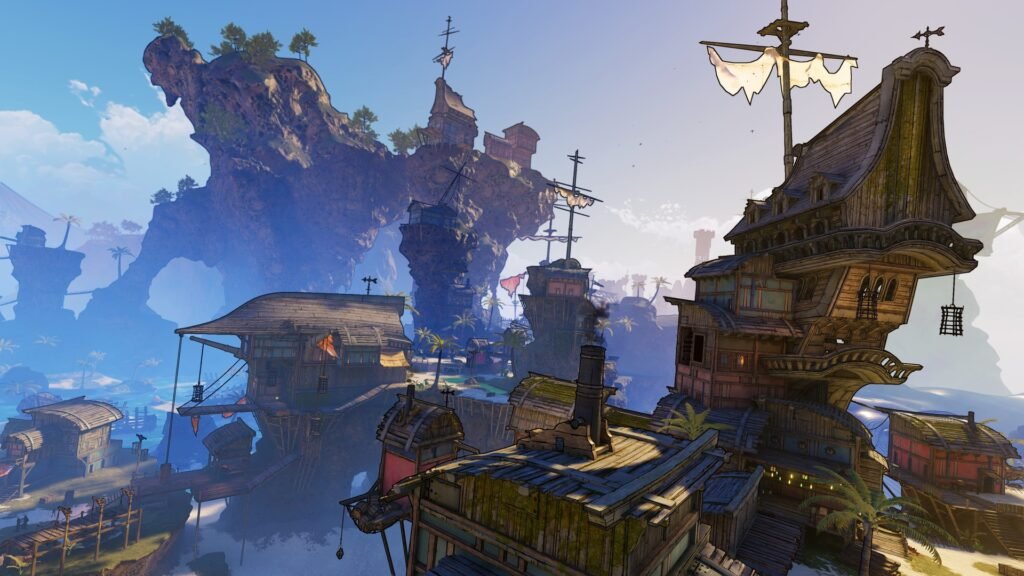
Quick Points
- Finish the main campaign. It’s the best part and fits short sessions well.
- Do standout side quests like GTFO, but skip filler errands and random Overworld fights.
- Ignore full Lucky Dice completion unless you truly want the endgame grind.
- Treat Chaos Chamber as a bonus, not your new second job.
- Play for 15 to 25 hours, enjoy the best bits, and leave satisfied.