
If your gaming time comes in tired little chunks after work, Split Fiction is the kind of game you need to evaluate differently. Not on raw quality. On friction. On how often it wastes your time. On whether it gives you something memorable every session or makes you spend half your night getting set up, reoriented, and back into the flow.
I’ve played enough co-op games to know the usual trap. Great concept, fun for an hour, then scheduling becomes the real final boss. Split Fiction mostly avoids that. It is built around constant forward motion, frequent set pieces, and mechanics that change before they wear out. That matters a lot more when you are not playing four-hour sessions on a free weekend.
So yes, Split Fiction is good for busy gamers. But there’s a condition attached. It is good if you have one reliable co-op partner and you want a focused, finite game instead of an endless hobby. If your play schedule is chaotic, or you hate coordinating with another person, the game’s best strengths can turn into its biggest annoyance.
This is not a game I’d recommend because it respects your time in a clean, minimalist way. It doesn’t. It’s loud, busy, and constantly throwing new ideas at you. I’d recommend it because it keeps paying you back. Most sessions feel like you actually saw something new, did something new, and moved somewhere meaningful.
That is a huge win when your backlog is already judging you.
Why Split Fiction Works Better for Busy Adults Than Most Co-op Games
The big advantage here is that Split Fiction is structured like a playable highlight reel. It does not settle into one loop and ask you to grind it for ten hours. It keeps shifting between platforming, puzzle solving, chase sequences, combat bits, and one-off gimmicks. Normally I’d say that kind of variety can feel messy. Here, it’s exactly why the game works for people with limited time.
You can jump in for a single chapter or even part of one and still get a satisfying session. There’s a good chance you’ll hit at least one memorable mechanic, one strong visual set piece, and one moment where you and your partner have to actually communicate instead of just occupying the same screen.
That last part is important. Split Fiction is not passive co-op. This is not Diablo where one person can carry and the other person kind of follows along half awake. You both need to pay attention. You both need to do the thing. For busy players, that’s either a huge plus or a deal breaker.
If you and your partner want something that feels active and collaborative, this is excellent. If one of you is usually multitasking, checking a phone, or mentally half out of the room, it will get frustrating fast.
The other thing in its favor is that it feels authored. There’s a beginning, middle, and end. No battle pass. No daily checklist. No sprawling open-world cleanup. You play through it, enjoy the ride, and move on. For adults trying to be more selective with games, that’s honestly refreshing.
The Parts That Are Actually Worth Your Time
What makes Split Fiction worth playing is not just that it’s co-op. It’s that the game keeps finding new ways to make co-op matter. The best sections are the ones where each player gets a distinct role or mechanic and the game forces you to sync up under a little pressure.
The early hours are strong and do a good job of selling the whole idea
The opening stretch is efficient. You get the premise, the split-world structure, and the basic rhythm quickly. More importantly, the game starts showing off early. It does not spend three hours teaching you how to jump and push boxes. That alone gives it an edge over a lot of modern games.
For busy players, this matters because you can tell pretty fast whether your duo is going to click with it. You won’t need to endure a long onboarding phase before the fun starts. The fun starts early.
The constant mechanic switching keeps sessions fresh
This is the game’s biggest strength. One chapter leans into platforming timing. Another gives each player different tools and asks you to solve movement puzzles together. Another turns into a more action-heavy sequence. Then it changes again before fatigue sets in.
That means you rarely get that drained feeling of, “Okay, I get it, can we move on?” Split Fiction usually moves on before you ask.
For someone playing in short bursts, that is gold. You are less likely to spend your entire night doing repetitive filler. Even when a section is not your favorite mechanically, it usually does not overstay its welcome.
The spectacle is worth it because it lands often
A lot of games aim for spectacle and make you work too hard for it. Split Fiction is generous. It throws out big visual changes, weird transitions, and playful genre shifts regularly enough that the game feels alive from session to session.
That’s not just nice to have. It changes how the game fits into a busy schedule. When you only play twice a week, you want a game that gives you something easy to remember. Split Fiction does. You’re not trying to recall which crafting material you needed or which map icon you were clearing. You remember the sequence. You remember the gimmick. You remember the joke or the scramble or the moment one of you messed up and both of you laughed.
It is one of the better “play with your spouse or close friend” picks right now
If you are specifically looking for a game to play with a partner who does not want a giant rules-heavy commitment, Split Fiction is an easy recommendation. It asks for cooperation, but not the kind that requires studying builds, raid mechanics, or a wiki. The challenge is in communication and execution, not homework.
That makes it much easier to get to the table. And for busy adults, getting to the table is half the battle.
Where the Game Starts to Drag a Bit
Split Fiction is not perfectly paced. It earns its recommendation, but it does have stretches where you can feel the formula a little more clearly.
The main issue is that the game’s commitment to constant novelty can occasionally make individual sections feel less polished than the best ones. You’ll hit a chapter that is fantastic, then follow it with one that is merely fine. Not bad. Just more like a transition than a highlight.
You will feel this more in longer sessions. If you play for three or four hours straight, the energy dips are easier to notice. In shorter sessions, they matter less because you’re often stopping right after a good set piece anyway.
There are also moments where puzzle communication gets slightly muddled. Not impossible. Just that familiar co-op friction where both players understand the broad goal but spend a minute asking, “Wait, what are you seeing?” If you are playing with someone patient, that’s part of the fun. If one of you gets snippy under pressure, those moments can sour a session.
And while the story setup is enough to keep things moving, this is not a game I’d play for narrative alone. The writing does its job. The real hook is the co-op design and variety. If you need deep character work or a story that carries you through slower patches, this is not really that game.
What You Can Safely Skip or Deprioritize
The good news is that Split Fiction is not packed with busywork. The bad news, if you like completionism, is that chasing every optional extra is not the best use of your time.
If your schedule is tight, do not treat this like a 100 percent game. Treat it like a guided co-op campaign. The main path is the reason to be here.
Optional diversions and side interactions can be fun in the moment, especially if you and your partner enjoy messing around, but they are not the point. They are worth doing when they appear naturally and you are both in the mood. They are not worth slowing your momentum for.
Same goes for replaying chapters just to clean up what you missed. Only do that if you genuinely loved a specific section and want another run at it. Do not do it out of obligation. Split Fiction is at its best when it feels brisk and surprising. Going back immediately to mop up odds and ends works against that.
I’d also say this is not the kind of game where you should force in a less interested partner just because it is co-op. If the other person is lukewarm, save it for someone else. The game relies too much on active engagement to work as a carry-along experience.
How to Play It Efficiently Without Burning Out
The smartest way to play Split Fiction is in chapter-sized chunks. Roughly one to two hours at a time is the sweet spot. That is long enough to get a full meal out of a session and short enough that the game’s constant escalation still feels sharp.
Don’t marathon it unless both of you are really locked in. The game can absolutely support a long session, but it is better when you leave wanting a little more instead of feeling dulled by nonstop noise.
Use the game as a scheduled co-op night game, not a fallback game. Pick a person. Pick a time. Stick with the same partner. Split Fiction benefits a lot from familiarity because you start reading each other’s timing and habits. That smooths out the communication friction and makes later sections feel better.
Also, if one of you is the more experienced player, don’t over-direct. This is one of those games where backseat driving kills the fun fast. Let the other person discover the gimmick, miss a jump, or solve the obvious thing a second later than you would have. You are not speedrunning. You are trying to have a good evening.
And if a section is annoying you, push through instead of overanalyzing it. Split Fiction usually rewards momentum. A weaker segment is rarely around long enough to justify getting hung up on it.
How It Works on Handhelds and Portable Setups


For a game like this, handheld viability is less about raw performance and more about setup friction. Split Fiction is absolutely the kind of game you might want to play on a Steam Deck, a laptop, or through a portable-friendly setup because it helps solve the biggest adult problem, which is finding time and space to actually sit down together.
On Steam Deck, the big question is readability and comfort. Since the game throws a lot of visual information at you and relies on quick awareness, a smaller screen is workable but not ideal for everyone. If you are playing solo on your own device in online co-op, it can be fine. If you are trying to share attention in a chaotic section, the reduced screen size makes things a little more tiring over time.
A Backbone One or similar phone-first setup is more situational. Technically useful, practically limited. For a game built around precision movement, timing, and visual clarity, streaming to a phone is only worth it if your connection is rock solid and you already know you tolerate that setup well. Otherwise, input lag and tiny visuals are going to undercut the whole point.
The best portable use case is honestly this: one or both players using a Steam Deck or laptop for easy online sessions when getting to the couch is the hard part. That can make the game much more realistic to finish. If the alternative is not playing at all, portable options help.
Local split-screen on a decent-sized TV is still the best way to play. No contest. It is easier to read, easier to coordinate, and more comfortable for longer sessions. But if handheld flexibility is what gets the game into your actual life instead of your wishlist, it’s a valid compromise.
If You Only Have 20 Minutes, Do This
Don’t boot Split Fiction cold if you only have 20 minutes and neither of you is already ready to go. This is not a good “maybe we’ll squeeze something in” game unless both players are online, focused, and picking up from a clear checkpoint.
If you do have a short window, use it for one of three things.
- Continue from a checkpoint you just reached last session. This is the best-case short-session scenario because you can get straight back into the action.
- Replay a favorite section for fun. Only if you already know it is a good bite-sized segment and both of you want something light.
- Use the time to set up your next real session. Seriously. Sometimes the smartest move is making sure your next hour actually happens.
Split Fiction shines most when you have enough time to settle in and finish a meaningful chunk. If your nights are constantly getting interrupted, save it for the evenings when you can actually give it room to breathe.
The Bottom Line for Busy Gamers
Split Fiction is worth your time if you want a co-op game that feels handcrafted, varied, and finite. It gives you a lot of memorable moments per hour, and that alone puts it ahead of a lot of bigger, more bloated games competing for your attention.
It is not the best choice if your schedule is unpredictable or if finding a consistent partner is going to be a chore. The game depends too much on shared momentum for that. You can’t treat it like a solo comfort game you dip into whenever.
But if you have one reliable person to play with, this is exactly the kind of game busy adults should prioritize more often. It gets in, does the fun stuff, keeps changing things up, and ends before it becomes your second job.
That’s the real sell. Split Fiction does not ask you to live in it. It asks you to show up, pay attention, and enjoy the ride.
For a lot of us, that’s perfect.

About the Author
Robert Davis may be middle-aged now, but he has always enjoyed playing video games. Just like others may like to curl up with a good book, he just prefers a different medium for story-telling. Now that life is much busier, he has to be choosy about which games he spends time on. And that's why Delayed Respawnse exists, because he's not the only one.
View all posts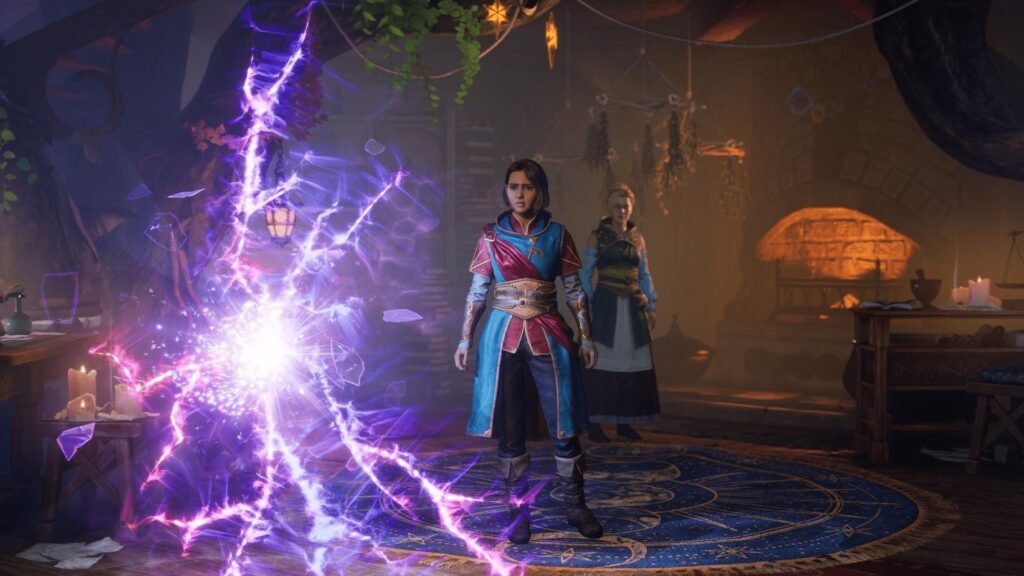
Quick Points
- Worth it if you have a reliable co-op partner
- Play in 1 to 2 hour sessions for the best pacing
- Stick to the main path and skip completionist cleanup
- Not a good fit if scheduling co-op is already a pain