
Not every gamer needs shorter games.
Some of us just need games that respect shorter sessions.
At Delayed Respawnse, the Sprint Player is defined by structure. You often have 30 to 60 minutes to play, and you want that time to matter. You want clarity and forward motion. You want to finish something tangible, not wander through systems that assume an entire evening.
Sprint-primary games are built around clear objectives, fast engagement, defined mission boundaries, frequent stopping points, and minimal friction when you return after a few days away. They are not simply playable in short bursts. They are intentionally structured for them.
Playing as a Sprint Player on Handheld


Sprint design becomes even more powerful when paired with portable hardware.
On Steam Deck, suspend and resume turns 30 minutes into a clean, self-contained arc. You can complete a mission, close the lid, and return later without losing mental context. That flexibility reinforces the structure these games already provide.
If you are playing remotely from console or PC, a Backbone controller transforms your phone into something far more precise than touch controls alone. Shooters like Borderlands 3 and Far Cry 5 benefit from real triggers and sticks. When your entire session might hinge on clearing one outpost or finishing one objective, comfort and control directly impact how satisfying that session feels.
When strong structure meets flexible hardware, short sessions stop feeling like compromise and start feeling intentional.
1. Hades
Hades feels as though it was designed specifically around the half-hour window.
Each run is broken into chambers that move quickly from encounter to encounter. Combat is immediate, bosses serve as natural anchors, and every biome creates a sense of closure. Even a failed run sends you back to the House of Hades, where upgrades and narrative progression unfold efficiently.
For the Sprint Player, this structure guarantees progress. A 25-minute run always results in something gained, whether it is new dialogue, resources, or improved understanding of weapon builds. There is no ambiguity about your goal. Escape. Push further. Refine your approach.
The loop is tight, honest about its time demands, and rewarding even when imperfect.
2. Dead Cells
Dead Cells thrives on biome segmentation, which makes it easy to treat each area as its own self-contained session.
Most biomes take roughly 10 to 15 minutes to clear. Combat is fast and reactive, and your weapon loadout shapes your run almost immediately. That early identity prevents wasted time experimenting without direction.
When you die, the session still contributes to long-term growth through unlocks and permanent upgrades. You are rarely confused about what to do next. There is always another door, another path forward, another opportunity to refine execution.
The clarity of that structure makes Dead Cells easy to revisit even after time away. You do not need a refresher. You simply begin moving again.
3. Vampire Survivors
Vampire Survivors defines your session before you even begin.
Most stages cap at 30 minutes, and that hard limit shapes the entire experience. You know exactly how long you are committing when you press start.
Within that window, power escalates rapidly. Upgrades appear constantly. Evolutions dramatically alter your build. Even if you fall short of the timer, the run feels complete because its structure has a clear beginning, escalation, and conclusion.
There is no narrative ramp-up or exploratory drift. The intensity is concentrated and predictable, which makes it ideal for players who want certainty in their schedule.
4. Borderlands 3
Borderlands 3 proves that a long campaign can still be Sprint-primary when its missions are clearly segmented.
Quests are discrete and explicitly marked. Fast travel reduces downtime. Combat arenas are designed as contained encounters rather than sprawling battles that blur together.
In 30 minutes, you can accept a quest, clear a facility, defeat a mini-boss, collect meaningful loot, and return to Sanctuary. That arc feels finished. New weapons immediately affect how the next mission plays, and skill points provide visible growth.
It is a large game structured as a series of digestible objectives, which makes it surprisingly compatible with fragmented schedules.
5. Far Cry 5
Far Cry 5 excels because of objective density and map feedback.
Outposts are compact tactical puzzles that can often be cleared in under ten minutes. Side missions are geographically close and clearly labeled. Every completed action pushes a resistance meter forward, giving you visible confirmation that your time mattered.
Even though it is an open world game, it rarely demands extended, uninterrupted sessions. You can approach an outpost, clear it, watch the region shift slightly in your favor, and step away feeling accomplished.
The structure supports clean entry and clean exit. That consistency makes it an excellent Sprint-primary experience.
6. Rocket League
Rocket League compresses competition into five-minute matches, and that design choice defines its compatibility with Sprint Players.
There is no buildup phase. You queue, you play, you finish. The outcome is resolved cleanly, and the next match begins just as quickly.
Three matches fit comfortably into a 20-minute window. Even a single match can feel complete because it contains its own narrative arc of momentum, pressure, and resolution.
The game does not expand beyond its boundaries. It respects them.
7. Tony Hawk’s Pro Skater 1 + 2
Two-minute runs create immediate structure.
Each session becomes a push toward specific score goals and challenge completion. Instant retries eliminate downtime, and progress is clearly tracked through unlocked levels and completed objectives.
The time limit creates natural boundaries that prevent overcommitment. You always know when a run will end, and improvement is measurable from attempt to attempt.
For Sprint Players, that hard structure reduces fatigue and maximizes satisfaction per minute invested.
8. Monster Hunter Rise
Monster Hunter Rise refined the hunt loop to better fit shorter sessions.
Most hunts resolve in 20 to 30 minutes. You accept a quest, track the monster, execute your strategy, carve rewards, and return to the hub. The cycle is contained and predictable.
Preparation, execution, and payoff all occur within a defined window. Even a single hunt produces materials, gear progression, and a clear sense of advancement.
The loop is deliberate but not bloated, which makes it far more Sprint-friendly than its scale might suggest.
9. Slay the Spire
Slay the Spire is built on layered segmentation.
Each act represents a contained climb. Battles are discrete encounters. The map shows your progress clearly and transparently.
Because it is turn-based, interruptions carry almost no penalty. You can pause mid-fight and return later without losing context. That flexibility reduces anxiety around short sessions.
The objective is always simple: reach the next boss while improving your deck’s synergy. Strategy unfolds within boundaries rather than across endless sprawl.
10. Into the Breach
Into the Breach distills strategy into tightly focused tactical problems.
Each mission lasts only a few turns, and enemy actions are clearly telegraphed. Success or failure is resolved quickly. Islands function as natural progression segments, so completing one feels like finishing a chapter.
There is no filler and very little downtime. Every turn contains meaningful decisions.
For Sprint Players, that density ensures that even 15 minutes can feel substantial.
What Sprint-Primary Games Share
Sprint-primary games are defined by structure, not length.
They create boundaries. They provide closure. They minimize confusion when you return. They reward time invested immediately rather than promising payoff hours later.
If your life currently operates in 30 to 60 minute increments, these games align with your rhythm instead of fighting it.

About the Author
Robert Davis may be middle-aged now, but he has always enjoyed playing video games. Just like others may like to curl up with a good book, he just prefers a different medium for story-telling. Now that life is much busier, he has to be choosy about which games he spends time on. And that's why Delayed Respawnse exists, because he's not the only one.
View all posts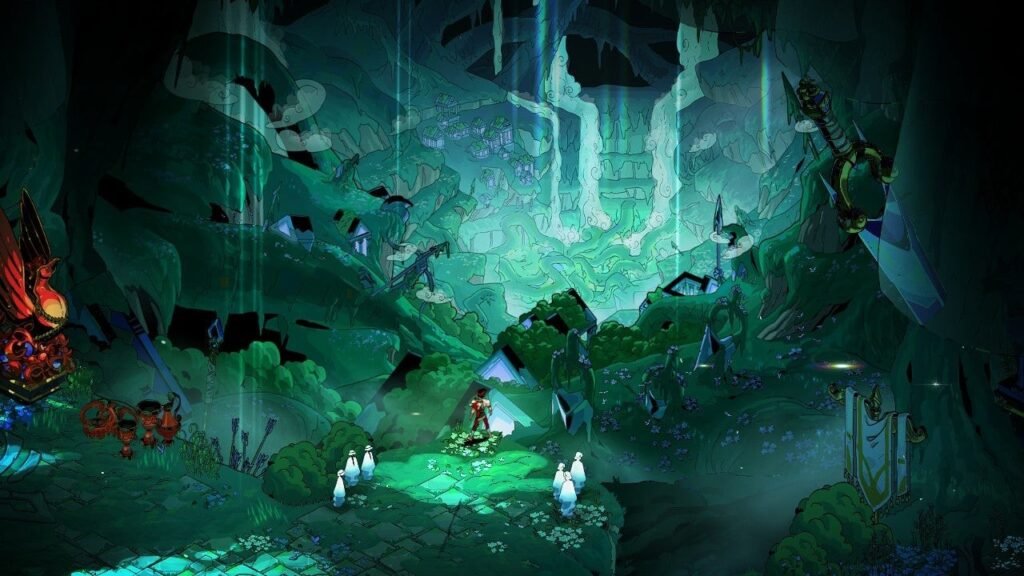
Quick Points
- Sprint Players thrive on clear 30 to 60 minute session arcs
- Mission structure matters more than total game length
- Defined objectives reduce mental load and re-entry friction
- Roguelikes, match-based games, and segmented campaigns excel here
- Open worlds can still be Sprint-friendly if objectives are dense and contained
- Handheld flexibility multiplies the value of strong session design