
Many gamers feel like they are falling behind.
There is always something new releasing. A massive open world game, a remake of something you never got around to, a sequel to a series you used to love. The conversation moves quickly, and if you are not there when a game launches, it can feel like you missed your moment.
But that feeling is built on an assumption that no longer holds up.
The assumption is that the best time to play a game is when it comes out.
That used to be true.
It is not anymore.
New Games Are No Longer Finished at Launch
There was a time when a game had to be complete the day it released.
Now, release is not the finish line.
It is the beginning.
Many modern games launch in a state that feels incomplete. Not broken beyond repair, but clearly unfinished. Systems that need balancing. Performance that is inconsistent. Features that feel like they were pushed just far enough to make the deadline.
And we have seen this play out again and again.
Cyberpunk 2077 is one of the clearest examples. At launch, it struggled with performance and missing systems. Over time, updates and major overhauls transformed it into something much closer to what players expected.
No Man’s Sky followed a different path, but reached a similar place. Its launch version felt sparse compared to what was promised. Years of updates turned it into a much deeper and more complete experience.
Even more recent releases show the same pattern. Star Wars Jedi: Survivor had noticeable performance issues at launch, particularly on PC, but improved significantly after patches.
This is not unusual anymore.
If you play at launch, you are stepping into something that is still being finished.
If you wait, you are stepping into something that has had time to become what it was meant to be.
The Hype Window Is Short. Your Time Is Not
New games come with a very specific kind of urgency.
Everyone is talking about them at the same time. Reviews, streams, social posts, conversations with friends. There is a narrow window where a game feels like the center of the gaming world.
Then it passes.
We saw this clearly with Diablo IV. At launch, it dominated conversations. Within weeks, discussions shifted toward endgame frustrations and balance concerns. Not long after that, attention moved on entirely.
The same thing happens with most major releases. The conversation is intense, but it is brief.
That window is not designed around your experience.
It is designed around attention.
If you only have a few hours a week to play, you cannot move at that speed. Trying to keep up means constantly switching games, chasing the next release before you have had time to really settle into the last one.
You start a lot of games.
You finish very few.
You End Up Paying More for Less
There is also a practical side to all of this.
When you chase new releases, you are paying full price for a version of the game that is often at its weakest.
Six months later, that same game is usually in a better state.
Star Wars Outlaws launched with a mix of performance concerns and gameplay systems that felt uneven to a lot of players. As patches rolled out, stability improved and some of those rough edges were smoothed over, making it a more consistent experience than it was at release.
Halo: The Master Chief Collection had a notoriously rough launch, especially with its online functionality. Years later, it has become one of the best ways to experience the series.
And in many cases, you are paying less for that improved version.
Waiting is not just patience.
It is value.
Your Backlog Is Not the Problem
Most players look at their backlog and see failure.
A list of games they meant to play but never finished.
But the backlog is not the problem.
The problem is trying to treat that backlog and the constant stream of new releases as if they deserve equal attention.
They do not.
When you chase what is new, your backlog becomes something you feel guilty about. It grows faster than you can make progress, and every new release pulls you further away from what you already started.
When you step away from that cycle, the backlog changes.
It becomes a set of options instead of a source of pressure.
You can finally go back to something like Persona 5 Royal or Divinity: Original Sin 2 and experience it without distraction, instead of abandoning it halfway through because something new came out.
There Is No Advantage to Playing Something First
A lot of the pressure to keep up comes from the idea that there is value in being early.
But there is no real advantage to playing something first.
You are not getting a better version of the game. You are not having a more meaningful experience.
If anything, you are dealing with more friction.
Assassin’s Creed Unity is a good reminder of this. At launch, it was known for technical issues. Years later, it is remembered very differently by players who experienced it after those problems were resolved.
Playing later often creates a better environment. There is less noise. Fewer distractions. No pressure to rush through content just to stay part of a conversation that will disappear in a few weeks anyway.
You can take your time.
And that is when most games are at their best.
Gaming Gets Better When It Slows Down
At some point, most players realize they are not trying to keep up anymore.
They are trying to enjoy the time they have.
That shift changes everything.
You stop looking at release calendars. You stop worrying about what you are supposed to play next. You start choosing games based on what fits your schedule and your interest.
And when you do that, something simple happens.
Gaming feels good again.
You Are Not Behind
You are not behind.
You did not miss anything by not playing a game at launch. In many cases, you avoided the worst version of it.
Games do not expire.
A great game is still a great game years later. Sometimes, it is a better experience when you play it after the updates, after the fixes, and after the pressure has faded.
The only timeline that matters is the one that fits your life.
Once you let go of the idea that you need to keep up, gaming becomes simple again.
You sit down, you play something you actually want to play, and you enjoy it.
And that is the whole point.

About the Author
Robert Davis may be middle-aged now, but he has always enjoyed playing video games. Just like others may like to curl up with a good book, he just prefers a different medium for story-telling. Now that life is much busier, he has to be choosy about which games he spends time on. And that's why Delayed Respawnse exists, because he's not the only one.
View all posts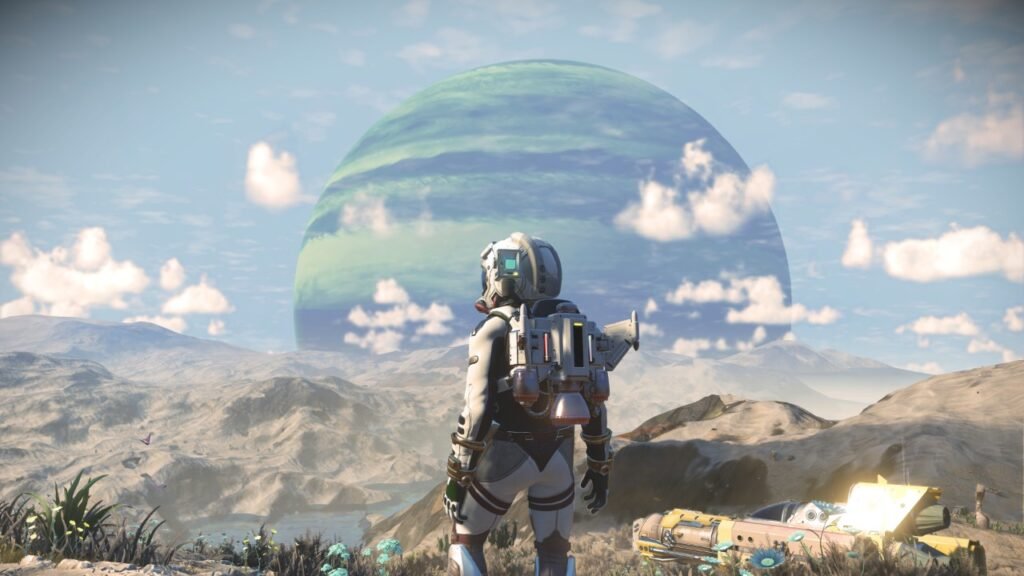
Quick Points
- New releases often launch in an unfinished state and improve over time
- Playing at launch usually means experiencing the roughest version of a game
- The hype cycle is short and not designed for players with limited time
- Chasing new games leads to more unfinished experiences and a growing backlog
- Waiting often results in a better, more stable, and more complete experience
- You don’t need to be part of every launch window to enjoy great games