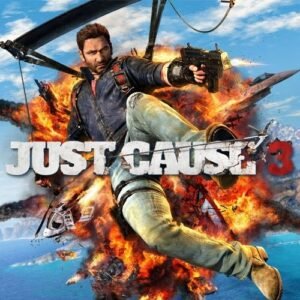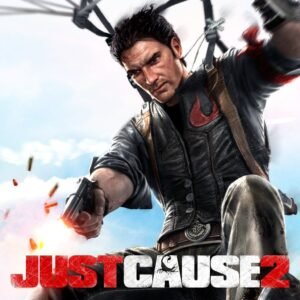
What’s Actually Worth Doing in Just Cause?
You hijack a jeep, launch it off a hillside, bail out with the parachute, then land badly near a cartel roadblock and somehow turn that…
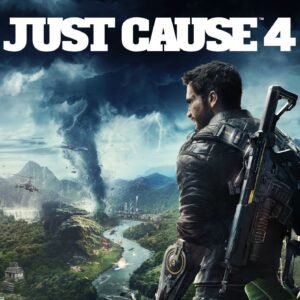
Just Cause drops you into a tropical island with a loose story, plenty of vehicles, and missions that let you improvise instead of follow a strict path. Its early open-world chaos is the draw, with grappling-hook setups still simple enough to learn fast while territory pressure and side jobs give you steady progress between short sessions.
Just Cause is built around getting somewhere quickly, causing disruption, and moving on before the pace drops. Rico’s parachute and grappling hook are simpler than in later games, but that works in its favor here because traversal is easy to grasp within minutes and immediately useful for escaping firefights, boarding moving vehicles, or cutting across rough terrain.
Missions rarely lock you into a single clean solution. You can drive in, steal a helicopter, jump from a cliff, or improvise with whatever vehicle is nearby, which makes even short sessions feel active instead of scripted. The result is a game that keeps momentum high without asking for much setup time.
Most objectives are broken into clear checkpoints, so progress comes in manageable bursts rather than long, demanding stretches. That structure makes it easy to knock out a mission, fail without losing too much time, or chip away at the campaign over several shorter play periods.
The story is mostly a framework for sending you into new parts of the island, but the mission variety helps keep the loop moving. Escort jobs, assaults, races, and extraction-style tasks all lean on the same open-ended controls, so the game stays readable while still giving each objective a slightly different feel.
What sets Just Cause apart is how side activities feed into a broader sense of control over the island. Completing jobs for different factions and helping destabilize regions gives the world a practical progression loop, so your time spent outside the main missions still pushes things forward.
That makes the game a good fit if you want steady returns from every session. Even when you are not advancing the main plot, you are unlocking more opportunities, opening up new tasks, and gradually shifting the balance of the map through action rather than grinding for stats or gear.
Just Cause gets to the point quickly. You are not spending hours learning layered systems before the game becomes fun. Within a short stretch, you are already stealing cars, jumping into helicopters, and using the parachute and grappling hook to turn bad situations into escapes.
That immediacy matters because the game works well in short bursts. A single mission, a stunt-filled trip across the island, or one messy assault on enemy forces can feel complete on its own, so it is easy to drop in, cause damage, and leave satisfied.
The best reason to play Just Cause is how little it asks for perfect execution. Many missions feel like problems with several workable answers, whether that means driving straight through danger, approaching from the air, or improvising after the plan falls apart. The game is at its best when you are adapting on the fly rather than following a strict script.
That gives it a more relaxed kind of action than many open-world shooters from the same era. It is messy in a way that helps the experience, because success often comes from momentum and nerve instead of careful optimization.
Just Cause also holds up because it gives you a constant sense of movement across the island. Territory pressure, side activities, and mission chains keep feeding you small goals, so there is usually something useful to do without digging through menus or relearning a complicated build.
That structure makes the game easy to return to after time away. You can log back in, pick a target, and make visible progress toward opening more of the map, which gives the chaos a satisfying purpose beyond just blowing things up.
A focused run through Just Cause usually takes about 8 to 11 hours. Progress comes through checkpoint-based missions spread across the island, with travel, firefights, and vehicle grabs filling the gaps between story beats rather than long cutscene-heavy stretches.
The game suits sessions of 30 to 60 minutes because most progress comes in compact chunks. You can clear a mission, push territorial control forward, or knock out a side objective, then stop without losing the thread. Longer sittings work too, but the island structure makes it simple to dip in, cause some damage, and leave with something done.
If you want a broader playthrough, expect around 18 to 22 hours, while a more thorough run can stretch to roughly 28 to 32 hours. Extra time comes from liberating more of the island, chasing collectibles, taking on side jobs, and spending more time experimenting with vehicles and traversal instead of heading straight to the next main objective.
Replay value is less about radically different story paths and more about how loosely missions can play out. You may come back to try cleaner runs, approach the same targets with different vehicles, or spend a session focused entirely on chaos and map cleanup. That makes it a good fit if you want a campaign you can finish fairly quickly, but still return to in short bursts.
Curious what Just Cause is all about? The trailer gives you a great first look at the world, the vibe, and the kind of story you're stepping into.
These videos give some tips and pointers on getting started with Just Cause
Want to see what Just Cause actually looks like in-game? These screenshots will hopefully give you a feel for what the world of Just Cause is like.
No. Just Cause is a single-player game only, so the full experience is built around solo exploration, missions, and open-world chaos. There are no co-op modes, competitive modes, or online features to plan around.
The story is light and mostly serves to move you between regions, factions, and major targets. You do not need to pay close attention to enjoy the game, but the campaign does give your actions a clear sense of direction.
It is a single large island rather than a set of separate levels. You unlock more of the map as you progress, with towns, military sites, and mission locations spread across different regions.
It is generally approachable, but some missions can get messy because vehicle handling, aiming, and enemy pressure feel rougher than in newer open-world games. Failure usually comes from chaos piling up rather than from complex systems, so patience helps more than precision.
Yes, if you want a simpler and more straightforward version of the formula. It has fewer gadgets and less polish than later entries, but that also makes it easy to pick up and understand without much setup.
Great games dont have an expiration date. Take our quiz and we will find you the perfect game.
Take the QuizSome of the links on this site are Amazon affiliate links, which means if you click through and make a purchase, I may earn a small commission—at no extra cost to you. It’s a simple way to help support the site and keep the game recommendations coming. Thanks for your support!
Get our weekly digest of the best games worth your limited time — no filler, no hype.
No spam. Unsubscribe anytime.
You're in!
Check your inbox for the next issue.