





How to Make Progress in Final Fantasy XV in Under an Hour
Only got half an hour tonight, maybe an hour if nobody needs you for something? Final Fantasy XV can work for that, but only if…
Final Fantasy XV is a road trip RPG built around downtime as much as spectacle, with long drives, camp meals, and easy banter giving the story room to breathe between hunts and set-piece battles. Its real-time combat stays readable, and the open early structure lets you chip away at quests before the back half turns more linear and story-focused.
Some links may be affiliate links. We may earn a commission at no extra cost to you.
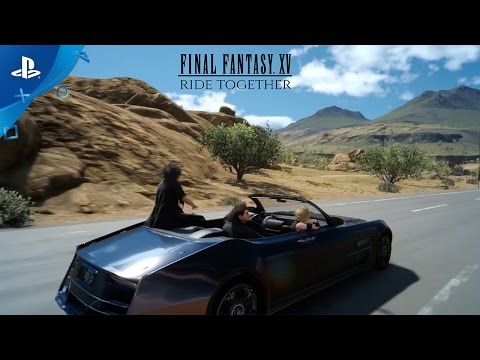
Final Fantasy XV is built around movement and downtime as much as action. You drive between objectives, pull over for hunts, ingredients, and side quests, then use camps and diners to reset, stock up, and pick your next stop. That makes the early game easy to play in chunks without losing the sense of a longer journey.
The open region gives you room to wander, but it rarely feels directionless because activities feed back into combat readiness and party growth. Long stretches on the road, short detours, and regular rest points create a rhythm that feels distinct from more densely packed RPGs.
Combat keeps things active without becoming too hard to parse. Noctis warps between enemies, phases through attacks, and links up with companions for coordinated strikes, so fights stay mobile while still giving you clear defensive options. You can lean on basic attacks and item use, but timing, positioning, and target choice make encounters go much smoother.
Your party matters even when you are not directly controlling everyone. Teammates bring distinct techniques, enemy weaknesses reward weapon swapping, and larger fights often hinge on recognizing when to stay aggressive and when to back off. It is a system that looks flashy, but usually remains manageable once you settle into its rhythm.
One of the game’s most effective loops happens when the fighting stops. Experience is banked until you rest, so choosing when to camp or check into a hotel affects how quickly your levels jump, and Ignis’s meals add meaningful stat boosts for the next stretch of quests or hunts. Preparation has a visible payoff without turning into heavy micromanagement.
That structure also supports the story well. Early freedom lets you spend time with the group and build attachment through everyday routines, then the later, more linear push lands with more weight because you have lived in that party dynamic instead of only watching cutscenes about it.
Final Fantasy XV stands out because the party feels like a group of friends you spend real time with, not just combat roles following a script. Their chatter in the car, reactions during travel, and conversations at camp build attachment steadily, so the bigger story beats land harder than they would on spectacle alone.
That makes even quieter stretches worthwhile. You are not only moving toward the next objective, you are spending time with a cast that grows more believable the longer the trip lasts.
One of the best reasons to play Final Fantasy XV is how naturally it supports short, low-friction sessions. You can pick a hunt, drive to a marker, clear a fight or two, rest, craft a meal bonus, and stop without feeling like you ended in the middle of a complicated system.
Later, when you want a more focused push, the story tightens and carries you forward with much less wandering. That early flexibility and later momentum give the game a pacing curve that is easy to work with instead of against.
Final Fantasy XV keeps its real-time battles approachable while still feeling active. Warping around the field, managing positioning, and calling on your allies creates fights with motion and style, but the basics stay clear enough that you can jump back in after time away without relearning everything.
Progress also comes in satisfying, tangible steps. Better gear, stronger abilities, cooking buffs, and completed hunts all feed into a sense that every outing matters, whether you play for half an hour or settle in for a longer story stretch.
A focused run through Final Fantasy XV usually lands around 25 to 35 hours. The game starts with a broad open region where story chapters, hunts, errands, and long drives sit side by side, then shifts into a more linear stretch in the back half that moves the plot along faster.
Its rhythm is friendly to shorter sessions because progress often comes in clear stops: finish a hunt, reach a town, complete a chapter objective, or set up camp and save. A 45 to 90 minute session is enough to travel somewhere meaningful, clear a few fights, and end on a natural reset without feeling lost when you come back.
If you want to go well beyond the credits, expect roughly 55 to 100 hours depending on how deep you go. Most of that extra time comes from hunt boards, optional dungeons, fishing, cooking ingredients, upgrading gear, superboss-style challenges, and the postgame content that opens up once the main story is done.
Completion in Final Fantasy XV is less about checking every icon and more about lingering in the road trip loop. Replay value is moderate rather than essential, since the strongest draw is revisiting the party dynamic and taking a different pace through side content, not radically changing the story path.
Curious what Final Fantasy XV is all about? The trailer gives you a great first look at the world, the vibe, and the kind of story you're stepping into.
These videos give some tips and pointers on getting started with Final Fantasy XV
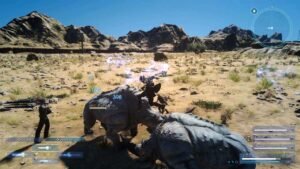
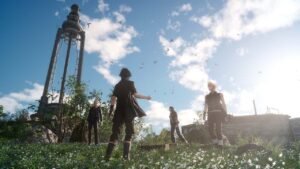
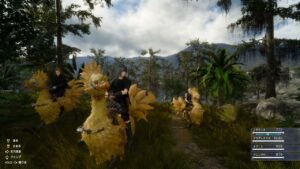
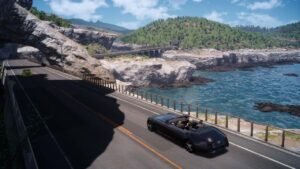
Want to see what Final Fantasy XV actually looks like in-game? These screenshots will hopefully give you a feel for what the world of Final Fantasy XV is like.
DLC just means more of a good thing. Here are some for Final Fantasy XV
Final Fantasy XV: Episode Ardyn is a story expansion focused on Ardyn Lucis Caelum, the main villain of the base game. It acts as a prequel, showing his past, his motivations, and how his conflict with the royal line took shape. You play as Ardyn in a separate episode with his own abilities, including chaotic combat tools that fit his character.
It is a short, self-contained chapter rather than a large expansion. The main draw is the extra story context and the chance to see the world from Ardyn’s side.
This is worth considering if you finished the main story and wanted better context for one of its most important characters. Episode Ardyn helps fill in gaps that the base game leaves vague, and that makes the overall plot easier to appreciate.
If you mainly want a lot of gameplay for your money, this is less compelling. It is brief and best treated as an optional story add-on, not something essential for enjoying the core adventure.
Final Fantasy XV Multiplayer: Comrades is a standalone online co-op expansion set during the World of Ruin. Instead of playing as Noctis and the main party, you create your own Glaive and take on missions with up to three other players or AI partners. It includes character creation, weapon upgrading, town rebuilding, and a separate progression loop built around short hunts and escort-style quests.
This is meaningful if you want more time in the world of Final Fantasy XV and like mission-based co-op. It is not essential if you mainly care about the main story, since it feels more like a side mode than a natural extension of the campaign. For solo players, the AI option helps, but the appeal is still strongest if you want a separate multiplayer grind rather than more story-driven content.
Final Fantasy XV Royal Edition is the expanded version of the main game. It bundles the base game with the Season Pass content, including Episode Gladiolus, Episode Prompto, Episode Ignis, and Comrades, plus extra Royal Pack content. The biggest additions are an expanded Insomnia area at the end of the game, new bosses, a first-person mode, a controllable Royal Vessel boat, and a few smaller gameplay and story extras.
Yes, if you are starting fresh or want the most complete version of Final Fantasy XV. The extra episodes help fill in story gaps and give the party members more screen time, while the Royal Pack makes the final chapter feel less thin. If you already own the base game, this is mainly worth it if you care about the character episodes and a better late-game finale. If you only want the main road trip story, the base game still works on its own.
Final Fantasy XV: Pocket Edition is not a traditional DLC pack for the main game. It is a separate, scaled-down version of Final Fantasy XV released in 2018, with a simplified art style, streamlined controls, and the core story retold across shorter episodes. It was designed for mobile devices and later other platforms, not as an expansion that plugs into the original release.
If you already own Final Fantasy XV, this is not essential extra content. It does not expand the base game with new story chapters, regions, or systems. Its value is in offering a lighter, more portable way to experience the same main narrative. Buy it only if that specific format appeals to you. Otherwise, it is easy to skip.
Final Fantasy XV: Episode Ignis is a story expansion focused on Ignis during the events in Altissia. It shows his side of a major turning point in the main game, with new combat built around his elemental quick-change style and a self-contained chapter separate from Noctis’s journey.
It also includes an alternate ending route, which gives this episode more replay value than the other character chapters. If Ignis felt underused in the base game, this fills in important context.
This is one of the more worthwhile Final Fantasy XV DLC episodes because it improves a key story moment and gives Ignis a stronger role. It is still optional, but it feels more meaningful than a side story with no real impact.
If you mainly want cleaner story context and a short but focused extra chapter, it is worth considering. If you only care about the core road trip and are fine with some gaps in the narrative, you can skip it.
Final Fantasy XV: Episode Prompto is a story expansion focused on Prompto during his time away from the main party. It adds a short self-contained chapter with third-person shooting, snowy environments, and more background on his identity and connection to the empire. You also get a boss encounter, a few new mechanics built around firearms and mobility, and extra scenes that fill in a gap from the main story.
This is meaningful if Prompto felt underused in the base game or if you wanted clearer context for one of the story’s abrupt detours. It is not essential to understand the full plot, but it does make his character arc land better and feels more useful than a purely cosmetic add-on.
If you mainly play Final Fantasy XV for the road trip dynamic and main campaign, this is optional. If you want a compact story episode with a different combat style, it is an easy pick.
No. Final Fantasy XV tells a standalone story with its own world, cast, and lore. You may catch small series references, but they are not needed to follow the plot.
The main game is a single-player RPG with no standard co-op campaign. There was a separate multiplayer mode called Comrades, but it is not the focus of the core experience and may depend on platform support.
It is generally approachable for a story-focused RPG, especially if you do some side content and keep your gear updated. If battles feel rough, leveling up, cooking better meals, equipping stronger weapons, and using items more freely can smooth things out quickly.
The Royal Edition is usually the best pick because it bundles most of the major updates and extra content into one package. On PC, the Windows Edition serves a similar role and includes the broader feature set many players expect now.
Yes, if you want more context for key party members and some story gaps. Episode Gladiolus, Episode Prompto, and Episode Ignis add the most useful character-focused material, while the main game still works on its own if you only want the core campaign.
Great games dont have an expiration date. Take our quiz and we will find you the perfect game.
Take the QuizSome of the links on this site are Amazon affiliate links, which means if you click through and make a purchase, I may earn a small commission—at no extra cost to you. It’s a simple way to help support the site and keep the game recommendations coming. Thanks for your support!
Get our weekly digest of the best games worth your limited time — no filler, no hype.
No spam. Unsubscribe anytime.
Almost there!
Check your email and click the confirm link to start receiving the weekly digest.